SEO proxy mistakes are expensive because they create confident but inaccurate reports. A dashboard can look polished, a chart can look precise, and a ranking change can look urgent while the real problem is only proxy location mismatch, repeated blocked queries, or inconsistent session behavior. The goal is to reduce noise before the team makes content or budget decisions.
Most mistakes come from treating proxies as a simple switch. A team adds a proxy, runs the same tracker, and expects better data. In reality, proxy type, location, rotation, language, browser environment, query pacing, and retry logic all affect what the monitoring system sees.
What SEO proxy mistakes hurt rank tracking?
The most common SEO proxy mistakes are using one IP for too many SERP checks, rotating IPs without region rules, mixing dashboard sessions with public SERP scraping, and treating verification pages as ranking results. Dynamic residential addresses fit public SERP coverage, while static residential IPs fit stable review dashboards.
SEO proxy mistake checklist
Mistake
Why it hurts SEO data
Better workflow
One IP for too many SERP checks
Search engines may return blocks, captcha pages, or noisy results
Use controlled dynamic residential rotation by market or keyword batch
No region validation
A wrong location can make ranking reports misleading
Log country, city, language, and SERP evidence
Mixing dashboards and scraping
Account sessions need continuity, public checks need coverage
Use static residential IPs for dashboards and dynamic addresses for SERP checks
Wrong region can change the whole SERPDo not count failed pages as ranking dataKeep bad data out of SEO reports
Frequently Asked Questions
What is the biggest SEO proxy mistake?
The biggest mistake is mixing public SERP collection and login-based SEO dashboards under the same IP rotation rule.
Should SEO rank tracking use dynamic residential proxies?
Dynamic residential addresses are usually a better fit for public SERP checks across many markets, keywords, and locations.
When should SEO teams use static residential IPs?
Use static residential IPs for dashboards, manual review, login sessions, and browser profiles that need continuity.
How do you know a SERP result is usable?
No failure labels
Teams cannot separate ranking changes from proxy problems
Record block page, captcha, timeout, wrong region, and usable SERP rate
Related IPIPD reading
Use these related IPIPD pages to compare static residential IPs, dynamic residential addresses, pricing, and adjacent workflows without leaving the same topic cluster.
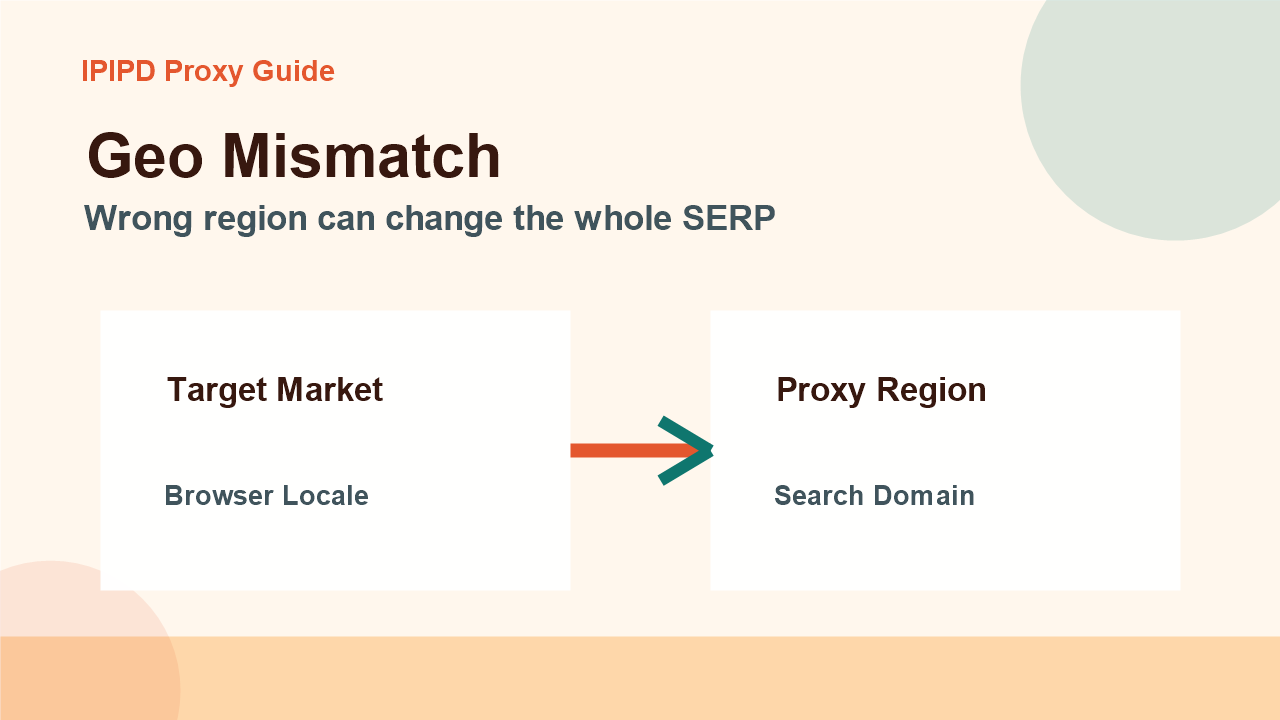
Location mismatch is the most common issue. If the target market is Germany but the proxy, browser language, and search domain point elsewhere, the report may collect the wrong SERP. Local packs, ads, shopping results, and organic competitors can all change. A wrong location does not only create a small error; it can change the entire interpretation of the keyword.
The fix is to define location rules clearly. Match proxy region, search domain, browser language, timezone, and keyword market. Then log the region used for every check. If the report does not know where a result came from, it cannot be trusted for local SEO decisions.
Mistake 2: rotating too aggressively
Some teams believe more rotation always means better SEO monitoring. It does not. Aggressive rotation can break session continuity, change localization signals too often, and make repeated checks hard to compare. If every query uses a different context, ranking variance may reflect the setup rather than the search result.
Dynamic residential proxies are useful for broader coverage, but they still need rules. Rotate by batch, market, or schedule. Keep enough consistency for comparison. Use static residential IPs when the workflow involves dashboards, logins, or manual review where a stable identity is more valuable than broad rotation.
Mistake 3: ignoring blocked or challenged queries
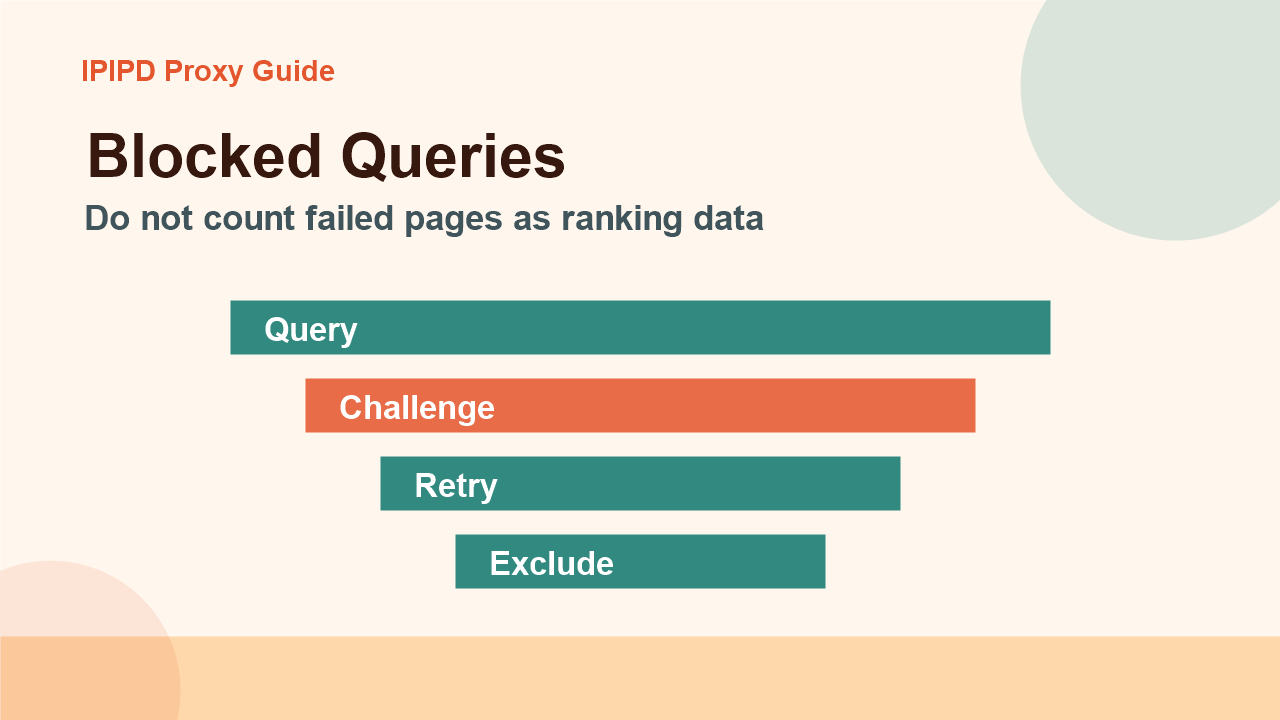
A blocked query is not a ranking result. Verification pages, empty responses, abnormal redirects, and partial pages should not be mixed with clean SERP data. If the tracker silently retries or records bad pages as normal results, the ranking report becomes unreliable.
Teams should track verification rate and unusable result rate separately. A rising challenge rate may signal excessive frequency, poor pacing, wrong IP type, or region mismatch. Fix the workflow before interpreting the ranking changes.
Mistake 4: mixing markets in one configuration
One proxy configuration should not casually cover every country, device, and language. Mixed markets make reports hard to interpret. A keyword can move because of real ranking change, location change, language change, personalization, or SERP layout differences. If all of those variables are mixed, the report cannot explain why anything changed.
Separate keyword groups by country and language.
Use consistent search domains and device settings.
Keep proxy region aligned with the tracked market.
Avoid changing rotation rules during a comparison period.
Document every configuration change in the SEO report.
Speed matters, but SEO monitoring needs usable data more than raw speed. A fast proxy that returns the wrong country is not useful. A fast proxy that triggers challenges is not useful. A fast proxy that changes context every run can create unstable reports. Judge the setup by data quality, not just milliseconds.
The better metric is successful clean SERP per target market. Add region accuracy, verification rate, retry rate, and variance. This turns the proxy decision into a business metric: how much reliable SEO data can the team collect per unit of cost and time?
Mistake 6: no fallback plan
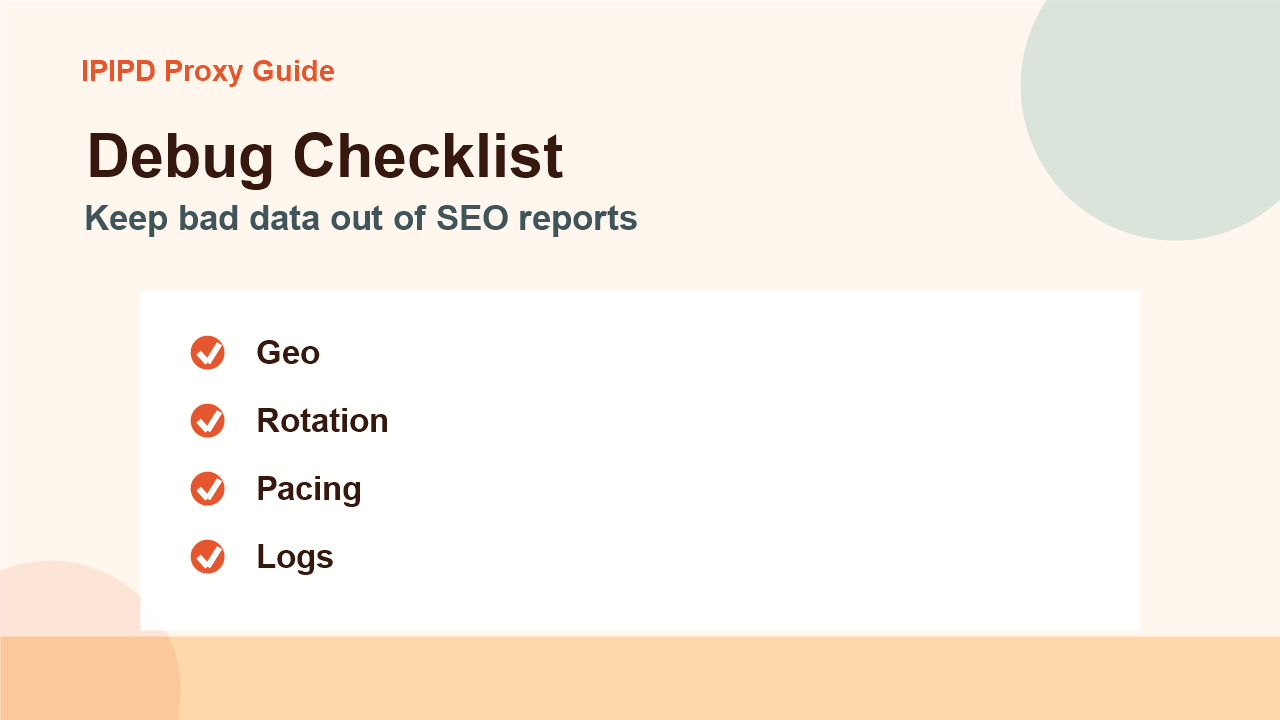
SEO monitoring should have failure handling. If a proxy region fails, if verification rises, or if a batch returns abnormal pages, the workflow should pause, switch pool, retry with pacing, or mark the data as uncertain. Without fallback rules, bad data travels into dashboards and creates false alarms.
A simple fallback rule is enough to start: stop the batch when verification rises above a set threshold, retry only after a delay, and compare a small sample with a known stable environment. If the second run disagrees sharply with the first run, mark the report as uncertain instead of treating it as a ranking event.
A reliable setup is not the one that never fails. It is the one that detects failure early, keeps bad data out of reports, and helps the team recover without guessing.
A usable result should match the target region, load the expected search page, avoid captcha or block pages, and include enough evidence for review.