
How to Use NPM proxy-agent: Environment, Auth, and Checks
Configure proxy-agent in Node.js with proxy environment variables, credential protection, route verification, NO_PROXY checks, and clear error diagnosis.
Agent IP information2026-10-14
Configure proxy-agent in Node.js with proxy environment variables, credential protection, route verification, NO_PROXY checks, and clear error diagnosis.

Choose a single HTTPX proxy, route by scheme with mounts, protect credentials, control environment variables, and troubleshoot observable transport errors.

Configure an assigned proxy in aiohttp, keep credentials out of source code, set timeouts, verify the request route, and diagnose common connection errors.
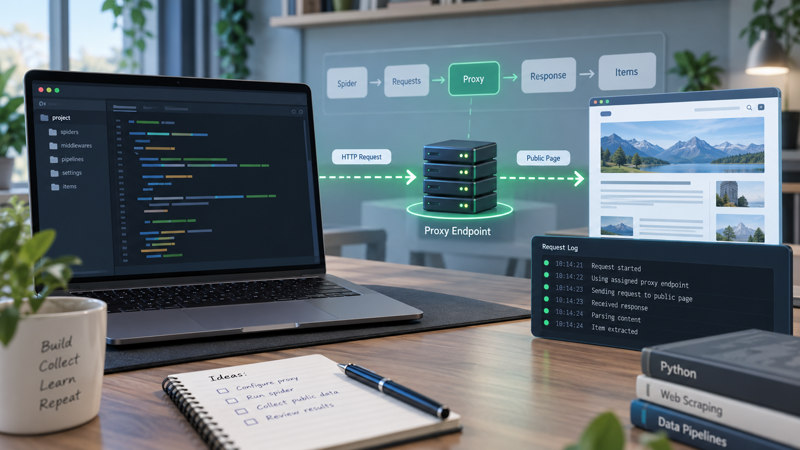
Configure a Scrapy proxy per request or with environment variables, protect credentials, verify support, and diagnose DNS, 407, timeout, and TLS errors.

Learn how to use the PS4 proxy server field with an assigned host and port, test each connection stage, troubleshoot failures, and restore the setup.

Check a proxy service website before buying: verify its domain, business identity, terms, documentation, support, checkout, and pilot evidence.

SOCKS5 proxies are an application relay protocol, not an IP category. Check RFC commands, DNS behavior, authentication, and TCP or UDP limits before setup.

A fast proxy is task-specific. Compare connection time, first byte, transfer, errors, and repeatability against a fixed baseline before making a decision.

Use a clear proxy procurement workflow: define the task, record the supplier response, review a limited pilot, then accept, return, or decline.

Plan authorized AI-agent page checks with consistent addresses and stop rules. IPIPD offers static IP and VPS; rotating IP is discontinued.
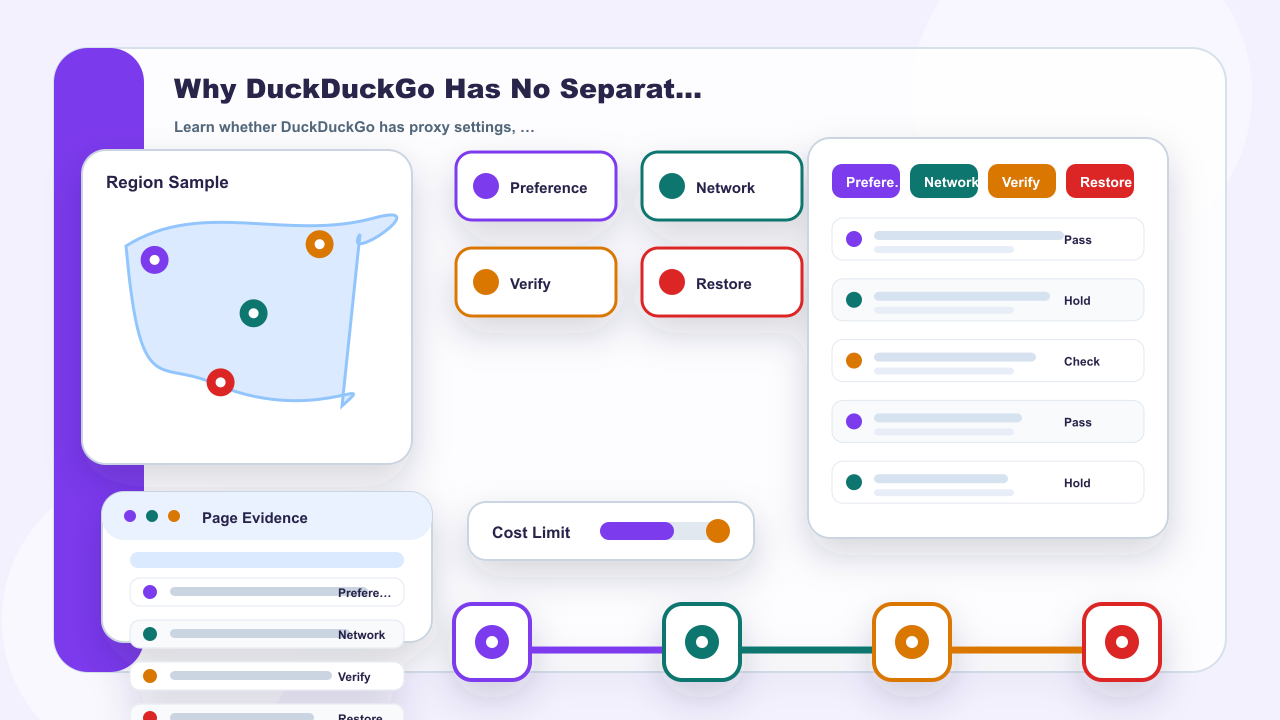
Learn whether DuckDuckGo has proxy settings, where to configure an assigned endpoint, how to verify a public search sample
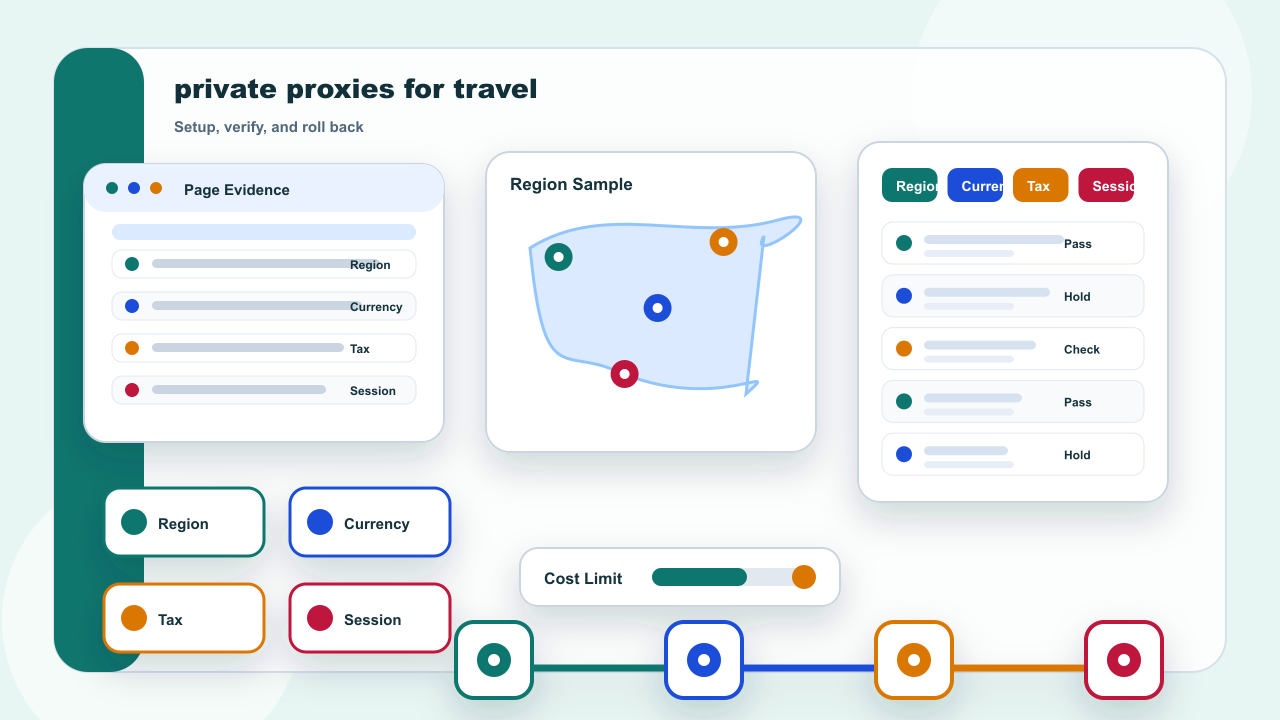
Verify public travel-price presentation by separating region, locale, currency, taxes, timing, cookies, and session state.
Configure proxy-agent in Node.js with proxy environment variables, credential protection, route verification, NO_PROXY checks, and clear error diagnosis.
Choose a single HTTPX proxy, route by scheme with mounts, protect credentials, control environment variables, and troubleshoot observable transport errors.
Configure an assigned proxy in aiohttp, keep credentials out of source code, set timeouts, verify the request route, and diagnose common connection errors.
Configure a Scrapy proxy per request or with environment variables, protect credentials, verify support, and diagnose DNS, 407, timeout, and TLS errors.
Learn how to use the PS4 proxy server field with an assigned host and port, test each connection stage, troubleshoot failures, and restore the setup.
Check a proxy service website before buying: verify its domain, business identity, terms, documentation, support, checkout, and pilot evidence.
SOCKS5 proxies are an application relay protocol, not an IP category. Check RFC commands, DNS behavior, authentication, and TCP or UDP limits before setup.
A fast proxy is task-specific. Compare connection time, first byte, transfer, errors, and repeatability against a fixed baseline before making a decision.
Use a clear proxy procurement workflow: define the task, record the supplier response, review a limited pilot, then accept, return, or decline.
Plan authorized AI-agent page checks with consistent addresses and stop rules. IPIPD offers static IP and VPS; rotating IP is discontinued.
Learn whether DuckDuckGo has proxy settings, where to configure an assigned endpoint, how to verify a public search sample
Verify public travel-price presentation by separating region, locale, currency, taxes, timing, cookies, and session state.