Price monitoring proxy setup should start from the business question, not from IP quantity. A team needs to know which products, markets, sellers, currencies, and check frequency matter before choosing a proxy rule. Otherwise the report may collect many pages but still fail to explain pricing differences.
Residential IPs can reduce obvious location bias in ecommerce checks. They also need disciplined rotation, pacing, and evidence handling. A stable workflow is more valuable than a large but noisy pool.
Quick Answer
Proxy cost should be judged by usable workflow results, not only headline price, IP pool size, or traffic package cost.
Basic Facts Table
Item
Practical Meaning
Business Check
Proxy behavior
Static residential addresses provide continuity; dynamic residential addresses provide distributed coverage.
Choose by workflow, not by proxy label alone.
Best fit
Stable sessions, public data checks, regional review, or evidence collection depending on the task.
Define session length, target region, and success condition before scaling.
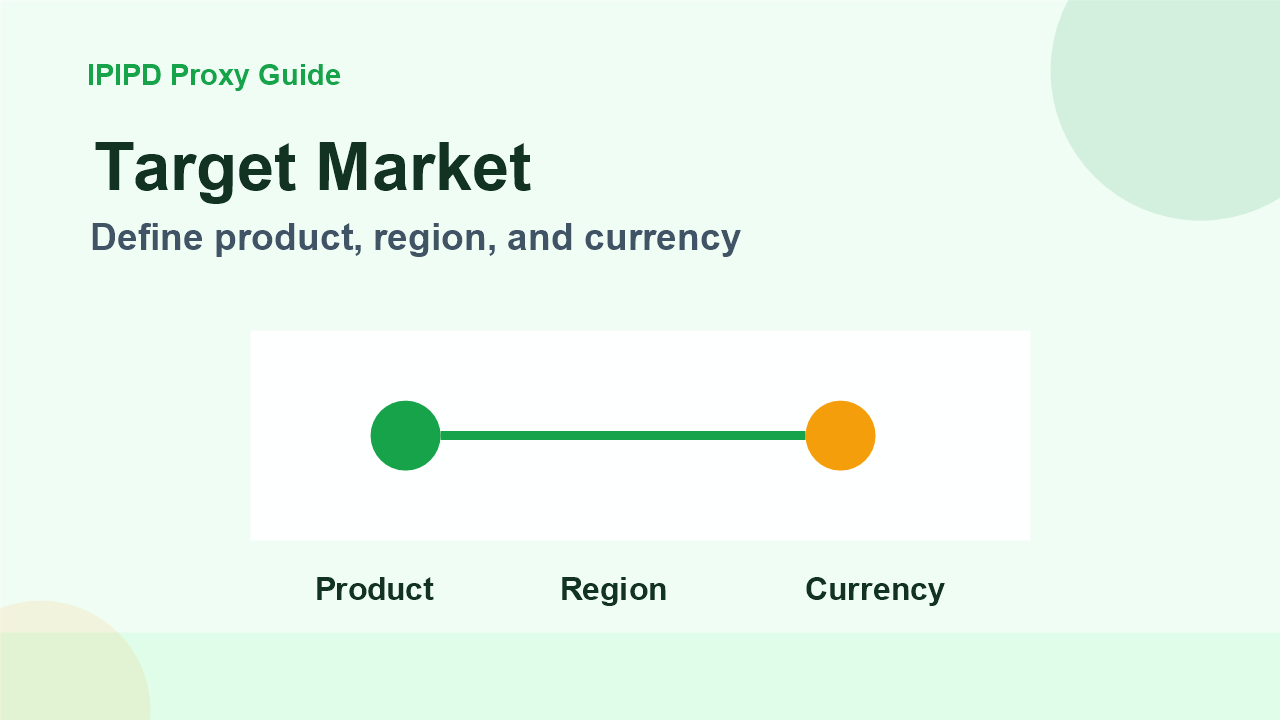
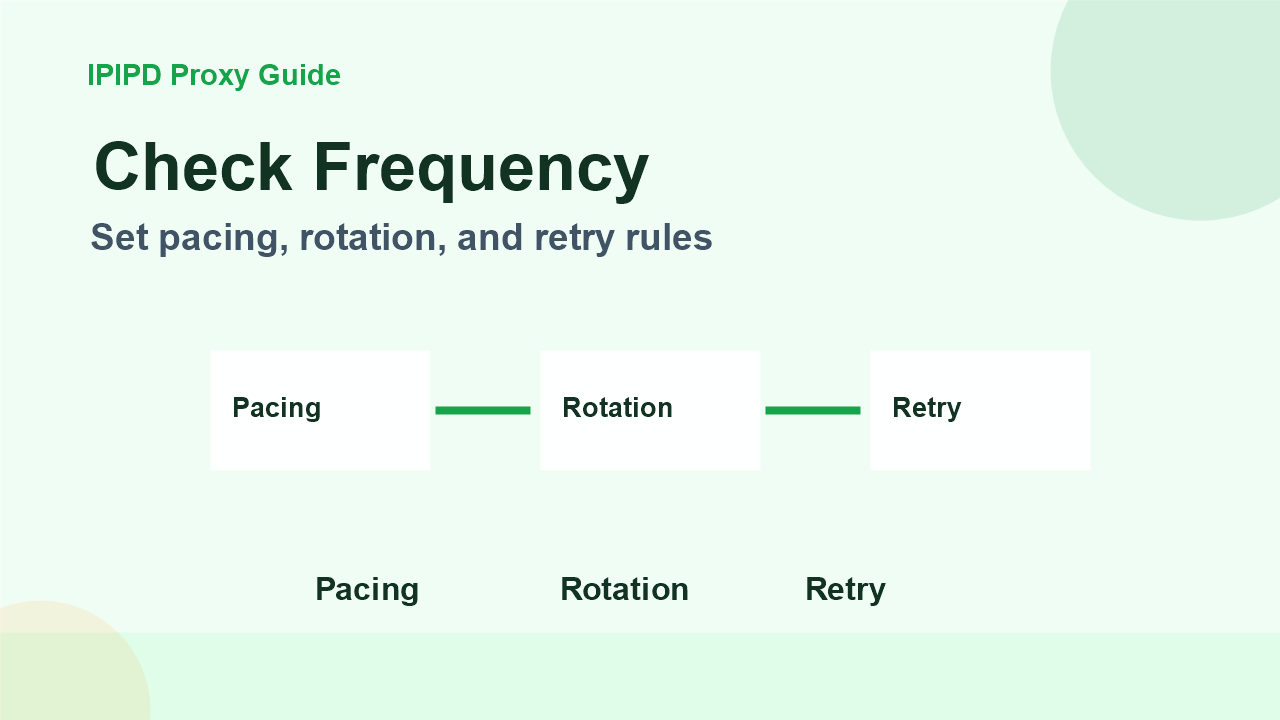
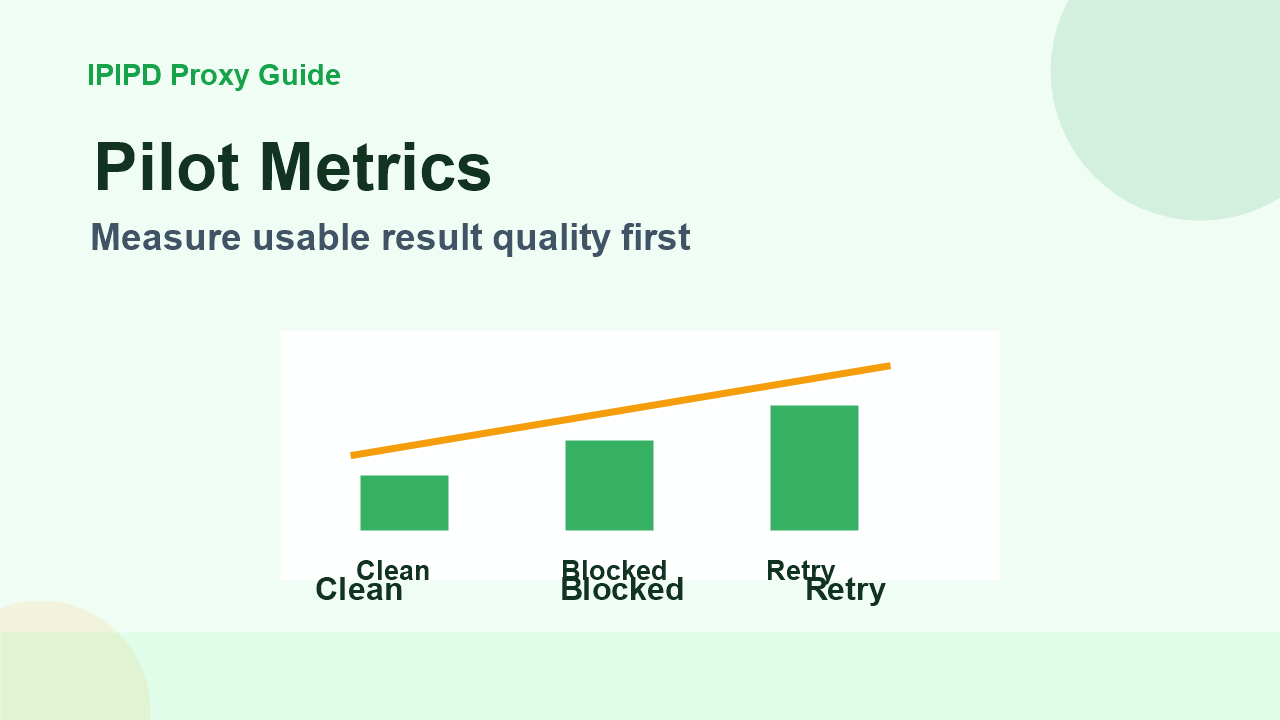
Define product, region, and currencySet pacing, rotation, and retry rulesMeasure usable result quality first
Frequently Asked Questions
Which proxy type fits price monitoring?
Dynamic residential addresses usually fit public price checks across many locations, while static residential IPs fit stable review sessions or dashboards.
How often should price monitoring run?
The frequency depends on product volatility, target market, acceptable block rate, and the business value of fresher data.
What should a price monitoring log include?
Record product URL, region, currency, observed price, timestamp, proxy behavior, retry count, page state, and whether the result is usable.
Why do prices differ by proxy location?
Review logs, screenshots, status codes, and completed workflow cost.
IPIPD boundary
Static residential addresses and dynamic residential addresses
Adjacent proxy types are comparison context, not IPIPD product claims.
Source / Evidence Note
This update uses the article's original content, IPIPD's current static and dynamic residential address product scope, and Google Search Console page data. Proxy performance varies by target website, region, session duration, browser profile, request pacing, and compliance requirements, so the page avoids fixed success-rate claims.
Data Anchor
Google Search Console snapshot before this combined CTR and GEO update: 0 clicks, 3 impressions, CTR 0.0%, average position 4.0. Review again after 7 and 14 days for impressions, clicks, CTR, average position, Google indexing status, and AI answer mentions.
How should businesses set up proxies for price monitoring?
A price monitoring proxy setup should define the target markets, product groups, check frequency, session rules, retry limits, and evidence logs before scaling. Dynamic residential addresses fit public price checks across regions, while static residential IPs fit stable review flows and account-based dashboards.
Price monitoring setup table
Setup item
Decision to make
Evidence to record
Region scope
Country, city, language, currency, and store variant
Observed price, region signal, page URL, timestamp
Check frequency
Hourly, daily, weekly, or event-based
Block rate, price variance, page freshness
Proxy behavior
Dynamic rotation, sticky session, or static residential IP
Session stability, retry count, usable result rate
Review workflow
Public page checks versus account dashboards
Screenshot, HTML sample, reviewer note, next action
Related IPIPD reading
Use these related IPIPD pages to compare static residential IPs, dynamic residential addresses, pricing, and adjacent workflows without leaving the same topic cluster.
A useful ecommerce proxy workflow should define the product list, market, language, device, seller type, and expected output before it runs. Price pages can change by region, currency, inventory, tax display, shipping rule, and promotion. If the monitoring system checks every page from one office network, the report may miss local price differences or overstate changes that only happen in one browsing context.
The goal is not to scrape everything. The goal is to collect enough reliable evidence to support a buying, pricing, or market research decision. Teams should mark whether a result came from a clean product page, a consent page, a blocked page, a redirected page, or a page with missing product data.
Set frequency, rotation, and session rules
Dynamic residential proxies fit public ecommerce observation when the team needs repeated checks across locations. They can help compare visible prices, stock messages, seller availability, and promotion differences. Static residential IPs fit stable workflows where a dashboard, account, or browser profile should keep the same identity during review.
The team should avoid mixing these behaviors in one metric. Coverage and continuity are different goals. A dynamic check can answer what public pages show across markets. A static review can answer whether a long session or account-adjacent workflow remains stable. Both can be useful, but each needs its own success metric.
Align proxy region, language, currency, and target market.
Record product URL, seller, timestamp, device, and page state.
Separate clean product pages from blocked or redirected pages.
Use pacing and retry rules instead of uncontrolled bursts.
Compare usable result cost, not only raw traffic cost.
Measure usable result quality
Before scaling, run a small baseline. Select a few products, two or three target markets, and a fixed schedule. Track price match rate, stock visibility, blocked pages, redirected pages, latency, and screenshot completeness. If the baseline is unstable, increasing request volume will only create a larger unstable report.
A good ecommerce proxy process ends with a business label: usable, uncertain, blocked, redirected, or needs manual review. That label helps teams decide whether to update pricing, investigate competitors, change proxy rules, or rerun the check. Without this classification, the report may be large but not actionable.
Operational checklist
Keep a short checklist for every run: market, product group, proxy type, rotation rule, session rule, retry policy, evidence field, and owner. This makes the workflow repeatable and easier to audit. It also keeps IPIPD's product positioning clear: dynamic residential addresses support coverage; static residential IPs support continuity.
How to turn monitoring into a decision
Ecommerce monitoring should end in a decision path. If a competitor price changed only in one market, the team may need a local pricing response. If stock disappeared only behind one proxy region, the team should verify whether the page is localized or whether the check failed. If every region shows a redirect or block, the proxy workflow or request pattern should be reviewed before anyone changes pricing strategy.
A simple decision table can include product group, market, observed price, previous price, stock state, screenshot link, proxy type, confidence label, and owner. The owner can then decide whether to update a pricing file, open a manual review, contact a marketplace partner, or rerun the check with a stable static residential IP. This keeps proxy data connected to business action rather than leaving it as raw page snapshots.
Buying considerations for IPIPD users
When evaluating IPIPD for ecommerce work, compare the cost of usable evidence rather than the cost of raw requests. Dynamic residential addresses make sense when the team needs public product-page coverage across markets. Static residential IPs make sense when the review needs continuity, account access, or a stable browser profile. The same company can use both, but each task should have its own success metric.
This distinction also helps avoid overbuying. If the current problem is poor workflow labeling, buying more traffic will not fix it. If the current problem is market coverage, dynamic residential capacity may help. If the current problem is unstable dashboards or repeated manual review, a static residential setup may be the better first test.
Prices can change by region, language, currency, store variant, promotion, inventory, personalization, and local delivery rules.