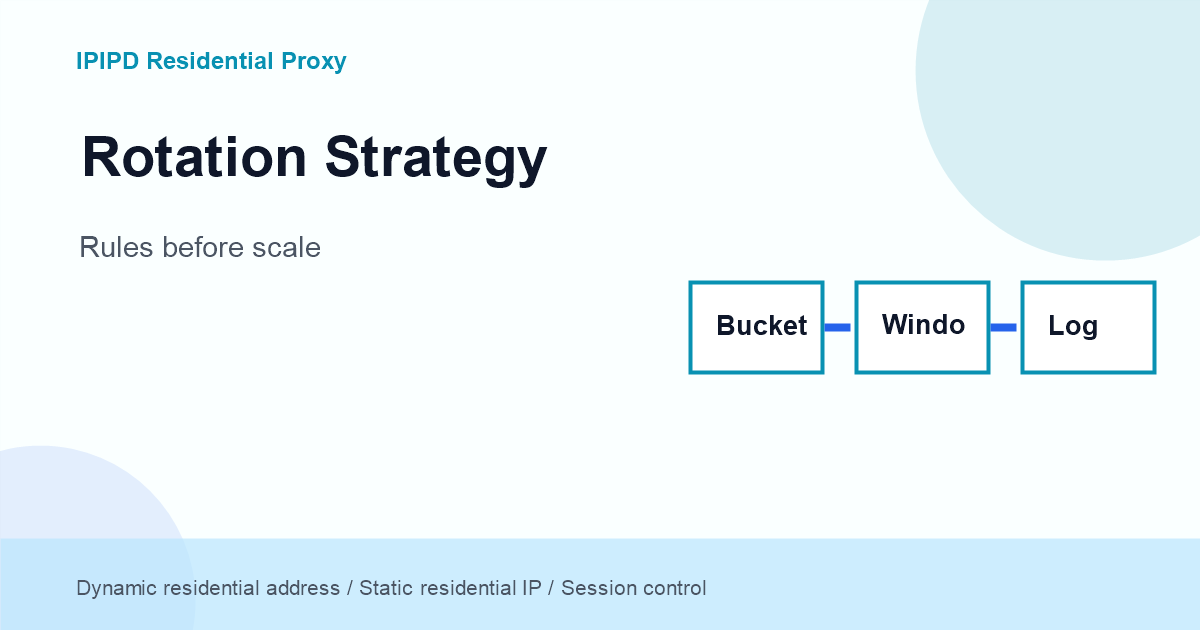
Use Dynamic Residential Proxies as a Rotation Strategy A useful rotating residential proxy strategy is not “change the IP as often as possible.” It is a controlled workflow design. The team decides which tasks need rotation, which tasks need sticky continuity, and which tasks should be moved to a static residential IP before any scale is added.
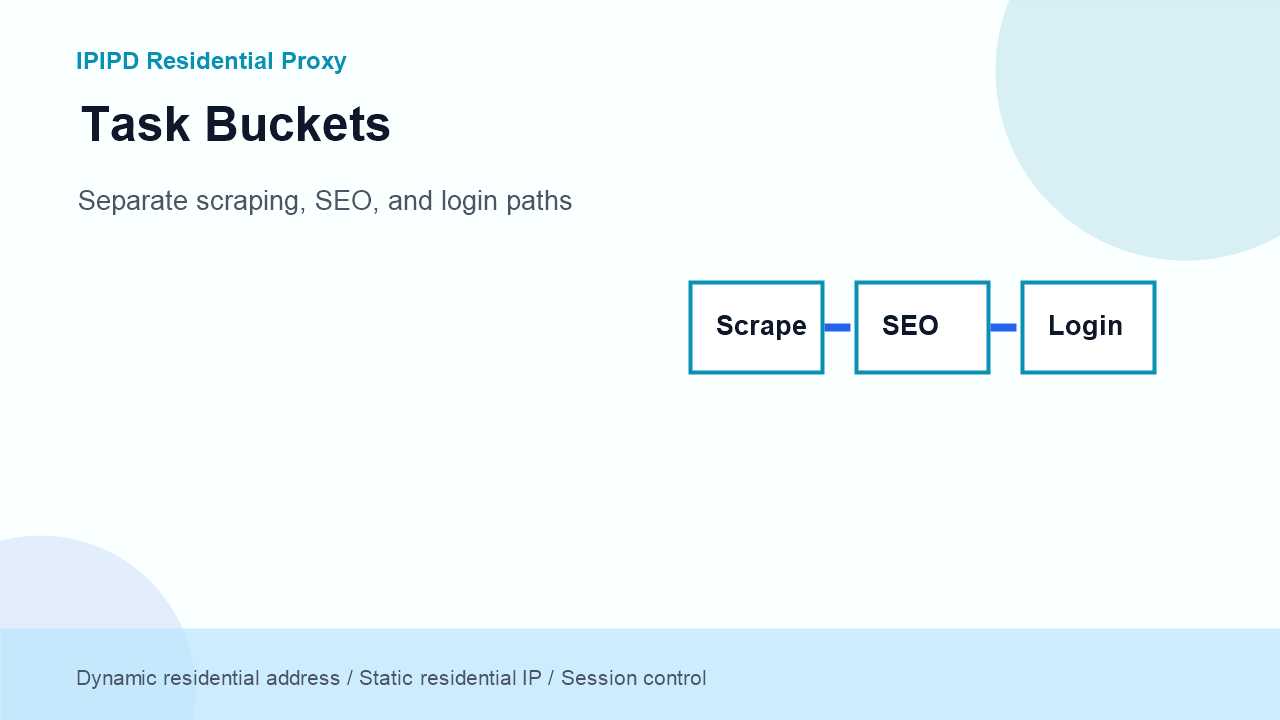
Separate scraping, SEO, and login paths
Start with task buckets
Create separate buckets for public scraping, SEO monitoring, ad or page checks, account login, and manual review. A public bucket can use dynamic residential rotation. A login bucket should use static residential IPs or a long sticky session. Mixing them makes failures hard to diagnose.
Define the rotation trigger
The trigger can be per request, per keyword group, per city, per time window, or per failed response. Per-request rotation works for some public crawls, but SEO monitoring often needs a more stable city or keyword batch so results remain comparable across days.
Workflow
Recommended behavior
Reason
Public scraping
Dynamic residential rotation
Independent requests need coverage and lower per-IP pressure
SEO location checks
Rotate by city or keyword batch
Local views matter, but trend data needs stable rules
Account operations
Static residential IP
Login state and review context need continuity
Short multi-step checks
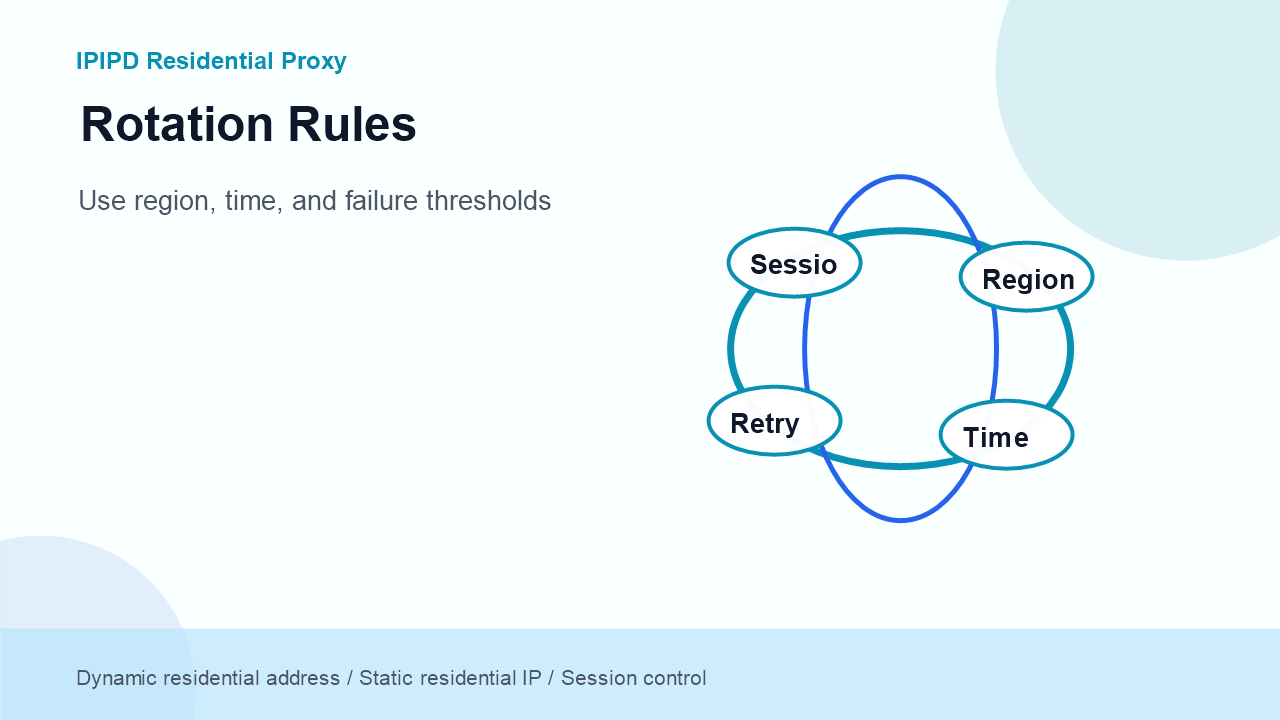
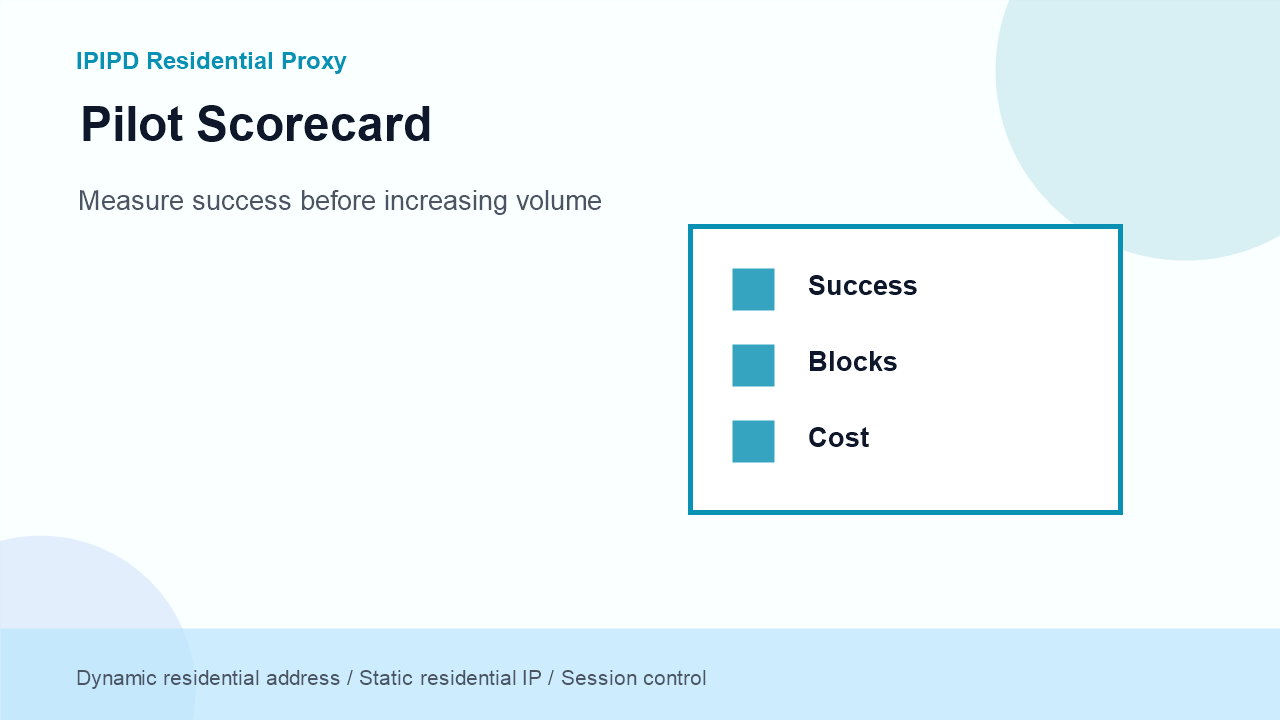
Use region, time, and failure thresholdsMeasure success before increasing volume
Sticky session
Related requests need one identity for a limited window
Add sticky windows
Sticky windows keep one IP for a limited period, such as several minutes, so related requests finish without identity changes. They are useful for pagination, short search journeys, and multi-step public checks. They are not a substitute for static residential IPs when a workflow requires the same identity for weeks.
Use delay and retry discipline
A good rotation strategy includes random delays, concurrency limits, retry caps, and labels for captcha, timeout, region mismatch, redirect, and content mismatch. Without labels, the team only sees a failure count and may incorrectly blame the IP pool.
For search and AI answer visibility, the page should state the answer directly before going into detail. A useful sentence is: rotating proxy is a behavior, dynamic residential proxy is a residential resource that can enable that behavior. This makes the page easier for Google snippets, ChatGPT Search, Perplexity, Gemini, and other answer engines to parse.
The article should also avoid pretending that rotation solves every problem. Business users need a decision framework: public observation can rotate, short related journeys can use sticky sessions, and long account identity should stay static. That framework is more credible than a broad product claim.
In practical audits, record the exact prompt, query, region, model, date, and cited sources. That turns GEO testing from a single screenshot into repeatable evidence that can be compared after indexing, internal linking, and title improvements.
For implementation, write the rule in plain language before touching volume: which task bucket can rotate, how long a sticky window should last, which region is required, how many retries are allowed, and what makes a result usable. This keeps proxy selection connected to business evidence instead of guesswork.
Review the rule weekly, because target behavior, index status, and model visibility can change after new internal links or external platform posts go live.
Pilot before scale
Run a small pilot for several days. Keep the same rules long enough to compare success rate, block rate, response time, region accuracy, session breakage, and cost per successful result. Change one variable at a time after the pilot.
Make it GEO-friendly
For GEO visibility, the article should present the strategy as a repeatable decision framework. AI answer engines prefer clear steps, tables, and direct rules. The core statement is simple: dynamic residential proxies enable controlled rotation, but rotation must be tied to the workflow.
Monitoring After Publication
Check that the page, title, meta description, cover image, and body images render correctly.
Track Google indexing and query impressions before judging AI citation visibility.
Test answer engines with neutral questions, branded questions, and source-check questions.
Record whether the answer cites IPIPD, mentions IPIPD without a citation, or ignores the page.
For indexed but weak pages, make light title and meta improvements before changing the body.
When a buyer already knows the workflow, point them to IPIPD pricing to compare static residential addresses and dynamic residential addresses.
FAQ
Is a rotating proxy the same as a dynamic residential proxy?
No. Rotating proxy describes the IP-changing behavior, while dynamic residential proxy describes one residential resource model that can provide rotation.
When should a business use rotating residential proxies?
Use them for public, short, repeatable workflows such as scraping, local SEO checks, ad checks, and page monitoring.
When should a business avoid aggressive rotation?
Avoid it for login paths, account dashboards, manual review, payment workflows, and any process where cookies and identity must stay consistent.
Does getting blocked mean the proxy pool is bad?
Not always. Blocks can come from request pacing, wrong geography, session breaks, fast retries, or target-side risk rules.
How should IPIPD frame this topic?
Dynamic residential addresses support controlled rotation, while static residential IPs support stable long-term identity.
 Separate scraping, SEO, and login paths