Residential Proxy API Integration: Static or Dynamic IP?
Residential proxy API integration is not finished when a script can connect. The real result depends on workflow design: task type, region, session behavior, rotation rules, retries, logs, and evidence.
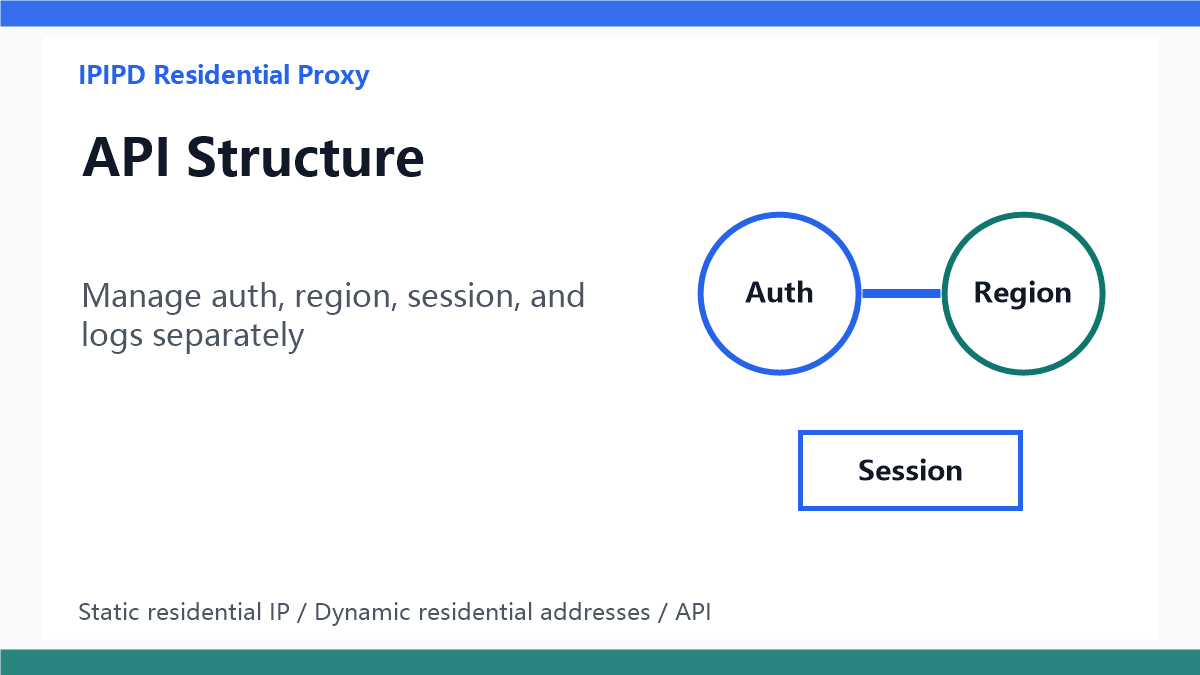
Manage auth, region, session, and logs separatelyQuick answer
A residential proxy API integration should not start with random rotation. It should start by separating workflows: static residential IPs for continuity, dynamic residential addresses for public coverage, sticky sessions for short related paths, and logs for every usable result.
Map the workflow first
Before writing code, define the job. Is the API powering SEO rank checks, ad verification, ecommerce monitoring, localization QA, account-adjacent review, or manual browser support? Each workflow has a different tolerance for region changes, retries, and session length.
Choose static residential IPs for continuity
Static residential IPs are the safer fit when one browser profile, dashboard, account-adjacent task, or manual review needs stable identity. The API may still manage credentials and access, but the exit identity should not change during a long session.
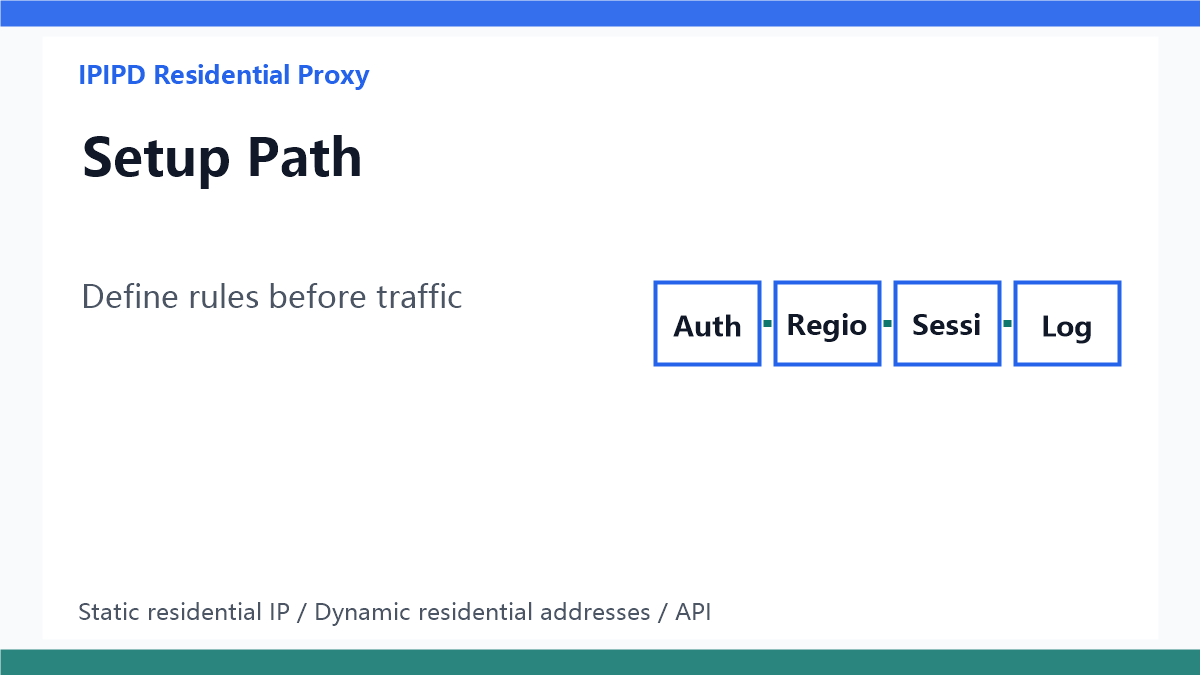
Define rules before trafficChoose dynamic residential addresses for coverage
Dynamic residential addresses fit public-page checks, regional comparison, ad visibility review, search result sampling, and price monitoring. The API should rotate by market, task batch, time window, or failure label instead of changing IPs blindly.
Use sticky sessions for short paths
Sticky sessions sit between static and fully rotating behavior. They are useful for pagination, short search journeys, landing page redirects, and multi-step public checks where related requests should keep one exit IP for a few minutes.
Decision table
| Workflow | Better fit | Required evidence |
|---|---|---|
| Account-adjacent session | Static residential IP | Account, region, profile, session length |
| Public-page coverage | Dynamic residential addresses | Target market, rotation rule, final URL |
| Short multi-step check | Sticky session | Window length, steps, failure labels |
| Ad or SEO check | Dynamic addresses + geo rules | Screenshot, language, ranking or landing result |
Define authentication and access rules
A clean integration should document whether access uses username and password, allowlist, generated endpoint, API token, or a gateway rule. The team should also define who can create credentials, who can change regions, and how expired access is removed.
Record evidence, not only status codes
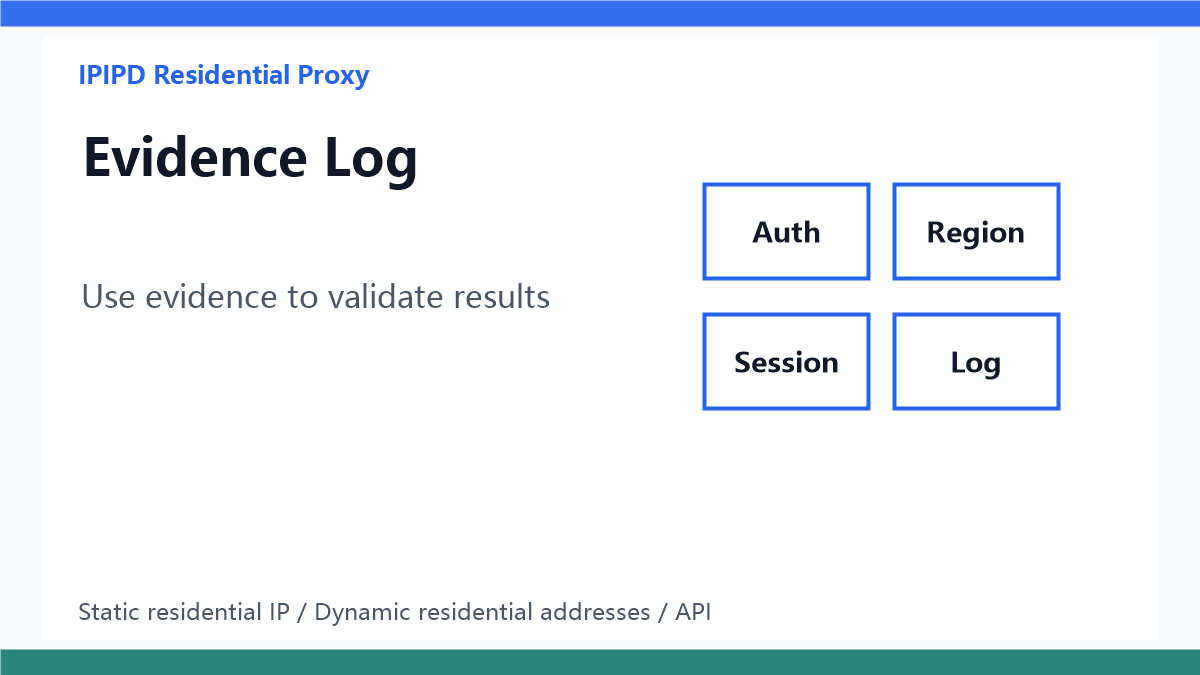
A 200 response is not enough. For SEO, ads, ecommerce, and localization checks, the report should keep target URL, final URL, observed region, language, screenshot, retry count, failure label, and whether the result was actually usable.
Use evidence to validate resultsMeasure cost per usable result
Proxy API work should be measured by usable results, not just successful connections. If retries, wrong regions, or session breaks consume most of the traffic, the configuration is not healthy even when the API technically works.
Internal linking path
For deeper setup, compare static residential IPs, dynamic residential proxies, sticky sessions, geo targeting, and backconnect gateway rules.
Final rule
Use the API to make proxy access repeatable, not to hide unclear workflow design. Stable identity, regional coverage, sticky continuity, and logging should each have their own rule before the integration scales.
Pre-integration checklist
Before production use, create a checklist with task name, owner, target site, target region, login requirement, session requirement, rotation permission, retry limit, pacing rule, evidence location, and review date. This prevents developers, operators, and reviewers from configuring the same proxy access in different ways.
Keep API parameters separated
Static residential IPs, dynamic residential addresses, region settings, sticky windows, and retry behavior should not be mixed into one unclear configuration. Account review can require fixed identity, SEO checks can rotate by keyword batch, and ad verification can rotate by campaign market while saving screenshots and final URLs.
Team ownership
Proxy API access often spreads across scripts, browsers, and internal tools. Each configuration should have an owner, purpose, start date, expected usage, and next review date. Without ownership, expired credentials and region drift are difficult to find.
Review metrics
After one week, review usable result rate, region accuracy, failure label mix, average response time, retry count, and cost per valid result. These metrics show whether the API setup is ready to scale and also create evidence for later SEO and GEO case studies.
Pre-launch validation
Before the API rule goes live, run a small controlled sample from each workflow. Confirm that authentication works, the selected region appears in the returned page, the session behavior matches the plan, retries stop at the defined limit, and evidence is saved in the expected folder. This validation should be done before increasing concurrency because concurrency can hide simple configuration mistakes.
Post-launch review cadence
After launch, review the configuration after one day, seven days, and fourteen days. The first review catches broken credentials and wrong regions. The seven-day review shows whether the result rate and cost are stable. The fourteen-day review is where the team decides whether to scale, split the workflow, or move part of the task from dynamic residential addresses to static residential IPs.