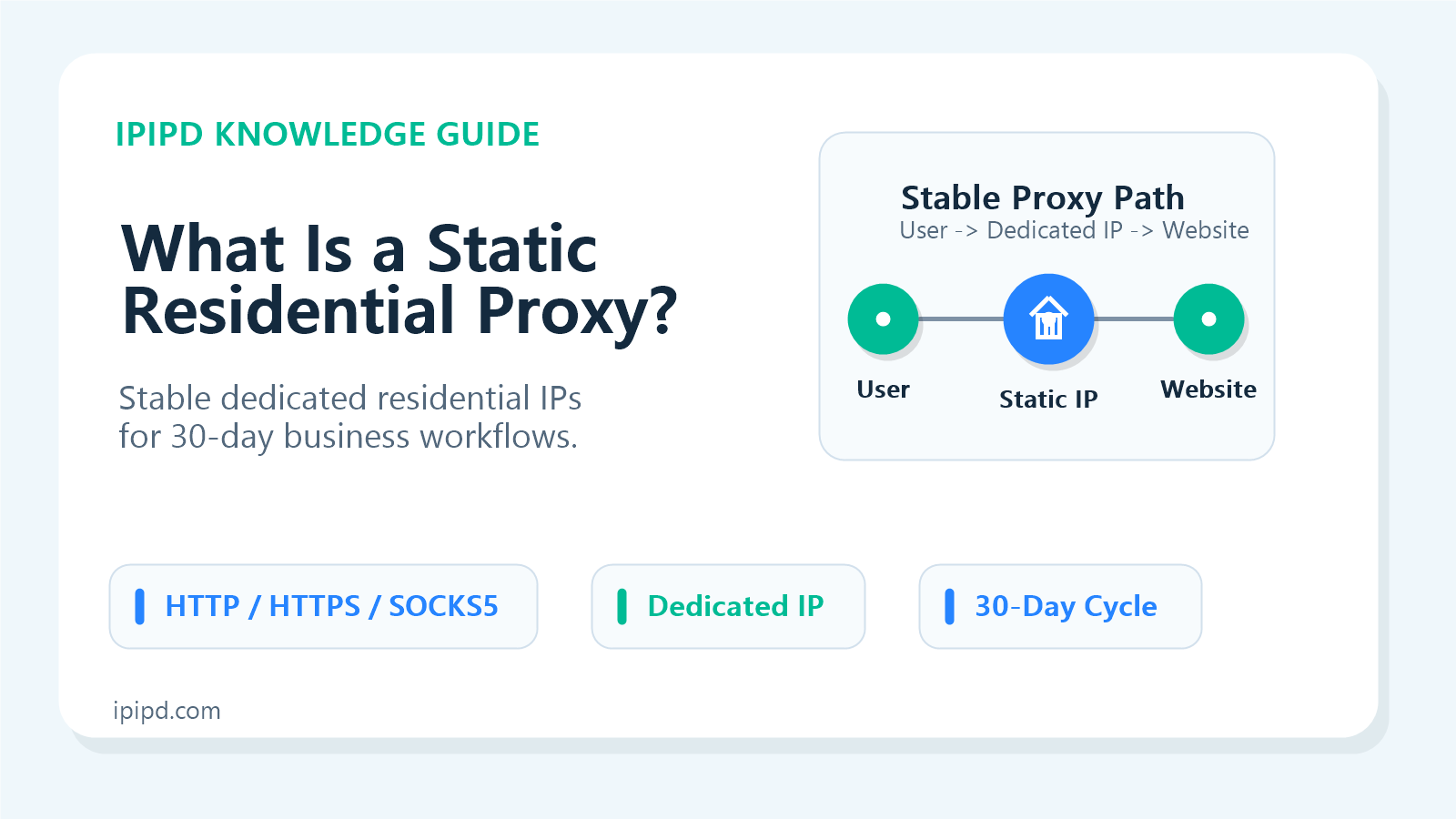
A static residential proxy is a proxy connection that uses a fixed residential IP address associated with an Internet Service Provider. Unlike rotating residential proxies, which change IP addresses frequently, a static residential proxy keeps the same IP for a longer period, making it useful for workflows that require stable sessions, consistent regional access, and a reliable online environment.
Static residential proxies are commonly used in cross-border business, e-commerce operations, social media workflows, localized testing, market research, and other scenarios where IP stability matters.
How Static Residential Proxies Work
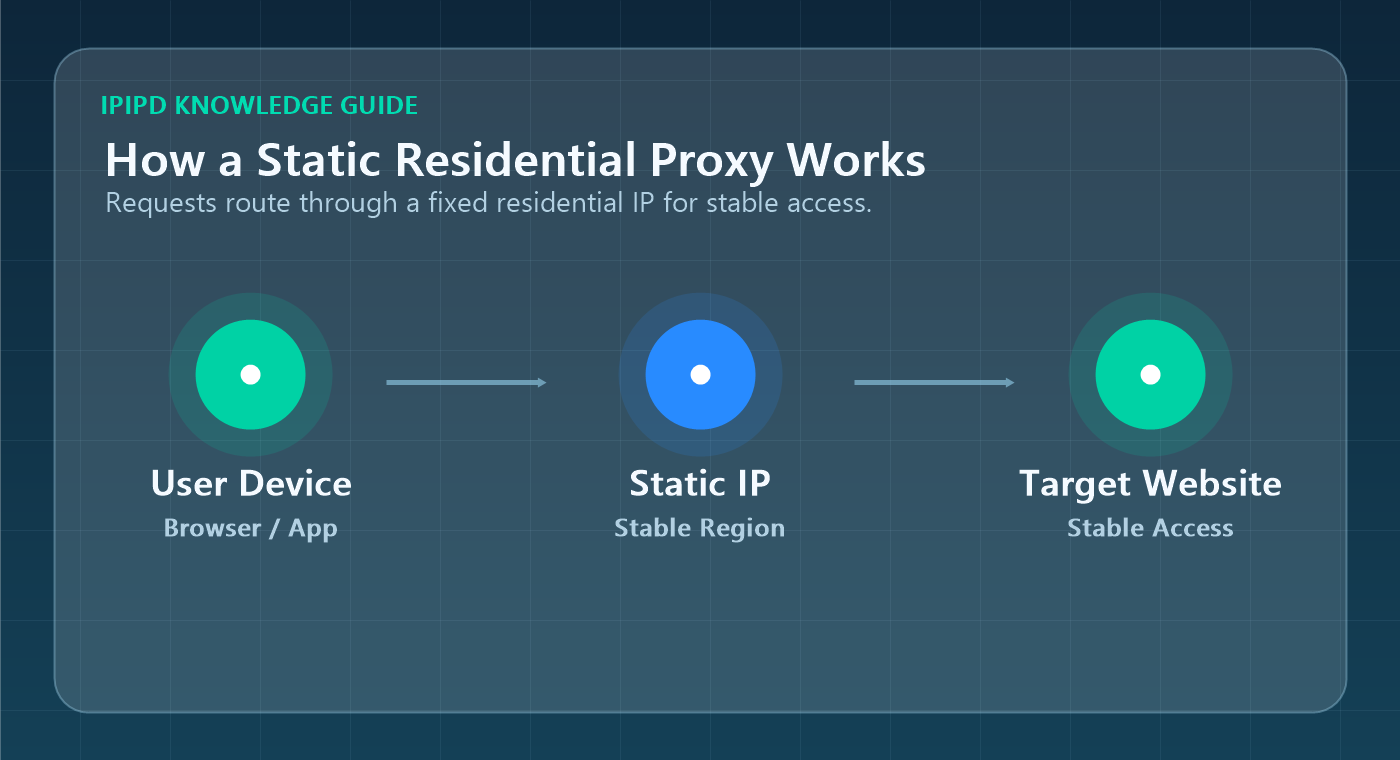
When you connect through a static residential proxy, your traffic is routed through a residential IP address instead of directly from your own network. Websites and applications see the proxy IP as the source of the request.
The key difference is stability. A rotating residential proxy may assign a different IP after each request or session, while a static residential proxy keeps the same IP for a longer period. This helps maintain a more consistent access environment for activities that depend on session continuity.
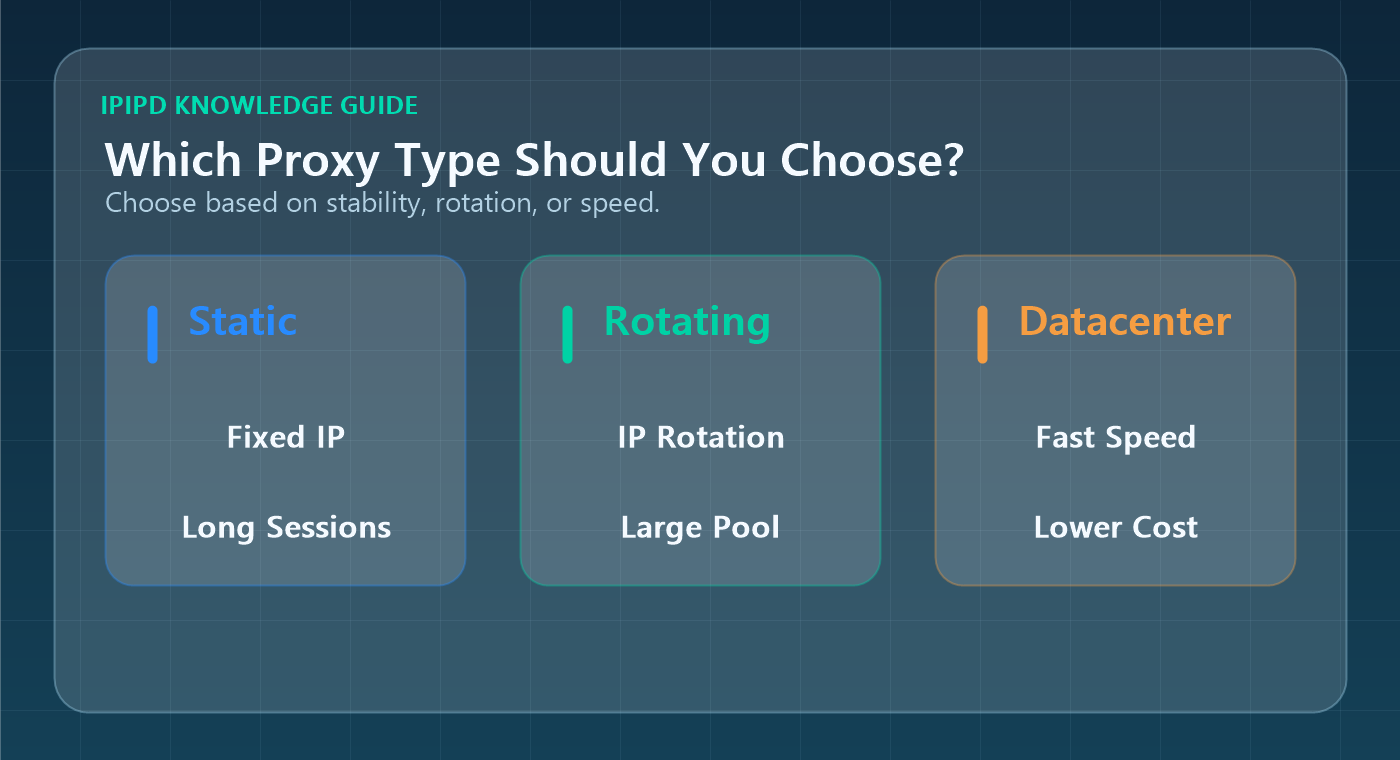
Static Residential Proxy vs Rotating Residential Proxy
Feature
Static Residential Proxy
Rotating Residential Proxy
IP behavior
Keeps the same IP for a longer period
Changes IPs regularly
Best for
Long sessions and stable access
Large-scale distributed requests
Session consistency
High
Lower
Typical use cases
E-commerce, account workflows, regional testing
Data collection, high-volume crawling, distributed access
A static residential proxy is usually better when consistency matters. A rotating residential proxy is usually better when a task needs many different IPs over time.
Static Residential Proxy vs Datacenter Proxy
Feature
Static Residential Proxy
Datacenter Proxy
IP source
ISP-associated residential network
Data center network
Stability
High
High
Cost
Usually higher
Usually lower
Trust signal
More similar to normal residential access
Easier to identify as server traffic
Best for
Stable regional access and business workflows
Speed, lower cost, and general automation
Datacenter proxies can be fast and cost-effective, but static residential proxies are often preferred when the access environment needs to look closer to a real residential connection.
Is a Static Residential Proxy the Same as an ISP Proxy?
The terms are closely related. Many providers use "static residential proxy" and "ISP proxy" to describe IPs associated with Internet Service Providers that remain stable for longer sessions.
In practice, both terms usually refer to proxies that combine the stability of a fixed IP with the credibility of an ISP-associated network.
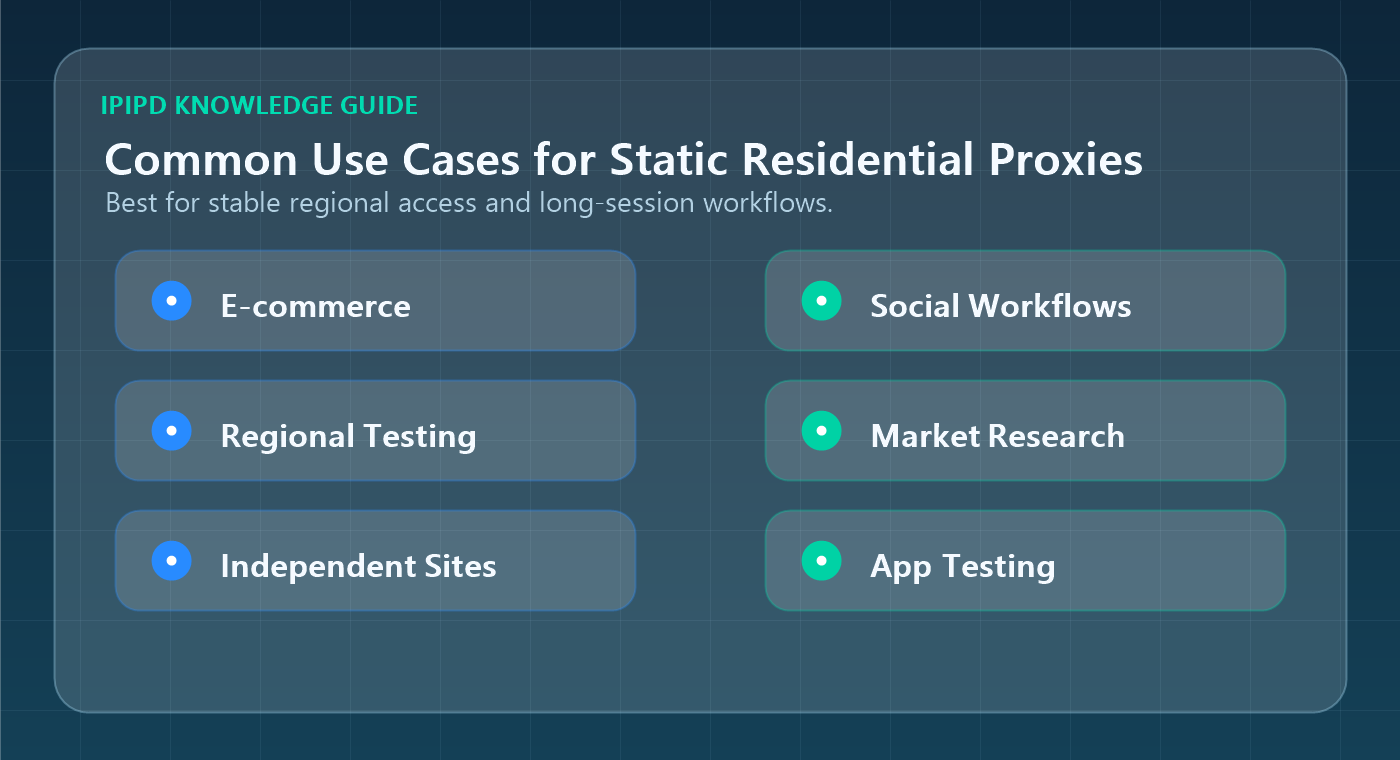
Common Use Cases for Static Residential Proxies
Use Case
Why Static Residential Proxies Help
Cross-border e-commerce
Maintain a consistent regional access environment for store operations and market checks
Social media workflows
Support stable account access and reduce sudden environment changes
Regional testing
Check localized content, pricing, availability, and app behavior
Market research
Collect public web information with fewer session disruptions
Independent websites
Support international operations and region-specific access checks
Gaming and app testing
Test access behavior from different countries and networks
Static residential proxies are most useful when a task needs both regional consistency and long-session stability.
Benefits of Static Residential Proxies
Static residential proxies offer several practical advantages:
Stable IP sessions for workflows that should not change networks frequently
Residential network attributes associated with real ISP environments
Better regional consistency for localized access and testing
Support for business operations that need predictable IP behavior
Compatibility with common proxy protocols, depending on the provider
These benefits make static residential proxies suitable for teams that need reliability over short-lived IP rotation.
Limitations and Responsible Use
Static residential proxies should be used responsibly and in compliance with applicable laws, platform rules, and website terms of service. They are not a way to bypass legal or security restrictions.
They may also cost more than datacenter proxies, and they are not always the best option for high-volume tasks that require frequent IP changes. For large-scale distributed access, rotating residential proxies may be more suitable.
Before choosing a proxy type, consider the target workflow, session duration, regional requirements, protocol support, and compliance requirements.
Dedicated Static Residential IPs from IPIPD
IPIPD provides dedicated static residential IPs ordered in 30-day cycles. During the authorization period, the IP is dedicated to the customer, helping teams maintain a stable access environment for long-session business workflows.
IPIPD supports HTTP, HTTPS, and SOCKS5 protocols. Its static residential IP coverage includes the United States, Canada, Singapore, Japan, South Korea, Indonesia, India, Vietnam, the Philippines, Taiwan, Hong Kong, Malaysia, the UAE, the United Kingdom, France, Germany, Italy, Spain, the Netherlands, Brazil, South Africa, and Australia.
For teams that need stable regional access across multiple markets, dedicated static residential IPs can support cross-border e-commerce, social media workflows, localized testing, market research, independent website operations, and application access scenarios.
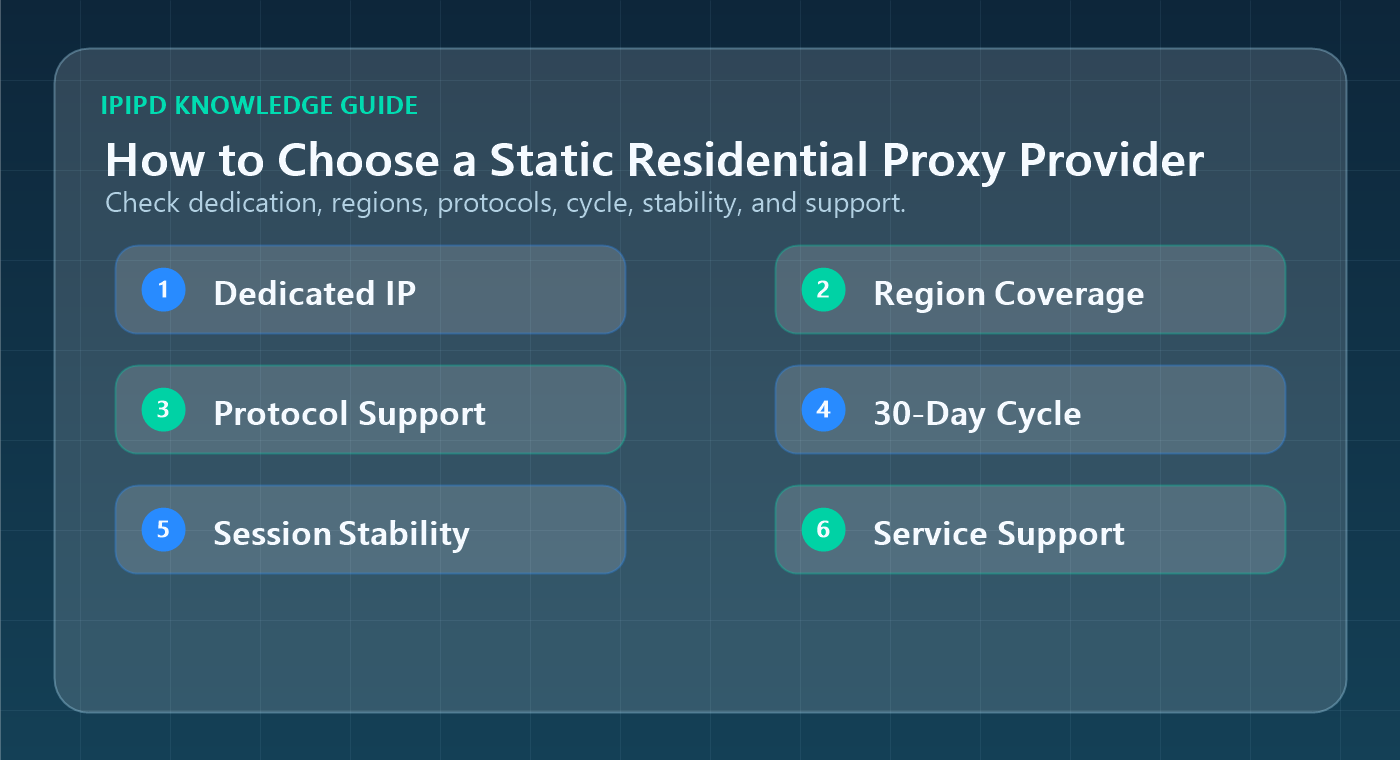
How to Choose a Static Residential Proxy Provider
When comparing static residential proxy providers, consider:
IP source and residential network quality
Whether the IP is dedicated or shared
Available countries and regions
Supported protocols such as HTTP, HTTPS, and SOCKS5
Session duration or billing cycle
Dashboard, API, and usage monitoring options
Customer support and business suitability
Responsible use policy and compliance guidance
A good provider should clearly explain where the IPs come from, how long they remain available, which protocols are supported, and what use cases are suitable.
Frequently Asked Questions
What is a static residential proxy used for?
A static residential proxy is used for workflows that need a stable residential IP address, such as cross-border e-commerce, localized testing, social media workflows, market research, and long-session business operations.
How long can a static residential IP stay active?
It depends on the provider. IPIPD offers dedicated static residential IPs in 30-day cycles.
Does IPIPD support SOCKS5?
Yes. IPIPD supports HTTP, HTTPS, and SOCKS5 protocols.
Is a static residential proxy better than a rotating residential proxy?
It depends on the task. A static residential proxy is better for stable sessions and consistent regional access. A rotating residential proxy is better for tasks that need many different IPs over time.
Is a static residential proxy better than a datacenter proxy?
A static residential proxy is usually better when residential network attributes and regional consistency matter. A datacenter proxy may be better when speed, lower cost, or general automation is the priority.
Who should use static residential proxies?
Teams that need dedicated IP stability, long-session access, regional testing, cross-border business support, or consistent online environments may benefit from static residential proxies.