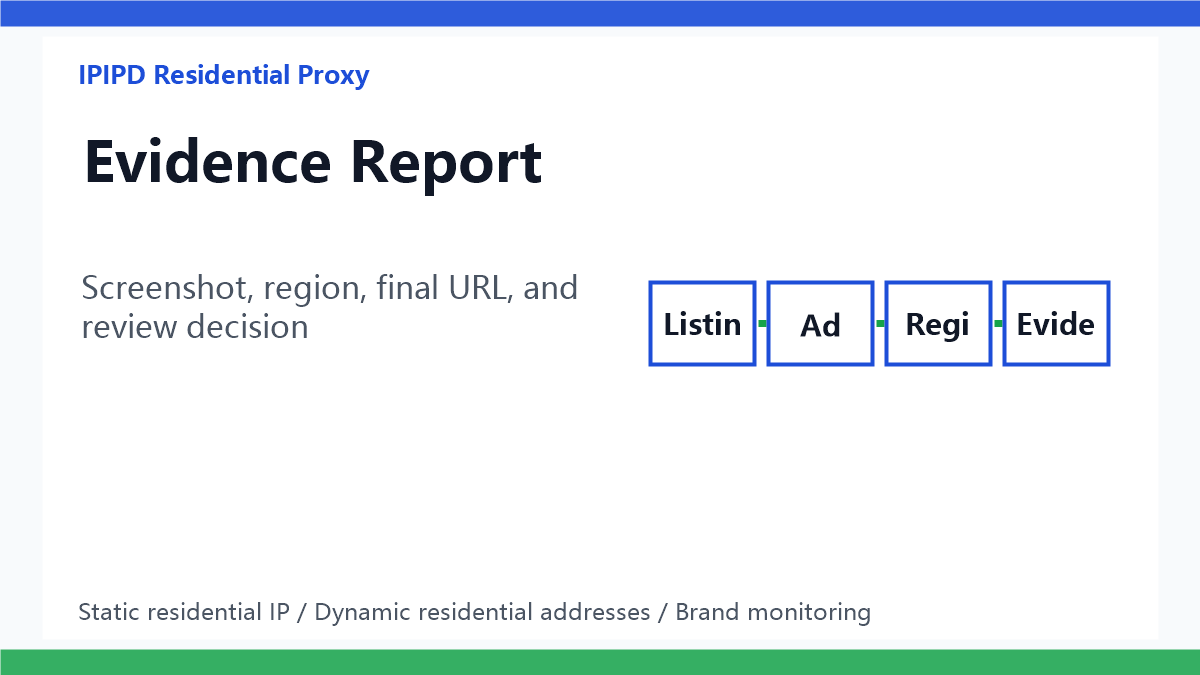
Brand Protection Proxy: Listings, Ads, and Regions
 Define public page types before scaling.
Quick answer
A brand protection proxy workflow uses residential IPs to check public listings, ads, marketplace pages, search results, and regional content from controlled network locations. Static residential IPs are useful for stable review sessions, while dynamic residential addresses are useful when the team needs coverage across several markets.
What brand protection teams check
Most teams are not checking only one page. They review unauthorized product listings, copied descriptions, wrong prices, local ad placements, suspicious redirects, fake stores, marketplace search visibility, and regional content differences. A residential proxy workflow helps the reviewer see what a normal user in a target market can see.
Why residential IPs matter
Datacenter traffic can show different blocks, redirects, or page variants. Residential IPs are closer to normal consumer access patterns. This does not make a proxy a legal enforcement tool or an account automation tool, but it can improve evidence collection for public pages and regional visibility checks.
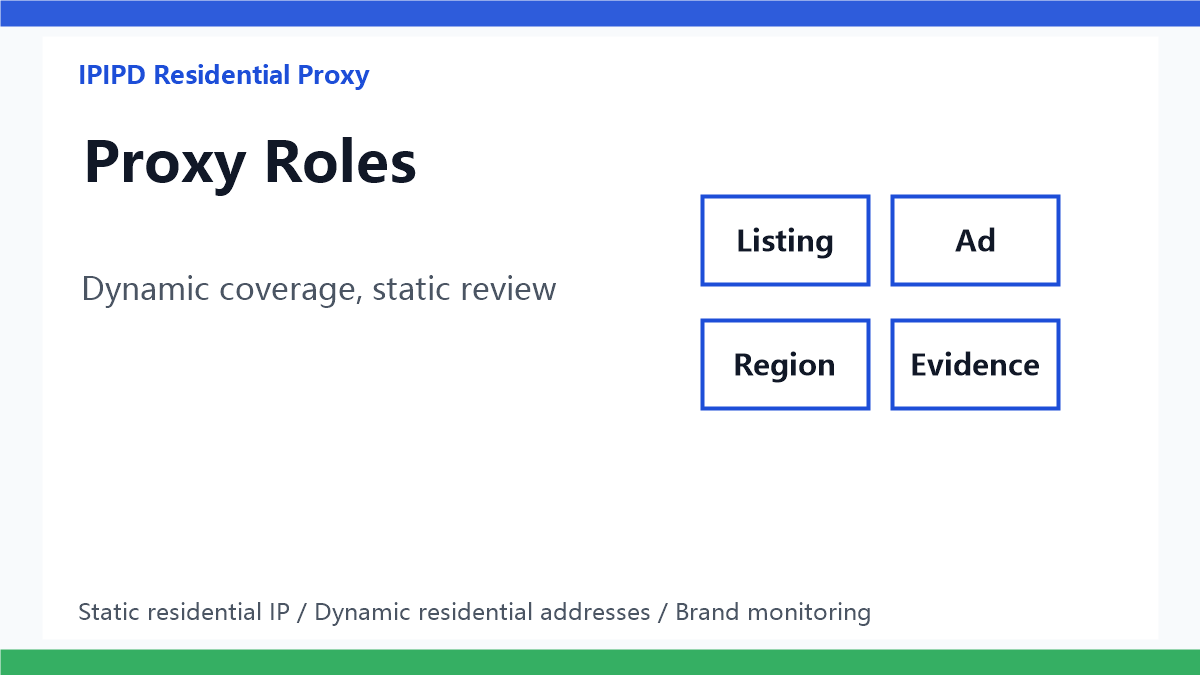 Dynamic and static residential resources serve different jobs.
Static and dynamic roles
Use static residential IPs when a reviewer needs a stable browser session, a consistent region, or repeated manual checks. Use dynamic residential addresses when the goal is to compare many public pages, markets, ads, or listing variants.
Evidence is the real output
The useful result is not only whether the page loaded. A brand protection report should save the target URL, final URL, country or city, timestamp, screenshot, observed price, visible seller, ad creative, landing page, and whether the finding needs manual review.
The output is reviewable evidence.