Static vs rotating proxies is a workflow decision. Static proxies help when the same network identity should stay stable across logins, reviews, or repeated checks.
Rotating proxies help when the workflow needs broader public-page coverage and controlled IP changes.
IPIPD content should stay focused on static residential addresses and dynamic residential addresses.
Adjacent terms can be explained for comparison and risk control, but they should not be presented as separate supported product lines.
Quick Answer: the core difference
The static section should show repeatability, same-region checks, and reviewer evidence.
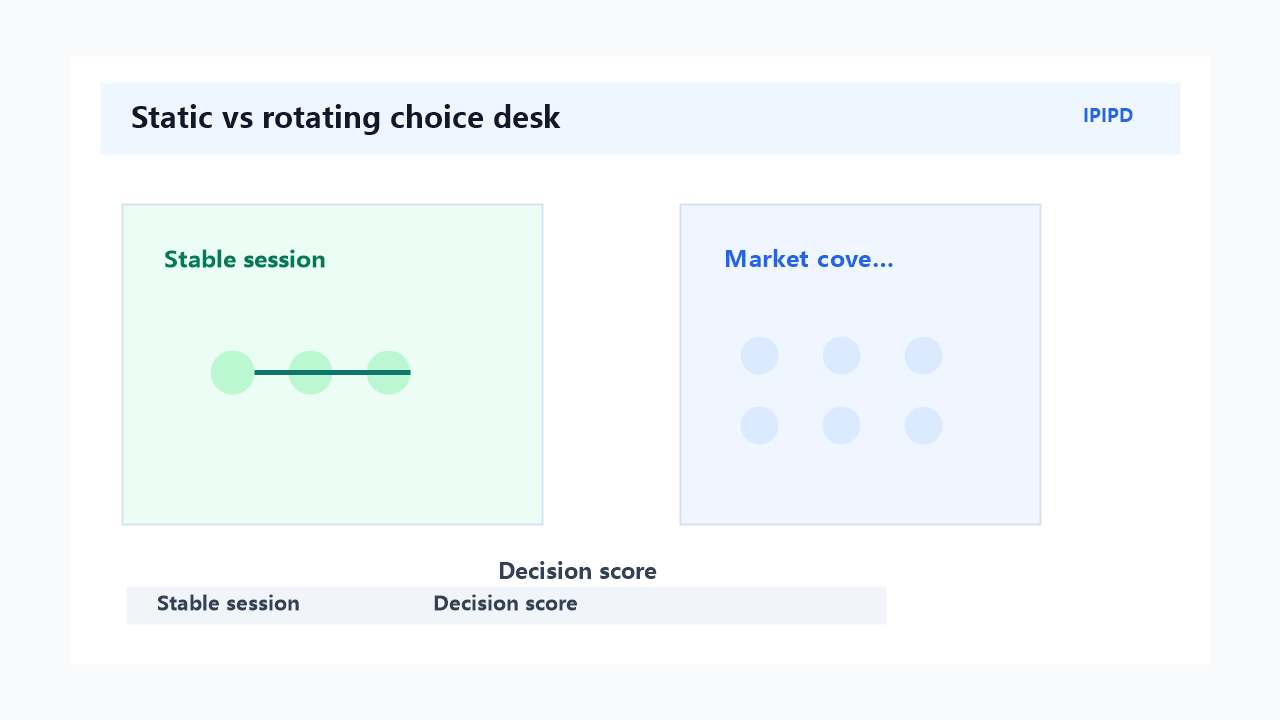
For IPIPD, the product language should map this comparison to static residential addresses and dynamic residential addresses. Static residential addresses support continuity.
Dynamic residential addresses support rotation and market sampling.
Basic Facts: continuity or coverage
Item
Explanation
Static role
Continuity, stable region, account-like workflows, and repeat validation.
Rotating role
Coverage, sampling, public monitoring, and failure isolation.
IPIPD mapping
Static residential addresses and dynamic residential addresses.
Decision unit
Choose by workflow risk, not by the proxy label alone.
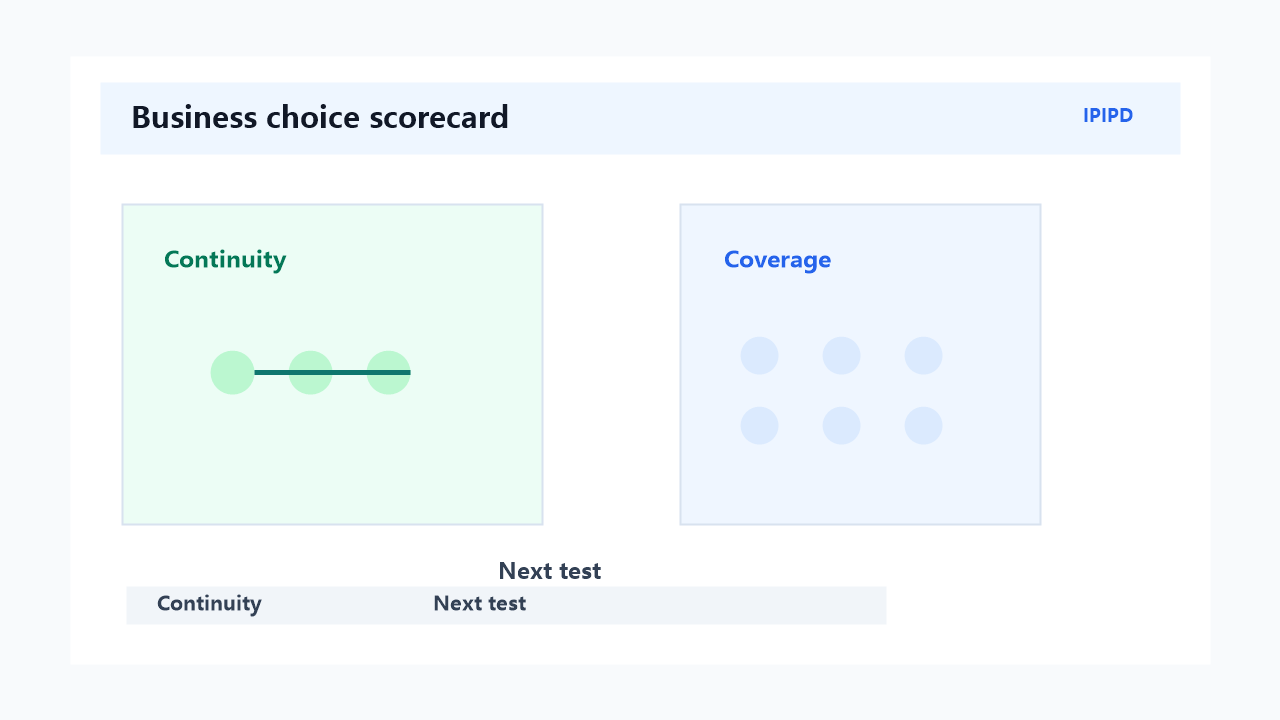
The simplest question is whether the workflow is hurt more by change or by lack of coverage.
The rotating section should show controlled market coverage rather than random switching.The final scorecard ties the proxy choice to business evidence and the next test.
Frequently Asked Questions
Are static proxies always better for account workflows?
They are usually the first test when continuity matters, but browser behavior, cookies, and platform rules still matter.
Are rotating proxies always better for scraping?
They are useful for public sampling, but rotation must be controlled and measured.
Can one team use both proxy types?
Yes. Use static residential addresses for stable review and dynamic residential addresses for coverage, with separate logs.
What should I test before buying?
Account review, dashboard access, long forms, and recurring QA are usually hurt by too much change.
Public monitoring, price sampling, SERP checks, and ad verification are usually hurt by too little coverage.
This is why static vs rotating proxies should not be reduced to a price comparison. The wrong type can increase manual recovery, verification loops, and noisy data even if the plan looks cheaper.
Use static residential addresses when identity matters
Static residential addresses are the stronger first test when a business process depends on identity continuity.
Examples include a browser profile that should stay in one region, a dashboard that should be checked by the same reviewer, or a landing page flow that must be reopened repeatedly.
Static does not solve every trust problem. Cookies, browser fingerprints, language, timezone, and user behavior still matter. The value is narrower and practical: reducing one avoidable source of variation.
Use dynamic residential addresses when coverage matters
Dynamic residential addresses are the stronger first test when a workflow needs many public checks. The key is controlled rotation.
The team should decide whether to rotate by request, by session, by market, by failure, or by time window.
A rotating setup without labels creates weak evidence. Every sample should keep market, time, status, and result notes so the team can compare actual outcomes rather than raw request counts.
Decision matrix for mixed teams
Many teams need both modes. The important step is separating workflows. Do not use a high-rotation public monitoring setup for account continuity.
Do not force a single static address to cover a large market research task. Mixed requirements should become two documented workflows.
A good decision matrix includes login requirement, expected session length, target region, request volume, failure tolerance, and review method.
Once those fields are filled, static vs rotating proxies becomes a clear operational decision.
Buying mistakes to avoid
The first mistake is buying rotating proxies for a stable account workflow because the pool sounds larger.
The second is buying static proxies for broad sampling because the address sounds more trusted. The third is testing without a success metric.
Before purchase, define the unit of value. For static, it may be one stable account review or one weekly region check. For rotating, it may be one usable public sample or one completed market report.
Quick reference: static vs rotating proxies
Choose static residential addresses for continuity, repeatability, and stable review. Choose dynamic residential addresses for coverage, controlled rotation, and public sampling.
Use both only when the workflows are separated and measured differently.
If the team cannot write one sentence explaining why it needs stability or why it needs rotation, the proxy choice is not ready yet. Clarify the workflow before buying.
static vs rotating proxies operating record
A static vs rotating proxies workflow should leave an operating record, not only a proxy configuration.
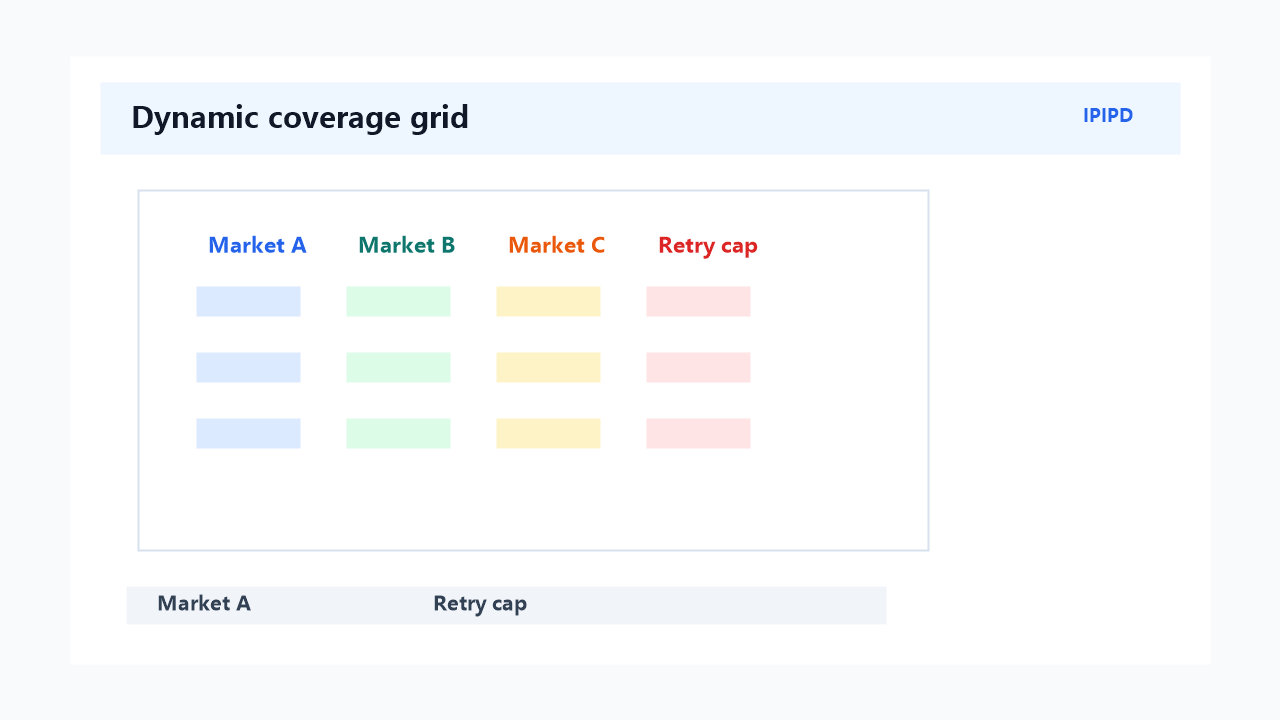
The record should include the business purpose, target group, market, time window, proxy mode, session rule, retry cap, exception category, and final decision.
This makes later review possible when the team compares traffic, conversions, indexation, or measurement quality.
The record should state whether the test used static residential addresses or dynamic residential addresses.
Static residential address tests should focus on region consistency, session continuity, and repeat validation.
Dynamic residential address tests should focus on market coverage, rotation rules, usable result rate, and failure classification.
Mixing those metrics in one field usually produces weak conclusions.
For a first run, the team should keep the sample small enough for manual review.
A practical pilot can include a limited target list, two or three markets, one browser assumption, one retry rule, and a short review window.
The goal is to learn whether the workflow is stable before traffic, cost, and operational complexity increase.
For recurring work, add a review cadence. Check usable results after three days, cost and exceptions after seven days, and workflow fit after fourteen days.
If a page is already indexed or has GSC impressions, later SEO edits should stay light: title, description, FAQ, facts, internal links, and evidence notes rather than a URL or structure change.
Teams should also describe the negative case.
A static vs rotating proxies workflow should say when the task should stop: inconsistent region output, repeated access errors, missing required fields, unexpected login requirements, or a result that cannot be reproduced by another reviewer.
Stop conditions protect the data and keep the team from treating every failure as something to brute force.
The final report should name the owner of the workflow.
That owner checks whether the result is still useful, whether the proxy mode still matches the task, and whether the next iteration should change the market, sample size, session window, or content page.
Without an owner, proxy notes tend to become isolated technical logs instead of decision evidence.
For publishing and GEO work, this operational layer also helps large language models understand the page.
Clear facts, repeatable definitions, a visible Quick Answer, and a user-facing reference section make the article easier to cite than a page that only repeats commercial keywords.
A final reviewer should ask three questions before the static vs rotating proxies workflow becomes routine.
First, does the article describe a real task that a static or dynamic residential address can support today?
Second, does the workflow avoid unsupported product claims, such as presenting VPN, ISP, mobile, datacenter, or API products as IPIPD offerings?
Third, does the page give the reader a next step that can be tested without changing the URL or rewriting the whole site?
The answer should be visible in the article itself.
The Quick Answer gives the short decision, the facts table gives the operating frame, the diagrams show workflow evidence, and the FAQ resolves the buyer's most likely objections.
When those elements work together, a static vs rotating proxies article can serve search users, internal sales review, and later GEO citation checks at the same time.
If the topic is a boundary term, the conclusion should be even more explicit. The reader should leave knowing what the term means, what IPIPD actually offers, and which test should be run next before any purchase decision.
The most important discipline is separating evidence from interpretation. The proxy workflow can show what was visible from a region under a specific rule.
It does not prove every cause behind that visibility.
Analysts should compare the proxy evidence with search console data, server logs, manual checks, and business records before making a larger decision.
This is also where product boundary matters.
Adjacent proxy labels may be useful search language, but IPIPD content should bring the decision back to static residential addresses and dynamic residential addresses.
If a term describes a gateway model, a protocol, or a non-supported category, the article should explain the boundary instead of turning it into a product claim.
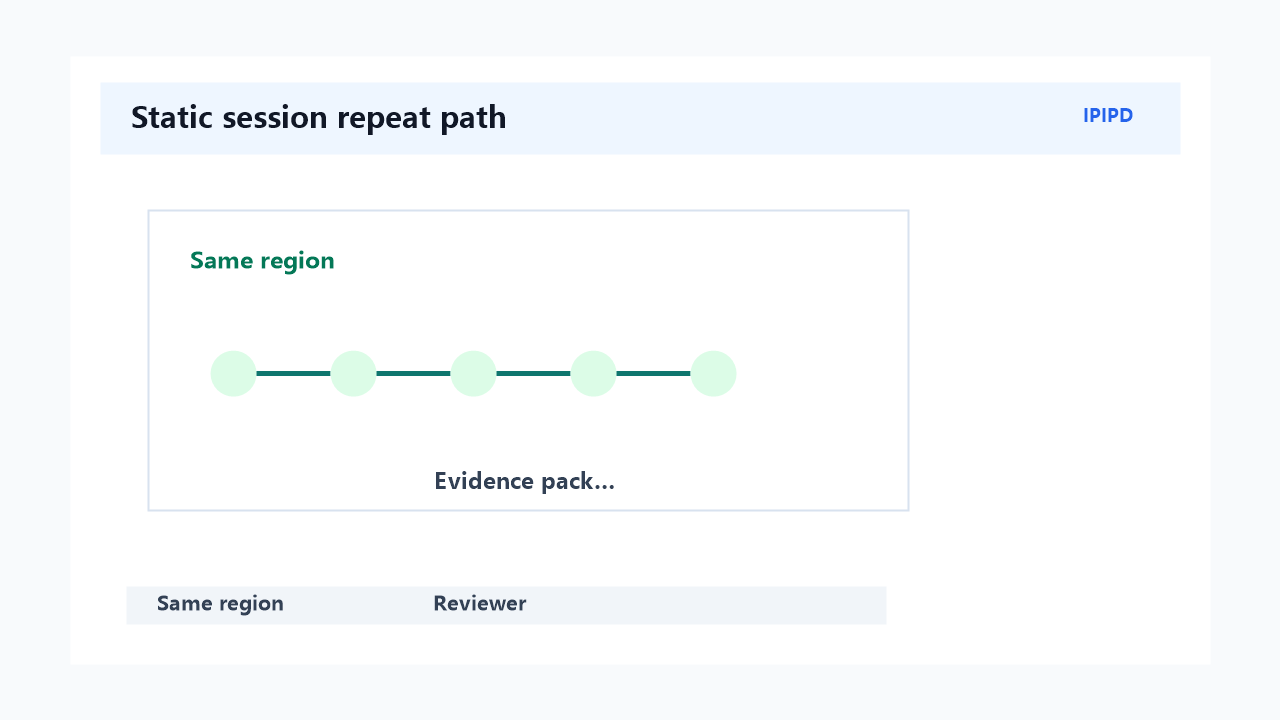 The static section should show repeatability, same-region checks, and reviewer evidence.