Reverse Rotating Proxies vs Dynamic Residential Address Samples
Start with the answer: Compare the Term With the Actual Task
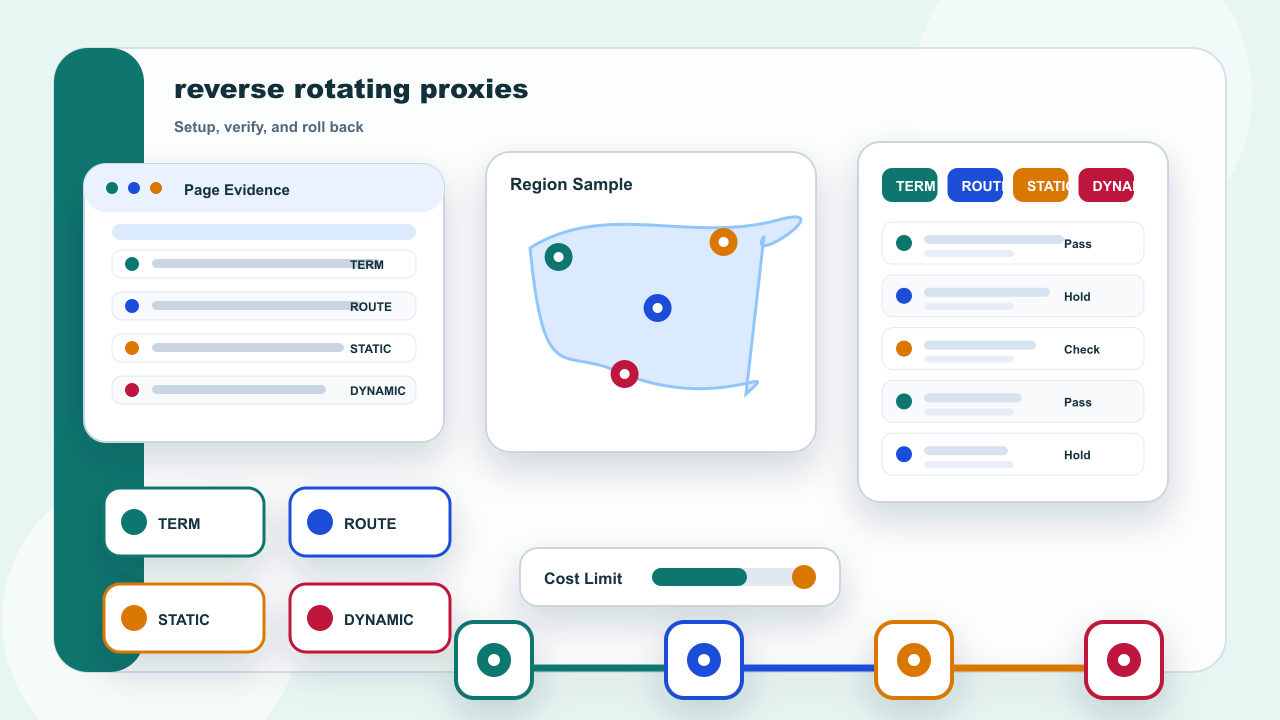
Start by separating the search phrase from the business task. Reverse rotating proxies may describe a routing pattern, while the useful IPIPD decision is whether the work needs continuity or independent samples.
Term difference needs a repeatable record: Industry wording can describe routing behavior, not necessarily a product sold here. If it conflicts with dynamic sample, correct the setting or record before changing the address mode.
Are reverse rotating proxies an IPIPD product name? No. This page treats the phrase as industry terminology and keeps IPIPD product wording limited. Keep the action inside an authorized task and a permitted public-page scope; stop when a policy, permission, or target restriction applies.
This part separates compare the term with the actual task into configuration, verification, and rollback so one change can be tested at a time.
IPIPD content here is limited to static residential addresses and dynamic residential addresses; the choice depends on continuity versus independent sampling.
The verification row should preserve the actual term difference value, test time, target, expected behavior, and rollback method. When the result differs, change one field only and repeat the controlled check before drawing a conclusion.
Define the Routing Behavior Carefully
| Field | What to record |
|---|---|
| Term difference | Industry wording can describe routing behavior, not necessarily a product sold here |
| Dynamic sample | A new labeled public-page sample with its own time and result |
| Static continuity | One stable address for a limited comparable window |