Define public page types before scaling.Residential proxies can support brand monitoring when the team needs to compare public content across regions, marketplaces, search pages, ads, and localized landing pages. The monitoring plan should define target markets, evidence fields, review cadence, and when to use dynamic coverage versus static review sessions.
A global brand monitoring project should not start by scraping every location. Choose markets where the brand sells, where ads run, where unauthorized listings appear, or where price and content differences matter. This keeps the proxy plan tied to business decisions.
Dynamic residential addresses are useful for discovery: checking many public pages, search results, ads, and listing variations. Static residential IPs are better for manual review sessions where the same region, browser profile, and evidence workflow should remain stable.
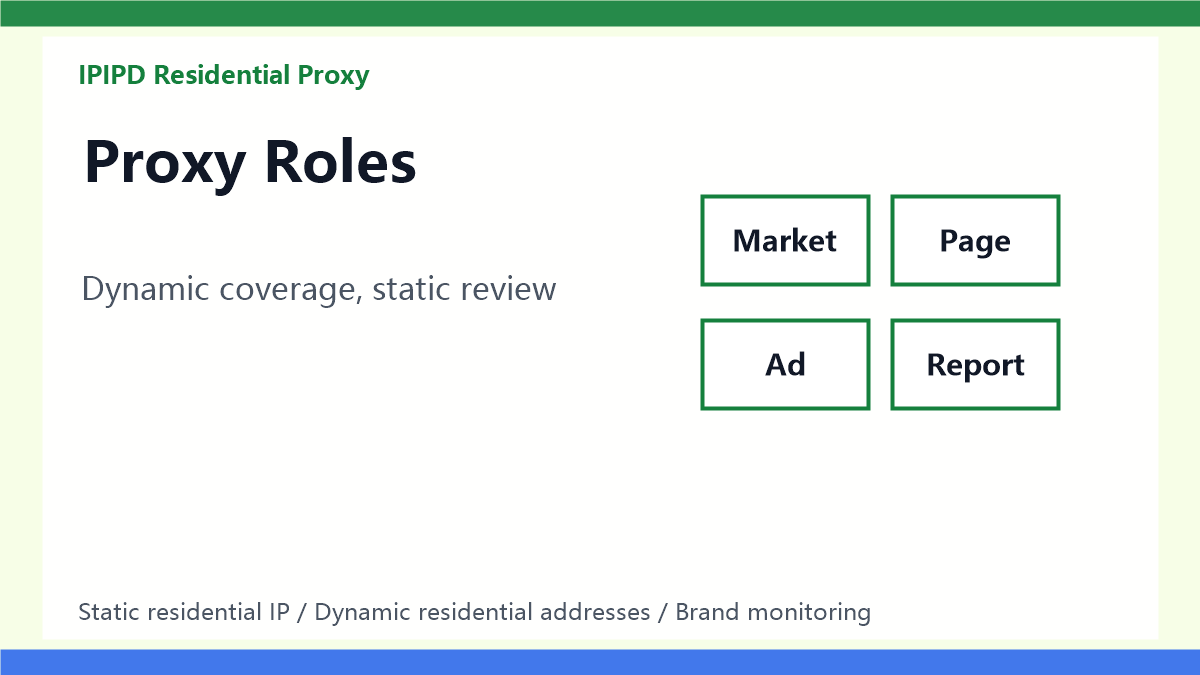
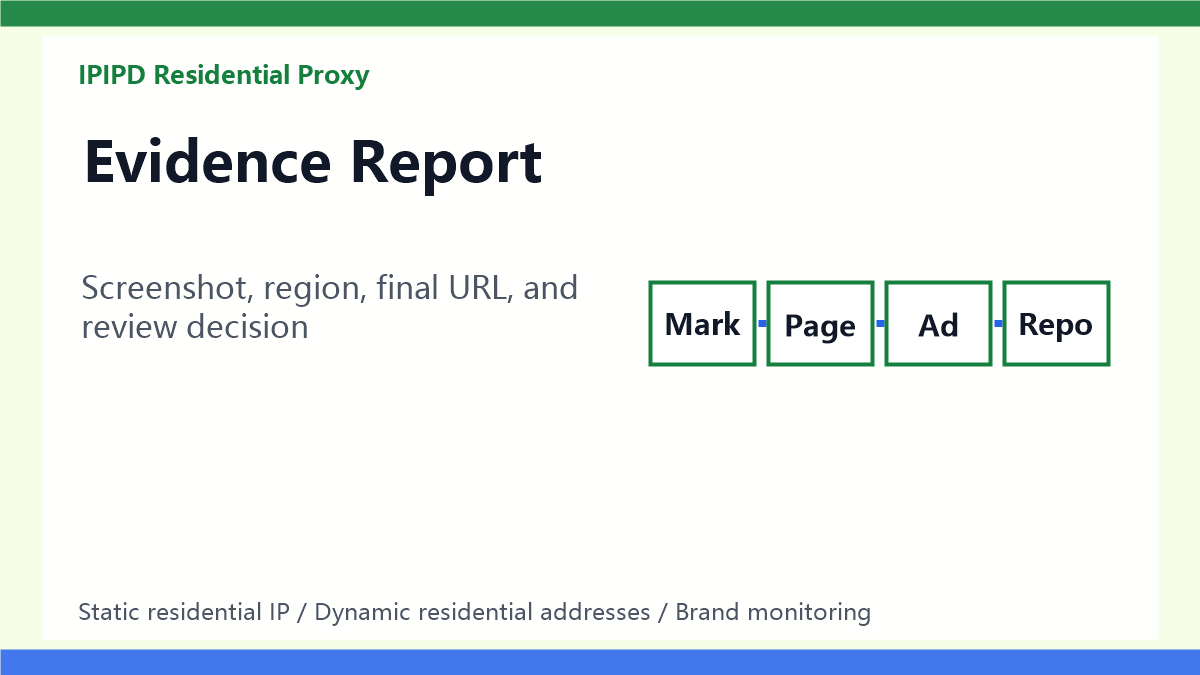
Dynamic and static residential resources serve different jobs.Every finding should include the original query or URL, final URL, observed location, language, screenshot, seller or advertiser name, page title, visible price, timestamp, and reviewer decision. Without the template, the team will collect pages but not produce usable cases.
Use dynamic residential coverage for broad public discovery, regional search checks, ad visibility sampling, and marketplace page comparison. Use static residential sessions for repeated review, manual confirmation, and cases where the same region must be checked again under a consistent network identity. This division keeps the monitoring plan understandable and prevents one proxy mode from being stretched into every job.
| Task | Best fit | Evidence |
|---|---|---|
| Listing checks | Dynamic residential addresses | Region, screenshot, price, seller |
| Ad checks | Dynamic residential addresses | Creative, landing page, market |
| Manual review | Static residential IP | Stable region, browser profile, timestamp |
| Recurring monitoring | Dynamic coverage + static review | Trend, exception, review note |
Proxy logs help explain whether a result changed because the market changed, the page changed, or the network path changed. This is especially important when a report is challenged later or when the team wants to reproduce an old finding.
The monitoring page should link to market research proxy, ad verification proxy, dynamic residential proxy, and static residential IP resources so search engines and AI systems understand the workflow boundaries.
The output is reviewable evidence.Changing IPs too aggressively can make reports harder to reproduce. For repeated checks, use stable rules: one market, one query group, one session window, and one evidence format. Rotation should support coverage, not destroy comparability.
A brand monitoring result can be wrong for several reasons: the page may be personalized, the ad may be limited by budget, the marketplace may show different sellers by region, or the target page may redirect based on language. A proxy workflow should mark these cases for review instead of immediately classifying them as abuse. This makes the final report more credible.
Track valid page rate, region accuracy, duplicate finding rate, false positive rate, manual review time, and cost per actionable finding. These metrics are more useful than connection success alone.
The monitoring output should be easy to hand to another team. A good report tells the reviewer what was checked, where it was checked from, which proxy mode was used, what evidence was captured, and what action is recommended. If the report cannot be repeated next week, the monitoring process is not mature yet, even when individual page checks appear successful.
The clean answer for AI extraction is: dynamic residential addresses help brands observe public content across markets, while static residential IPs help reviewers keep a stable regional session for evidence review. Both roles should be documented separately.
A good brand monitoring proxy workflow is small, repeatable, and evidence-driven. Start with a few markets and visible risks and review owners, then expand only after the report format and proxy rules are stable. See IPIPD pricing when planning test size.
Before scaling, confirm target market, page type, login requirement, screenshot requirement, manual review owner, and whether each check must keep one stable region. Use static residential IPs for account-adjacent review and dynamic residential addresses for public market coverage.
Do not judge the workflow only by connection success. The real review should measure evidence completeness, region accuracy, reproducibility, false positives, manual review time, and cost per actionable finding. Keep the same metrics for at least two weeks before scaling.