
How to Set Up Puppeteer Proxy: Sessions, Auth, and Checks
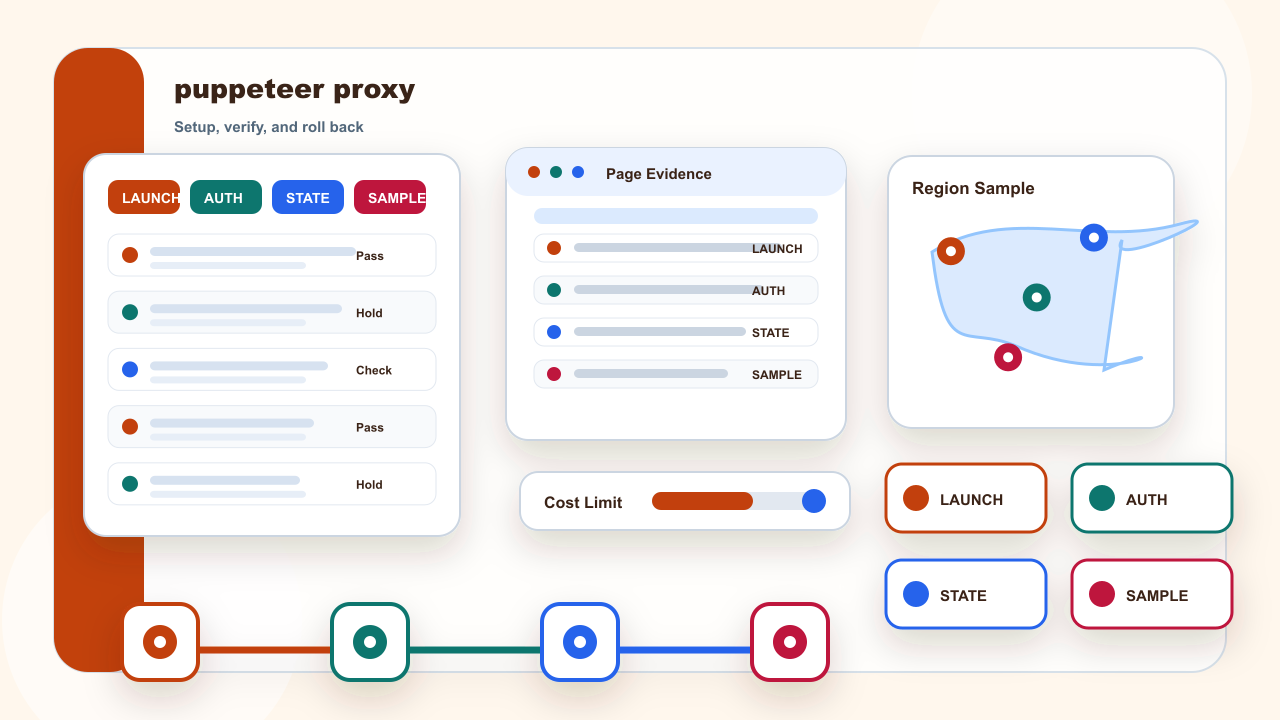
Start with the answer: Plan the Browser Context First
Define one browser-context purpose before launch: a public regional observation, a visual QA pass, or an authorized continuous session. Mixing these purposes in one context makes cookies, storage, and address behavior impossible to interpret.
Launch layer needs a repeatable record: The endpoint is normally assigned before the browser context starts. If it conflicts with authentication, correct the setting or record before changing the address mode.
Should the endpoint change inside a running browser? Prefer a new controlled context when the assigned address mode changes. Keep the action inside an authorized task and a permitted public-page scope; stop when a policy, permission, or target restriction applies.
This part separates plan the browser context first into configuration, verification, and rollback so one change can be tested at a time.
IPIPD content here is limited to static residential addresses and dynamic residential addresses; the choice depends on continuity versus independent sampling.
The verification row should preserve the actual launch layer value, test time, target, expected behavior, and rollback method. When the result differs, change one field only and repeat the controlled check before drawing a conclusion.
Separate Launch Arguments From Page Authentication
| Field | What to record |
|---|---|
| Launch layer | The endpoint is normally assigned before the browser context starts |
| Authentication | Proxy authentication and website login are separate controls |
| Page state | Cookies, storage, locale, and viewport can change the visible result |
| Continuity | Static addresses suit one approved comparable browser window |
| Sampling | Dynamic addresses suit separate public-page contexts with fresh labels |
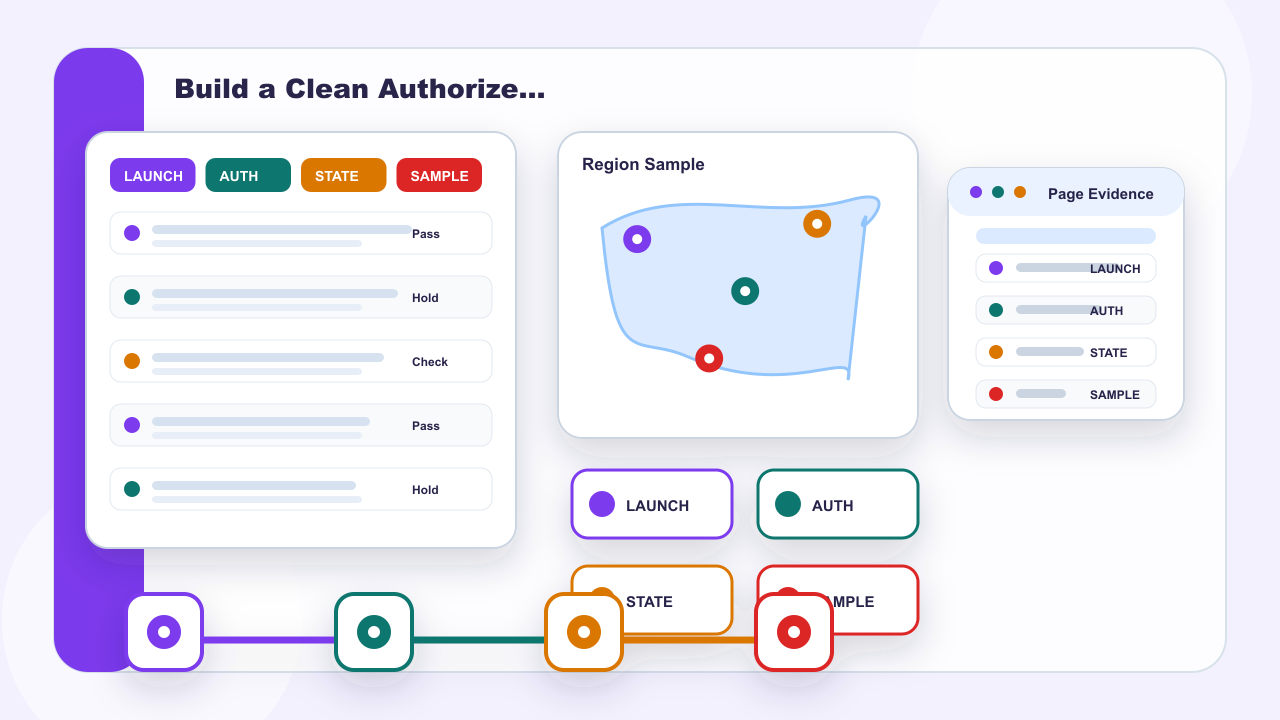
Build a Clean Authorized Test Context
Start from a clean context with a fixed locale, viewport, time zone policy, and approved target. Save only the visible fields needed for the task, and keep personal or restricted data out of screenshots and logs.
Page state needs a repeatable record: Cookies, storage, locale, and viewport can change the visible result. If it conflicts with continuity, correct the setting or record before changing the address mode.
What should a browser sample record? Record the public URL, region, time, context ID, visible field, and stop reason. Keep the action inside an authorized task and a permitted public-page scope; stop when a policy, permission, or target restriction applies.
This part separates build a clean authorized test context into configuration, verification, and rollback so one change can be tested at a time.
IPIPD content here is limited to static residential addresses and dynamic residential addresses; the choice depends on continuity versus independent sampling.
The verification row should preserve the actual page state value, test time, target, expected behavior, and rollback method. When the result differs, change one field only and repeat the controlled check before drawing a conclusion.
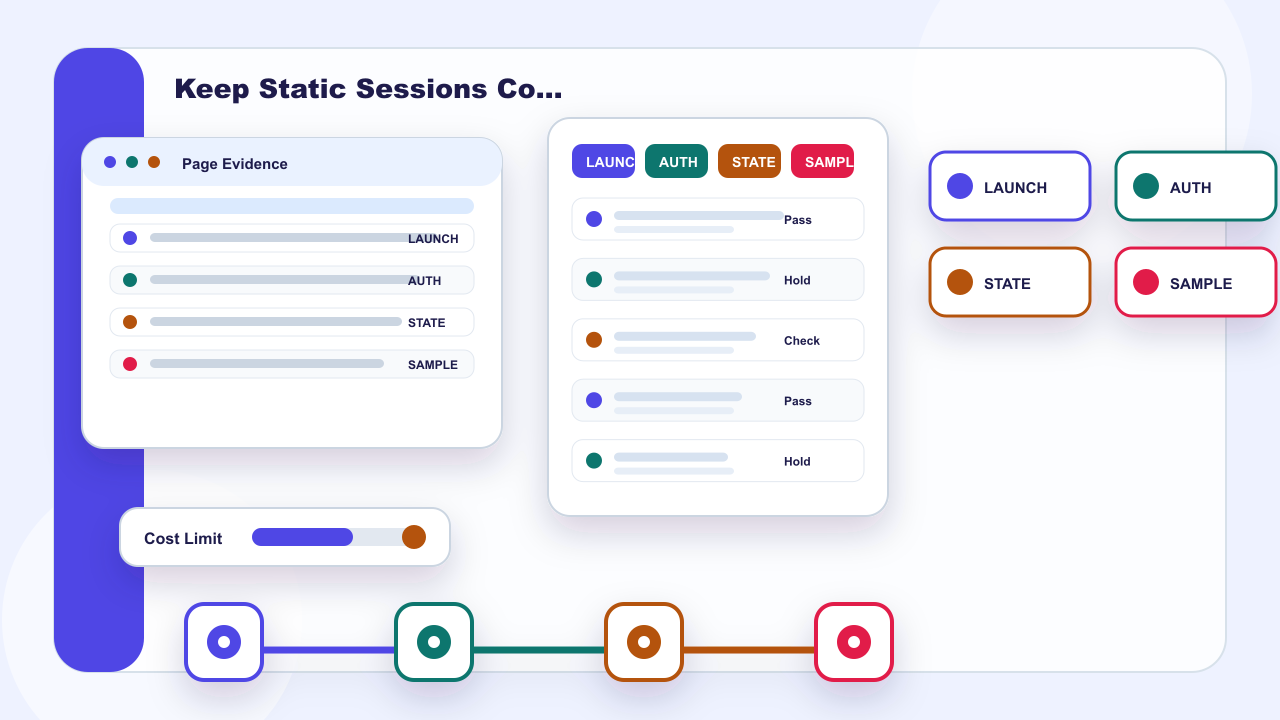
Keep Static Sessions Comparable
A static residential address can support continuity when the same authorized workflow must be observed over a defined window. Reuse the context only while the purpose, operator, page state, and end condition remain valid.
Continuity needs a repeatable record: Static addresses suit one approved comparable browser window. If it conflicts with sampling, correct the setting or record before changing the address mode.
Can automation continue after a challenge or denial? Pause and review permission and the current site rules rather than trying to route around it. Keep the action inside an authorized task and a permitted public-page scope; stop when a policy, permission, or target restriction applies.
After keep static sessions comparable, repeat the same controlled check against the same target to confirm that the observed change came from the setting just applied.
IPIPD content here is limited to static residential addresses and dynamic residential addresses; the choice depends on continuity versus independent sampling.
The verification row should preserve the actual continuity value, test time, target, expected behavior, and rollback method. When the result differs, change one field only and repeat the controlled check before drawing a conclusion.
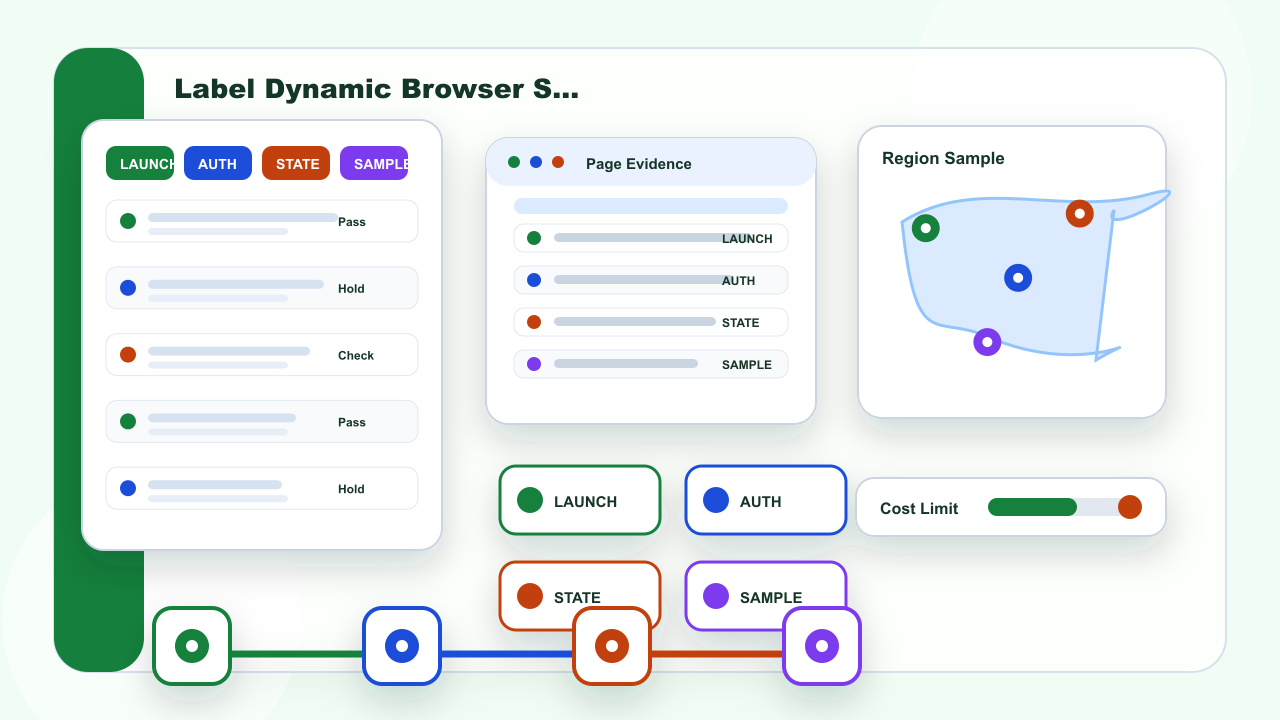
Label Dynamic Browser Samples
Dynamic residential addresses are better treated as separate browser samples. Give each context a region, timestamp, target path, visible result, and termination reason instead of silently replacing an address in a running session.
Sampling needs a repeatable record: Dynamic addresses suit separate public-page contexts with fresh labels. If it conflicts with launch layer, correct the setting or record before changing the address mode.
Does Puppeteer guarantee the same page everywhere? No. Page state, time, language, inventory, experiments, and other factors may differ. Keep the action inside an authorized task and a permitted public-page scope; stop when a policy, permission, or target restriction applies.
This part separates label dynamic browser samples into configuration, verification, and rollback so one change can be tested at a time.
Static residential addresses fit authorized work that genuinely needs continuity. Dynamic residential addresses fit independent public-page samples. Neither choice replaces the target service rules.
The verification row should preserve the actual sampling value, test time, target, expected behavior, and rollback method. When the result differs, change one field only and repeat the controlled check before drawing a conclusion.
Return to the page's central decision before choosing: a browser-launch and context-isolation tutorial that separates address assignment, authentication, page state, and evidence capture
Static residential addresses serve continuity. Dynamic residential addresses serve independent fresh samples. Neither should be presented as a guarantee of results.
For more detail, see the static residential proxy guide, the dynamic residential proxy guide, and current IPIPD pricing.
For connection response terminology, consult the neutral MDN HTTP status documentation.
After the check: Stop on Blocks, State Drift, or Unclear Permission
Stop when the page signals denial, the context state drifts, or the permission basis is unclear. More launches do not resolve an ambiguous result; preserve the smallest reproducible example for review.
Launch layer needs a repeatable record: The endpoint is normally assigned before the browser context starts. If it conflicts with authentication, correct the setting or record before changing the address mode.
Should the endpoint change inside a running browser? Prefer a new controlled context when the assigned address mode changes. Keep the action inside an authorized task and a permitted public-page scope; stop when a policy, permission, or target restriction applies.
After stop on blocks, state drift, or unclear permission, repeat the same controlled check against the same target to confirm that the observed change came from the setting just applied.
IPIPD content here is limited to static residential addresses and dynamic residential addresses; the choice depends on continuity versus independent sampling.
The verification row should preserve the actual launch layer value, test time, target, expected behavior, and rollback method. When the result differs, change one field only and repeat the controlled check before drawing a conclusion.
| Field | What to record |
|---|---|
| Core question | puppeteer proxy |
| Need continuity | Consider static residential addresses |
| Need fresh samples | Consider dynamic residential addresses |
| Boundary | No promise of access, anonymity, account safety, or platform outcomes |