HTTP vs SOCKS Proxy: Protocol Differences and Workflow Fit
Start with the answer: Start With the Application Protocol
Begin with the application protocol instead of the proxy label. A browser-like HTTP request, a command-line transfer, and a socket-aware client may not accept the same fields or the same authentication format.
Protocol fit needs a repeatable record: HTTP-oriented clients and socket-oriented clients read different settings. If it conflicts with client support, correct the setting or record before changing the address mode.
Is HTTP always better than SOCKS? No. The right choice depends on the application, protocol support, and the evidence you need. Keep the action inside an authorized task and a permitted public-page scope; stop when a policy, permission, or target restriction applies.
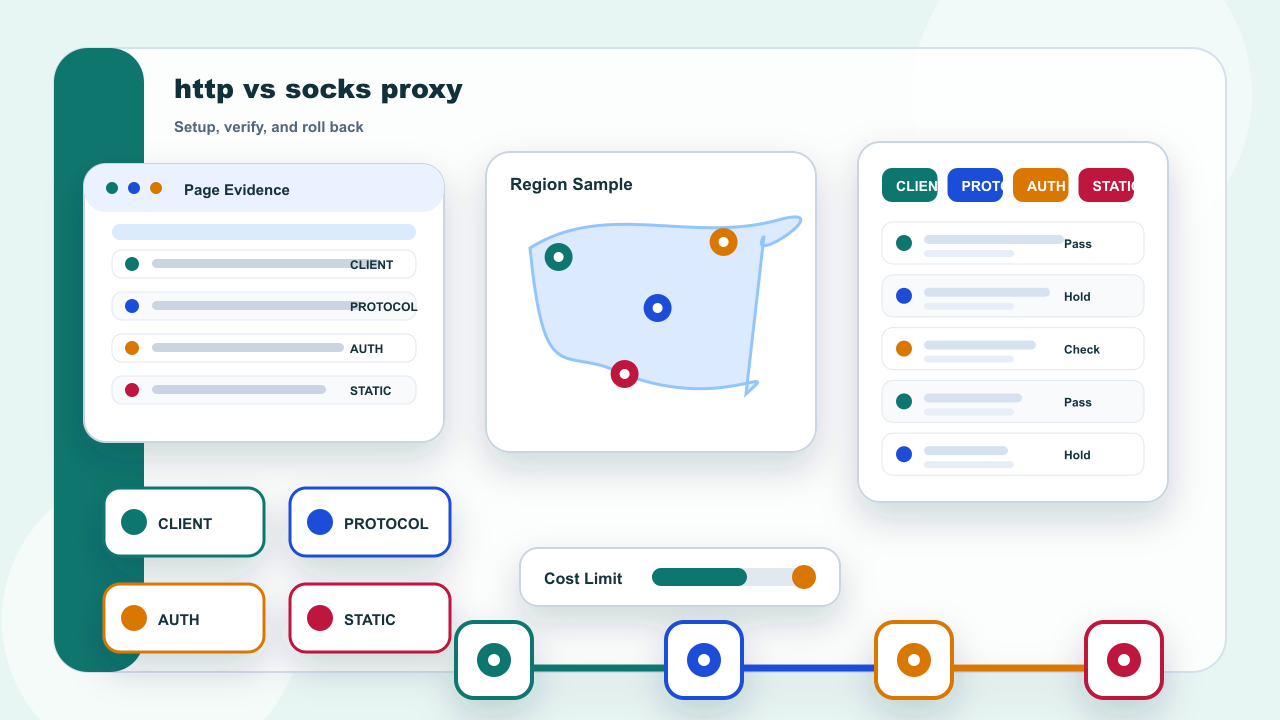
This part separates start with the application protocol into configuration, verification, and rollback so one change can be tested at a time.
IPIPD content here is limited to static residential addresses and dynamic residential addresses; the choice depends on continuity versus independent sampling.
The verification row should preserve the actual protocol fit value, test time, target, expected behavior, and rollback method. When the result differs, change one field only and repeat the controlled check before drawing a conclusion.
Compare the Fields That Actually Change
| Field | What to record |
|---|---|
| Protocol fit | HTTP-oriented clients and socket-oriented clients read different settings |
| Client support | A tool may support one protocol but not another |
| Authentication | Credential format must match the selected client and endpoint |