How to Set Up Firefox Proxy Settings Safely
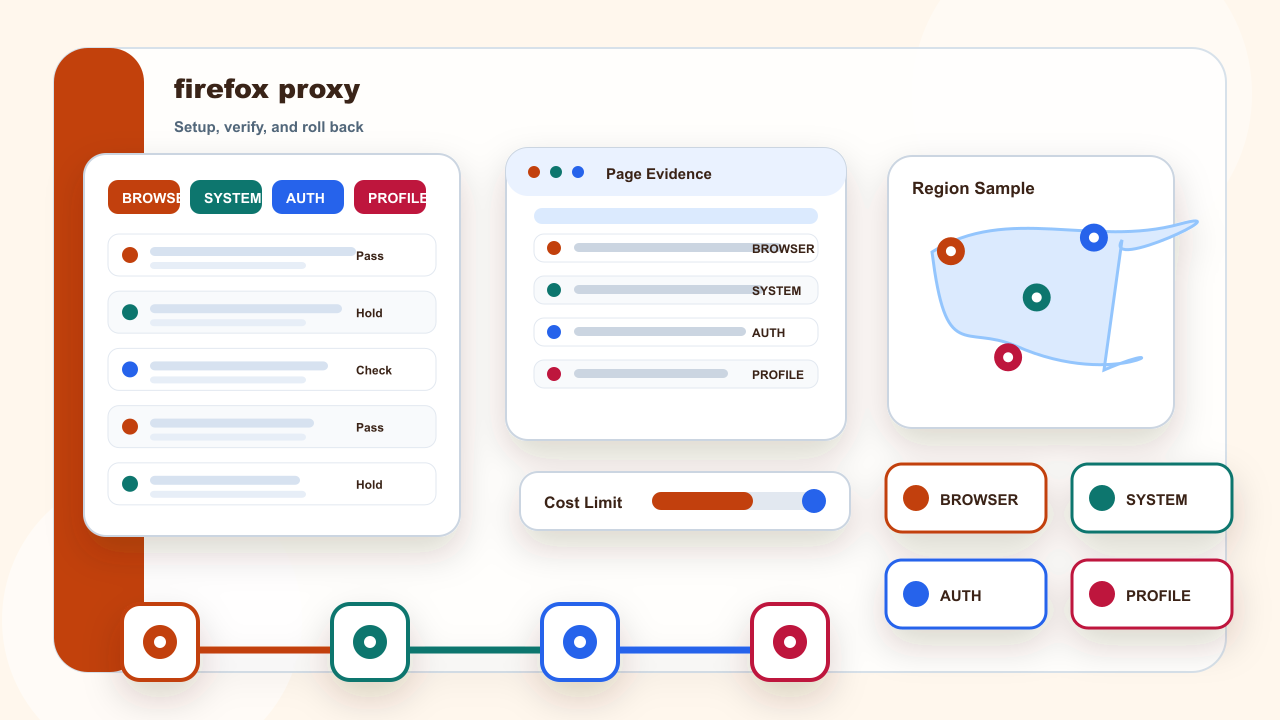
Start with the answer: Decide Whether Firefox or the System Owns the Setting
Firefox proxy work starts with scope. The browser may follow the operating system, use a manual endpoint, rely on an automatic configuration, or keep no proxy setting at all. Write down the selected mode before changing it.
Browser scope needs a repeatable record: Firefox can use its own proxy settings or follow system settings. If it conflicts with endpoint, correct the setting or record before changing the address mode.
Can Firefox ignore system proxy settings? Yes, depending on the selected Firefox network option. Keep the action inside an authorized task and a permitted public-page scope; stop when a policy, permission, or target restriction applies.
This part separates decide whether firefox or the system owns the setting into configuration, verification, and rollback so one change can be tested at a time.
IPIPD content here is limited to static residential addresses and dynamic residential addresses; the choice depends on continuity versus independent sampling.
The verification row should preserve the actual browser scope value, test time, target, expected behavior, and rollback method. When the result differs, change one field only and repeat the controlled check before drawing a conclusion.
Read the Assigned Endpoint Before Editing
| Field | What to record |
|---|---|
| Browser scope | Firefox can use its own proxy settings or follow system settings |
| Endpoint | Assigned host, port, protocol, and authentication must match |
| Prompt type | Endpoint authentication differs from website login |