How to Test a Proxy Server: Assigned Fields and Visible Results
Start with the answer: Define one proxy server test
Start with the one assigned proxy server test task that must be verified, not with a broad proxy change.
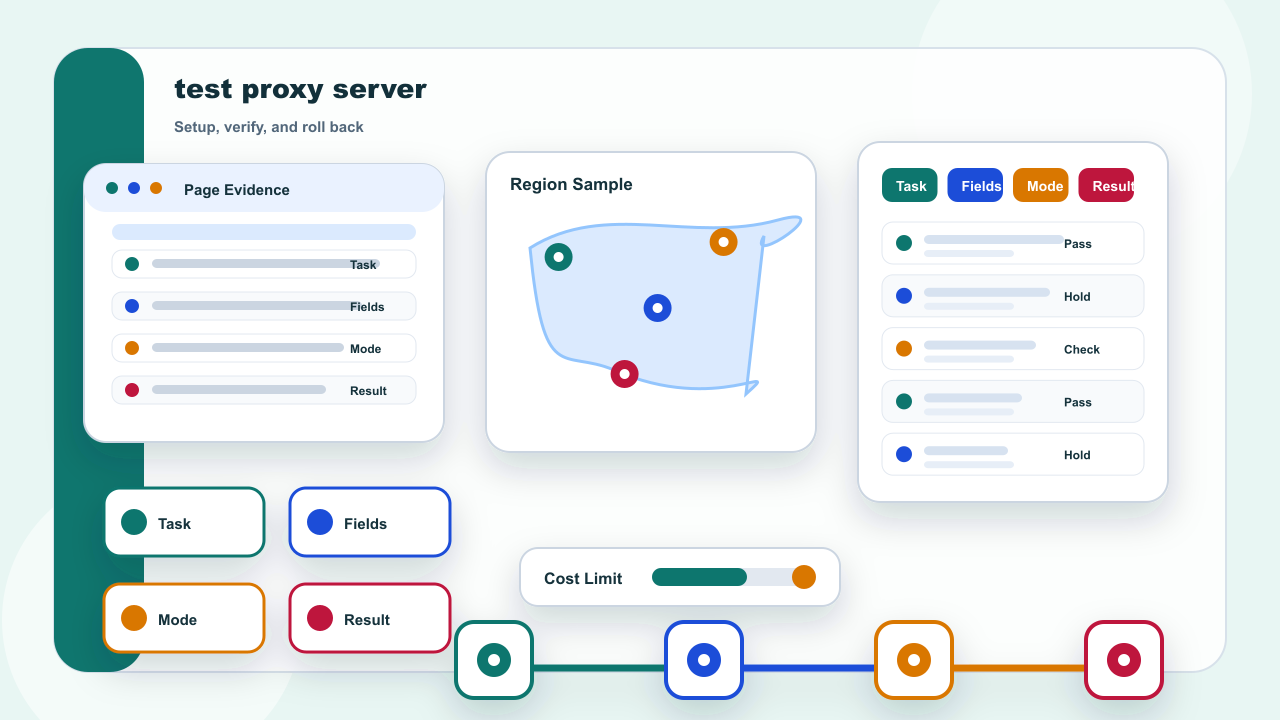
Troubleshooting test proxy server starts with one observed mismatch. Keep the target page, region label, address mode, browser state, and restore step stable while changing one field at a time.
Assigned host is the first diagnostic clue: Use only the server name or address supplied for the account. If it disagrees with assigned port, restore the setting and sample again.
What should test proxy server confirm first? Confirm the assigned host, port, protocol, authentication fields, target page, and restore path before changing a device or browser setting. The record should show before, after, and rollback rows so the team can see whether the issue came from settings, page state, or task scope.
Only after the troubleshooting row is stable should the team choose static continuity or dynamic sampling. Without evidence, the workflow should not scale.
This section also needs a separate assigned host row with sample time, target page, address mode, reviewer, and restore action. That prevents the record from showing only a region name without the evidence behind the decision.
Under the troubleshooting path, the conclusion belongs only to this page task. It should not extend to account status, platform acceptance, access, ranking, indexing, traffic, or lead outcomes. When evidence is thin, reduce the sample or pause.
Confirm the assigned host, port, and authentication
| Field | What to record |
|---|---|
| Assigned host | Use only the server name or address supplied for the account |
| Assigned port | Pair the port with the same endpoint and protocol |