The best residential proxies for web scraping are not simply the proxies with the biggest IP pool. For scraping, the real question is whether the proxy setup helps you collect public web data in a stable, traceable, and responsible way.
A good scraping proxy setup must handle more than connection success. It needs the right IP source, the right region, the right rotation rule, a sensible request pace, a retry strategy, a way to detect wrong results, and a testing process before you scale. Without those pieces, even an expensive proxy plan can produce noisy data, high retry cost, and unstable results.
This article takes a different angle from a general residential proxy buying guide. If you want a broad provider-selection overview first, read Best Residential Proxies in 2026. If your task is specifically public web data access, this guide focuses on how to choose, test, and operate residential proxies for scraping workflows.
For the basic technical background, a web crawler is software that systematically browses the web, and a proxy server acts as an intermediary for network requests. In real projects, however, the important work is not memorizing definitions. It is building a scraping workflow that respects target-site rules, avoids unnecessary load, and produces usable data.
Quick Answer
A strong scraping proxy setup usually has six qualities:
Basic Facts
Page role
Scraping workflow page, not a general provider ranking.
Best fit
Teams checking target-market pages, public product data, availability, or page changes.
Proxy mode
Dynamic residential addresses for broader sampling; sticky or static residential addresses when comparison continuity matters.
Evidence rule
A successful HTTP response is not enough; the returned page must be usable, expected, and logged.
Scraping tasks vary by target site, region, volume, and data quality needs
Rotation control
Some pages need frequent rotation, while others need sticky sessions
Geo accuracy
Search results, prices, and localized content may change by region
Stable success rate
A proxy that connects but returns blocked or wrong pages is not enough
Clear testing metrics
You need to measure usable pages, not only bandwidth or raw requests
Responsible use rules
Public data access still requires pacing, compliance review, and logs
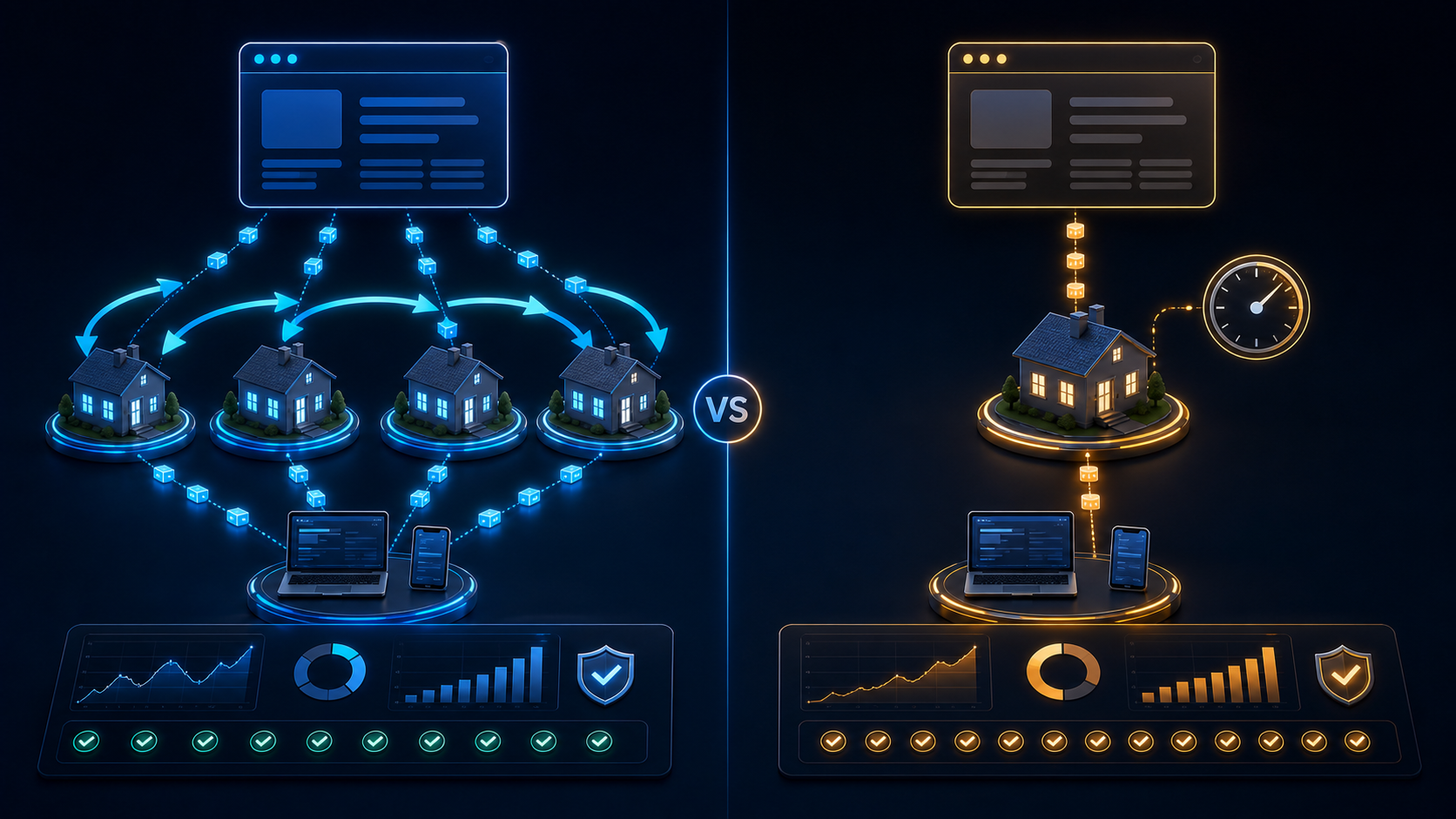
For most scraping teams, rotating residential proxies are the starting point. But that does not mean "rotate as fast as possible." The better approach is to match rotation to the target site and data goal. Some tasks need a new IP per request. Some need a sticky session for several minutes. Some need one region held steady so results remain comparable.
Start With the Data Goal, Not the Proxy Plan
A common mistake is starting with a package: how many GB, how many IPs, how many regions, how much per month. Those details matter, but they come too early.
Start with the data goal:
What public pages do you need to access?
Which countries or regions matter?
How often must the data be refreshed?
What counts as a usable page?
What failure rate can the project tolerate?
Does the workflow need login, cookies, or session continuity?
Which target-site rules and legal boundaries apply?
Two scraping projects can both use residential proxies, but they may need different proxy behavior.
An ecommerce price monitor may need stable country-level output so today's price can be compared with tomorrow's price. A search result monitor may need accurate city or country results. A market research crawler may need broad region coverage and controlled rotation. A product availability checker may need lower volume but stronger page correctness.
That is why a residential proxy setup for scraping should be evaluated by the data goal, not by marketing claims.
Build the Proxy Into the Scraping Pipeline
A proxy is only one part of the scraping system. It should sit inside a controlled pipeline, not outside it as a magic fix.
A practical scraping pipeline usually includes:
URL list or discovery logic.
Request scheduler.
Proxy selection and region rule.
Header, cookie, and session policy.
Response validation.
Parser and data cleaner.
Retry logic.
Storage and monitoring.
Compliance and rate-control review.
The proxy affects steps 3, 4, and 7 directly, but it also affects data quality. If the proxy returns the wrong region, the parser may still succeed while the data is wrong. If the proxy rotates too often, session-dependent pages may behave differently. If the proxy is too slow, the crawler may create retry loops and waste bandwidth.
So before choosing a provider, write down what the proxy must do inside the pipeline. For example:
Use United States residential IPs only.
Keep the same session for five minutes.
Rotate after a block or after a defined request count.
Pause retries when error rate rises.
Log region, endpoint, status code, page type, and validation result.
This turns "buy proxies" into an operational requirement.
Rotation Is Useful, But It Must Be Controlled
Web scraping teams often think rotation means "change IP every request." Sometimes that is right. Sometimes it creates unnecessary instability.
Use faster rotation when:
You access many independent public pages.
Session continuity is not important.
Target pages do not depend on cookies or state.
The task needs broad distribution across requests.
You can validate every response independently.
Use sticky sessions when:
The target site changes behavior during a session.
You need to keep a cart, filter, location, language, or cookie state.
Several requests belong to one logical task.
You need stable regional output for a short period.
Too much IP movement creates inconsistent results.
A strong scraping proxy service should let you control this behavior. If the provider only gives random rotation with no session setting, you may struggle with sites that require continuity. If the provider only gives fixed IPs, you may struggle with distributed collection tasks.
Good scraping operations usually combine both:
Rotating residential proxies for independent pages.
Sticky sessions for multi-step flows.
Stable regions for localized results.
Failure-triggered rotation for blocked or suspicious responses.
Cooldown logic when error rate rises.
That combination is more useful than a single generic setting.
Geo Targeting Can Decide Data Quality
For scraping, location is not just an access feature. It can change the actual data.
Prices may differ by country. Search results may differ by city. Product availability may differ by region. Ads, shipping information, tax estimates, currency, language, and inventory messages may all change based on the visible network location.
That means geo accuracy must be tested before scale.
Do not only ask whether a provider supports "global locations." Ask:
Does it support the exact country or market you need?
Does the output page match the expected region?
Does the region stay stable across a session?
Can you log which region was used for each request?
Can you separate wrong-region pages from true data changes?
If a page is scraped successfully but the region is wrong, the data may be useless. This is one reason proxy testing should include page validation, not just HTTP success.
Test Usable Pages, Not Raw Requests
The biggest metric mistake in scraping is counting requests instead of usable pages.
A request can be technically successful and still fail the business task. For example:
The page loads but shows a blocked message.
The page loads in the wrong language.
The page loads from the wrong region.
The page is missing key product data.
The content is personalized by a broken cookie state.
The parser succeeds but extracts outdated or duplicate data.
Your test should track the outcome that matters.
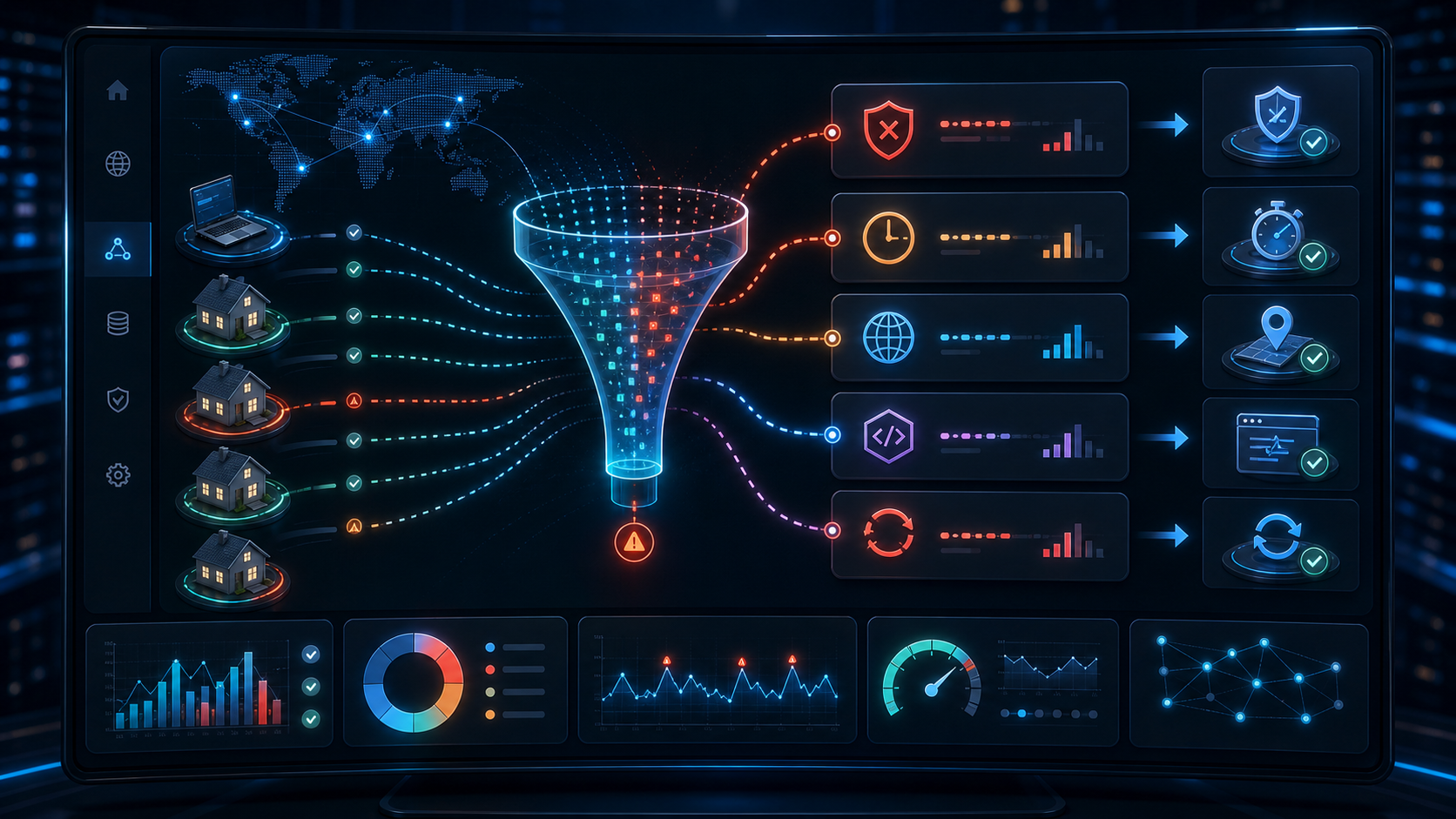
Use a test table like this:
Metric
What to Record
Connection success
Did the request complete?
Page validity
Is this the expected page type?
Geo match
Does the content match the target region?
Block rate
How often do block, CAPTCHA, or verification pages appear?
Retry cost
How many extra attempts are needed per usable page?
Latency
How long does a normal request take?
Duplicate rate
How often does the workflow store repeated or useless data?
Cost per usable page
Total cost divided by valid pages collected
This is how you compare residential proxy providers fairly. A lower traffic price may look attractive, but if it creates more retries and invalid pages, the real cost goes up.
Diagnose Failures Before Blaming the Proxy
Not every scraping failure is a proxy failure.
A failed page can come from:
Proxy quality or availability.
Wrong region selection.
Too aggressive request frequency.
Missing headers or unstable cookies.
Target-site rate limits.
Parser assumptions.
JavaScript rendering requirements.
Login or permission boundaries.
Network timeout settings.
Data validation rules that are too weak.
Before changing providers, classify failures.
If blocks rise only when request frequency increases, pacing may be the issue. If wrong-region pages appear across many targets, geo routing may be the issue. If only one target fails, target-specific rules may matter. If parsed data looks wrong while raw pages are correct, the parser may be the issue.
This is why scraping proxy setups should be tested with logs. Without logs, every failure feels like a proxy problem. With logs, you can decide whether to adjust rotation, region, pacing, parser logic, or provider.
A Practical 7-Day Test Plan
Before you scale, run a short test.
Day 1: Define the sample
Choose one target site group, one to three regions, and a limited URL sample. Make sure the sample includes easy pages, normal pages, and pages that are likely to fail.
Day 2: Baseline without scale
Run low-volume requests. Record page validity, region output, latency, and failure type. Do not optimize too early.
Day 3: Test rotation rules
Compare request-level rotation, time-based rotation, and sticky sessions. Keep the rest of the crawler logic stable so the comparison is meaningful.
Day 4: Test retry behavior
Set retry limits. Do not let failed requests loop endlessly. Measure how many retries are needed per usable page.
Day 5: Test region consistency
Repeat the same sample in each target region. Confirm whether the page content changes as expected.
Day 6: Review cost per usable result
Calculate the real cost. Include bandwidth, failed requests, retries, parsing errors, and manual cleanup.
Day 7: Decide the scaling rule
Only scale the regions, targets, and request patterns that worked. Keep the failed cases in a separate improvement list.
This plan keeps the first week focused. It also gives your team a common language for deciding whether the proxy setup is ready.
When Residential Proxies Are Not Enough
Residential proxies help with routing, location, and access distribution, but they do not solve every scraping problem.
You may also need:
Better request pacing.
Stronger page validation.
Browser rendering for JavaScript-heavy pages.
Clearer data schema.
More careful retry rules.
Better duplicate detection.
Legal and compliance review.
A smaller collection scope.
Sometimes the best decision is not to buy more proxy traffic. It is to reduce unnecessary requests, improve validation, or redesign the collection task.
Before choosing residential proxies for a scraping workflow, answer these questions:
What public pages are you collecting?
Which regions must be accurate?
What counts as a usable page?
Does the task need rotation, sticky sessions, or both?
What request pace is responsible for the target site?
How will you classify blocks, timeouts, wrong regions, and parser errors?
What is the cost per usable page?
What logs will the team keep?
Who reviews compliance before scaling?
What result must be proven before buying a larger plan?
If you can answer these questions, your proxy decision becomes much clearer.
Conclusion
The right scraping proxy setup is not chosen by pool size alone. It is chosen by how well it supports the scraping pipeline.
For independent pages, rotating residential proxies can work well. For multi-step flows, sticky sessions may be necessary. For localized data, geo accuracy matters more than raw IP volume. For cost control, usable pages matter more than requests. For long-term reliability, logs and compliance review matter as much as speed.
Start with a small test, measure the right outcomes, and scale only after the setup proves that it can produce clean, region-correct, responsible data.
Frequently Asked Questions
What are the best residential proxies for web scraping?
For scraping, a strong residential proxy setup usually includes rotating residential proxies with geo targeting, controllable sessions, reliable success rates, clear logs, and pricing that can be measured by usable page rather than raw traffic.
Are rotating residential proxies always better for scraping?
No. Rotating residential proxies are useful for independent pages and distributed access, but sticky sessions may be better for multi-step flows, cookies, location settings, or pages that need short-term session continuity.
What should I measure when testing scraping proxies?
Measure usable pages, geo accuracy, block rate, retry cost, latency, duplicate rate, and cost per usable page. Connection success alone is not enough because a page can load successfully but still contain the wrong or unusable data.
Do residential proxies prevent scraping blocks?
Residential proxies can improve access routing and distribution, but they do not remove the need for responsible request pacing, target-site rule review, validation, and retry control. Blocks can still happen if the workflow is too aggressive or poorly designed.
Should I use residential or datacenter proxies for web scraping?
Use residential proxies when geo accuracy, residential network attributes, and lower server-origin signals matter. Datacenter proxies may be enough for simple, low-risk, speed-focused tasks where residential attributes are not required.
Is web scraping with residential proxies legal?
Legality depends on the data, target website rules, access method, jurisdiction, and use case. Residential proxies are tools, not legal permission. Review applicable laws, website terms, privacy requirements, and internal compliance rules before scaling.