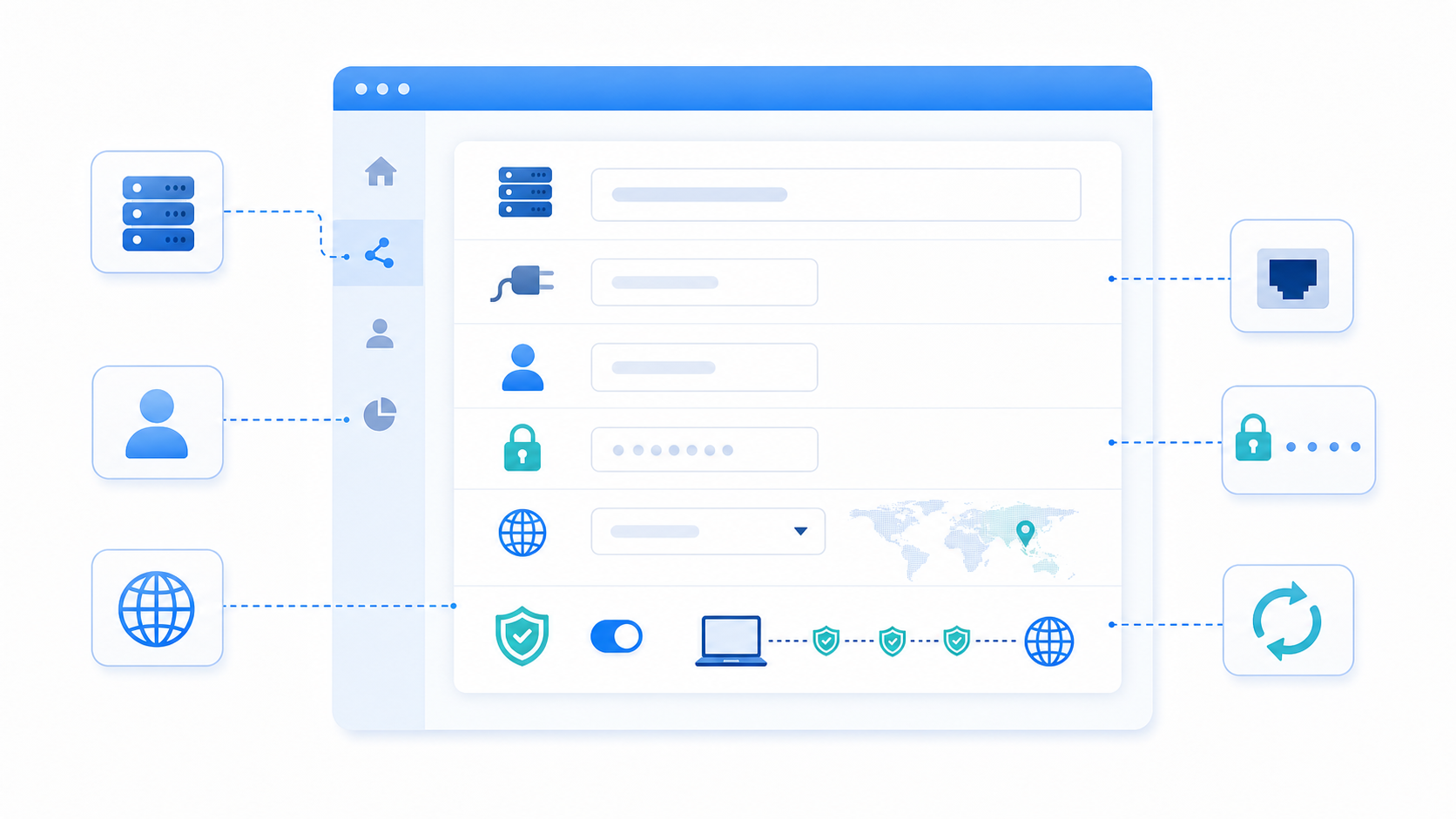
A backconnect proxy is a proxy service that gives you one gateway endpoint while routing your requests through a rotating pool of IP addresses behind the scenes. Instead of maintaining a long proxy list and replacing unavailable IPs by hand, you connect to one proxy host and let the provider handle IP rotation, session control, and request distribution for you.
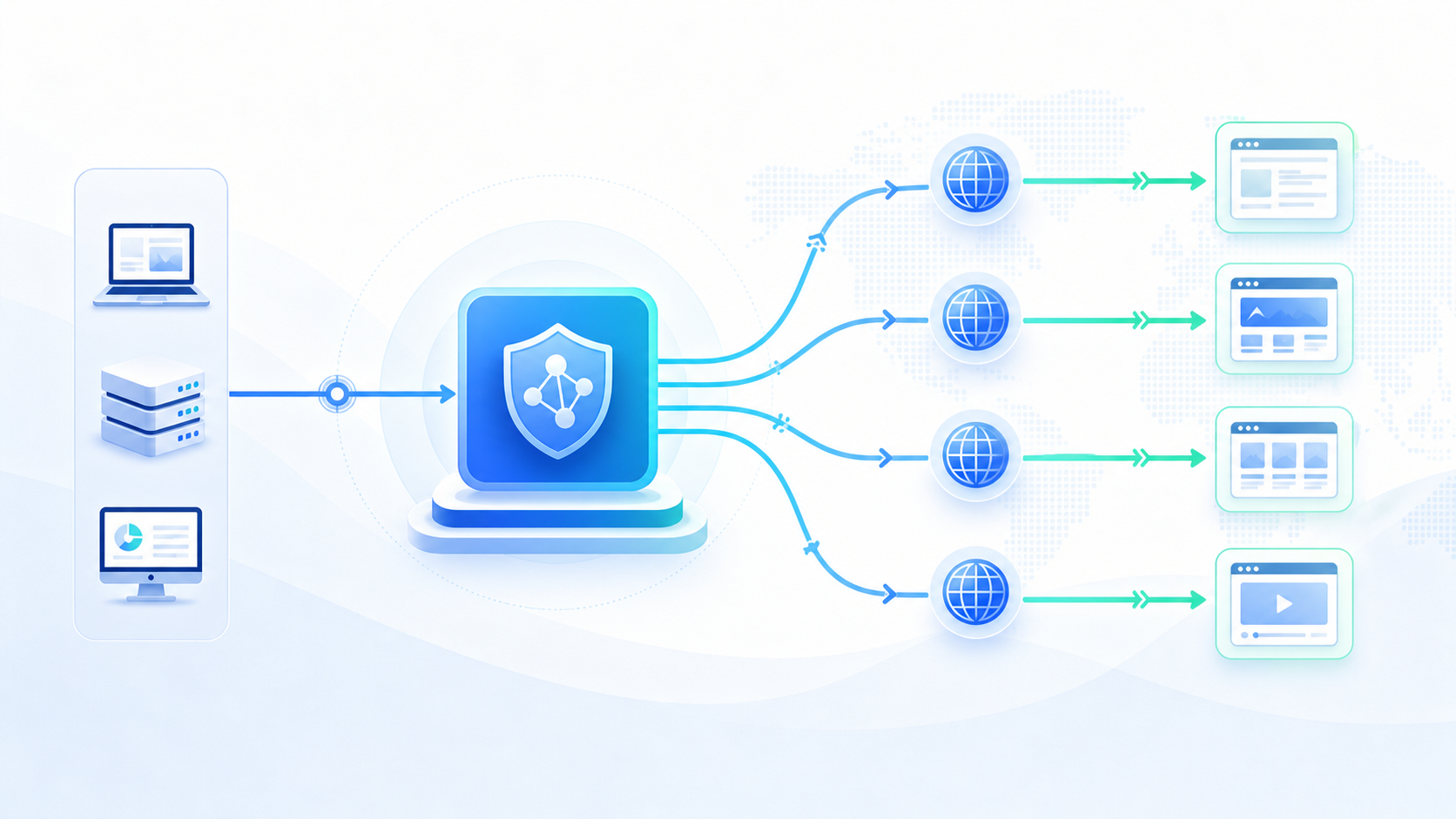
You can think of a backconnect proxy as a smart traffic hub. Your browser, crawler, automation tool, or data workflow connects to one entry point. The proxy network then decides which exit IP should handle each request based on your settings.
This is different from a traditional fixed proxy. A fixed proxy usually gives you one IP or a list of IPs that you must manage yourself. A backconnect proxy moves that complexity to the service side, which makes large workflows easier to operate.
If your team needs to collect public web data, monitor prices, check search results from different regions, verify ad delivery, or run location-based tasks, a backconnect proxy can simplify proxy operations and reduce manual work.
If you are new to IPIPD, you can start with the homepage and the product introduction. If you are preparing to configure a proxy, the proxy guide is a useful next step.
Quick Answer: What Is a Backconnect Proxy?
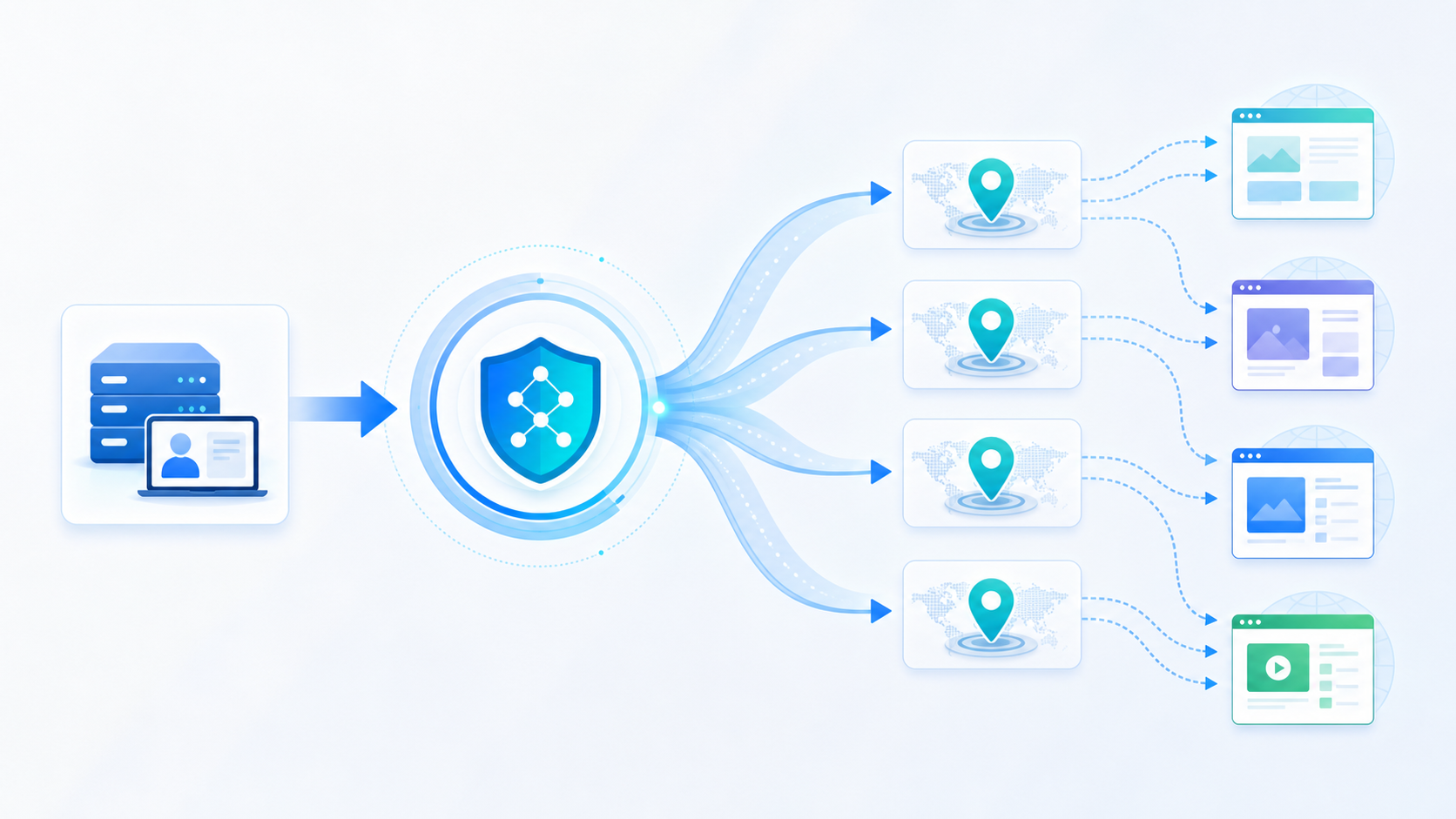
A backconnect proxy is a proxy gateway that routes traffic through multiple rotating IPs by using a single access point. The user only needs one proxy endpoint, while the provider assigns different exit IPs according to request rules, session duration, location settings, or rotation mode.
This makes a backconnect proxy useful when you need:
automatic IP rotation
one stable proxy entry point
lower manual maintenance
location-based routing
better request distribution at scale
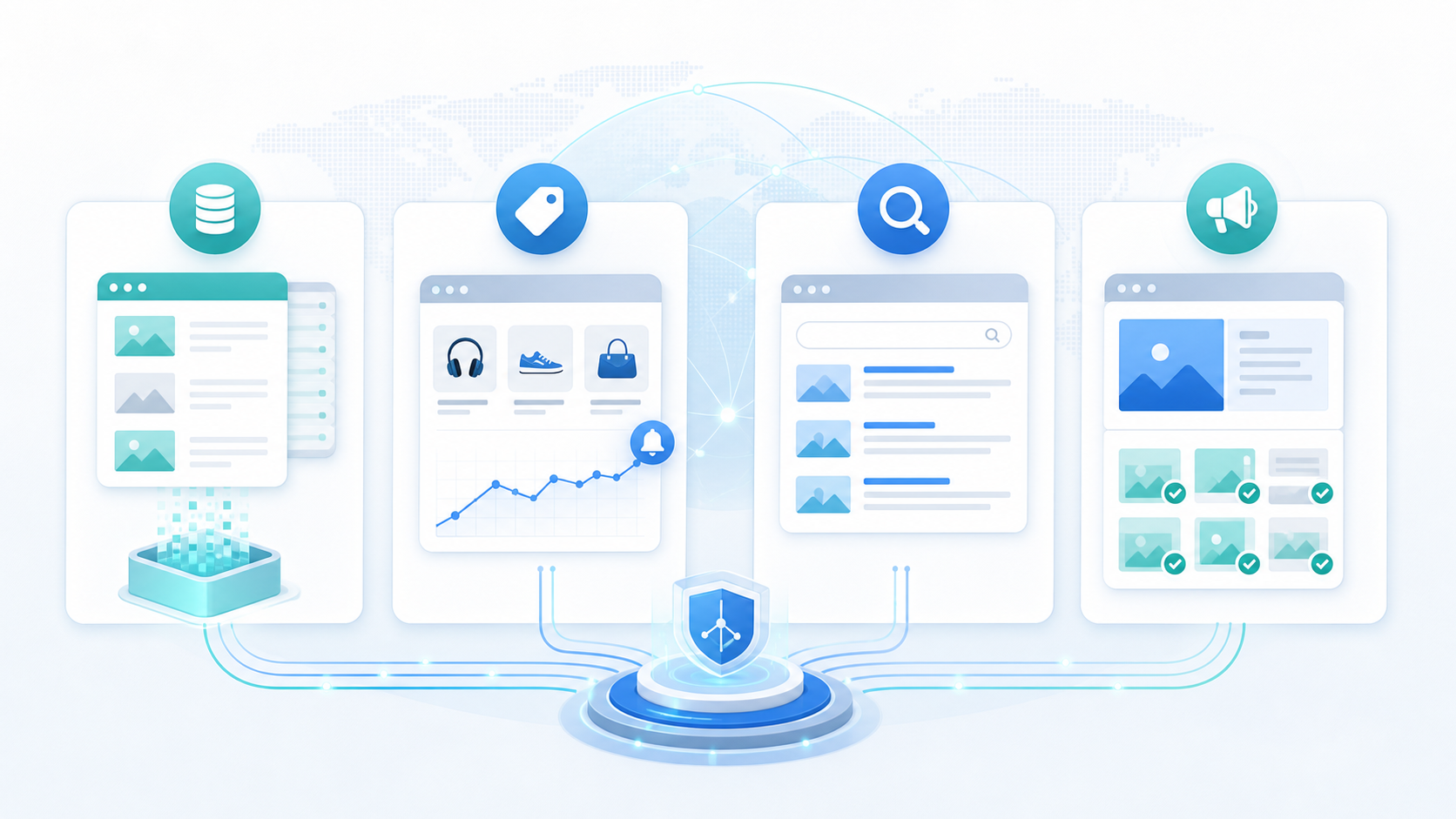
That is why a backconnect proxy is commonly used for compliant web scraping, market research, price monitoring, SEO rank tracking, ad verification, and brand protection. The main benefit is not just anonymity. The real benefit is operational control.
How Does a Backconnect Proxy Work?
With a normal proxy, your request usually goes through one fixed IP. The target website sees that proxy IP instead of your original device IP.
A backconnect proxy works differently. It gives you one gateway address with a host, port, username, and password. When your application sends a request to that gateway, the provider selects one IP from its proxy pool and forwards the traffic through that IP.
In practice, the process usually looks like this:
Your browser, crawler, automation script, or business system connects to the proxy gateway.
The gateway checks your account credentials and plan permissions.
The system selects an exit IP from the available pool.
Your request reaches the target website through that exit IP.
The response returns through the same route.
The next request may keep the same IP or switch to a new one based on your settings.
This is why many people describe a backconnect proxy as one gateway with many IPs behind it. You do not need to hard-code a large list of proxies into your software. You only need to configure one endpoint correctly.
For a broader technical definition, you can also refer to Wikipedia's page on a proxy server.
Backconnect Proxy vs Traditional Proxy
The biggest difference is management.
A traditional proxy usually gives you one fixed IP or a list of separate IPs. If one IP becomes slow, blocked, or unavailable, you must switch it manually or build your own rotation logic.
A backconnect proxy keeps the entry point the same while the provider controls the exit IPs in the background. That makes setup simpler and maintenance lighter for users who run repeated or large-scale tasks.
Feature
Traditional Proxy
Backconnect Proxy
Access method
One IP or proxy list
One gateway endpoint
IP rotation
Manual or self-built
Built in
Setup complexity
Medium to high
Lower
Best for
Small fixed tasks
Scalable workflows
Session control
Usually limited
Often configurable
Maintenance
User-managed
Provider-managed
If you only need one stable IP for basic browsing, remote access, or account operations, a traditional proxy may be enough. But if your workflow requires rotation, regional access, shared use across tools, or continuous public data collection, a backconnect proxy is usually more practical.
Why Businesses Use Backconnect Proxies
Businesses do not use proxies only to hide an IP address. In real workflows, proxies act as infrastructure. They help teams access public pages from different regions, verify how ads are shown, check ranking results, and monitor public pricing changes.
A backconnect proxy is useful because it automates much of the low-level work. Instead of constantly checking long proxy lists, your team can focus on the business task itself.
Public Web Data Collection
Public web data collection often requires many requests. If all requests come from one IP, the target website may slow down or limit access. A backconnect proxy distributes requests across multiple IPs, which can improve workflow stability when the system is used responsibly.
That does not mean a proxy removes compliance responsibilities. Teams still need to respect rate limits, website terms, privacy rules, and local laws. The proxy is only one part of a responsible data collection setup.
Price Monitoring
Ecommerce, travel, retail, and software teams often need to compare public pricing pages across countries and regions. A backconnect proxy makes this easier by routing requests through the right locations without forcing the team to switch networks manually.
SEO Rank Tracking
Search results vary by country, city, device, language, and personalization signals. SEO teams use proxies to see how rankings actually appear in different locations. A backconnect proxy makes that easier because one tracking tool can query many regions through the same gateway setup.
If you want to read more about rotation logic, IPIPD also has related guidance on IP rotation strategy.
Ad Verification
Ad verification teams need to confirm that ads are displayed correctly across regions, platforms, and audience environments. A backconnect proxy helps them inspect landing pages, redirects, local variations, and delivery differences from multiple locations.
Brand Protection
Brand teams may monitor public marketplaces, search results, social pages, and websites for counterfeit goods, unauthorized sellers, or copied content. A backconnect proxy helps increase coverage across locations.
What Features Matter Most?
Not every backconnect proxy service is the same. When choosing a provider, do not focus only on price or IP count. You should also look at IP quality, rotation control, region coverage, protocol support, speed, stability, and compliance transparency.
IP Pool Quality
A larger proxy pool is not automatically better. What matters is stability, trust, location coverage, availability, and how the provider manages the IPs. If your use case depends on realistic regional traffic, residential IPs are often more suitable than datacenter IPs.
If you want to learn more about residential proxy rotation, you can also read this related guide.
Rotation Control
Strong proxy services usually support several rotation modes, such as:
rotating on every request
rotating every few minutes
keeping the same IP for a sticky session
changing IP by country or city
switching IP after request failure
If your workflow involves logins or account actions, sticky sessions are often important. If your workflow involves large-scale public data collection, more frequent rotation may work better.
Location Targeting
If your workflow depends on geography, location targeting matters. Many providers support country-level targeting, while more advanced services may also support state-level or city-level targeting.
Protocol Support
Most providers support HTTP and HTTPS, while some also support SOCKS5. Different tools have different requirements, so you should verify compatibility with your crawler, browser automation stack, SEO tracker, or verification system.
Speed and Stability
A proxy network only adds value if it is stable. Look at connection success rate, response speed, bandwidth policy, plan limits, and support quality. The best test is to run a small sample against your real target websites.
Compliance and Transparency
Reliable providers should explain how their proxy resources are sourced, which use cases are allowed, and which behaviors are prohibited. Avoid services that encourage abuse or promise unrealistic access claims.
What Types of Backconnect Proxies Exist?
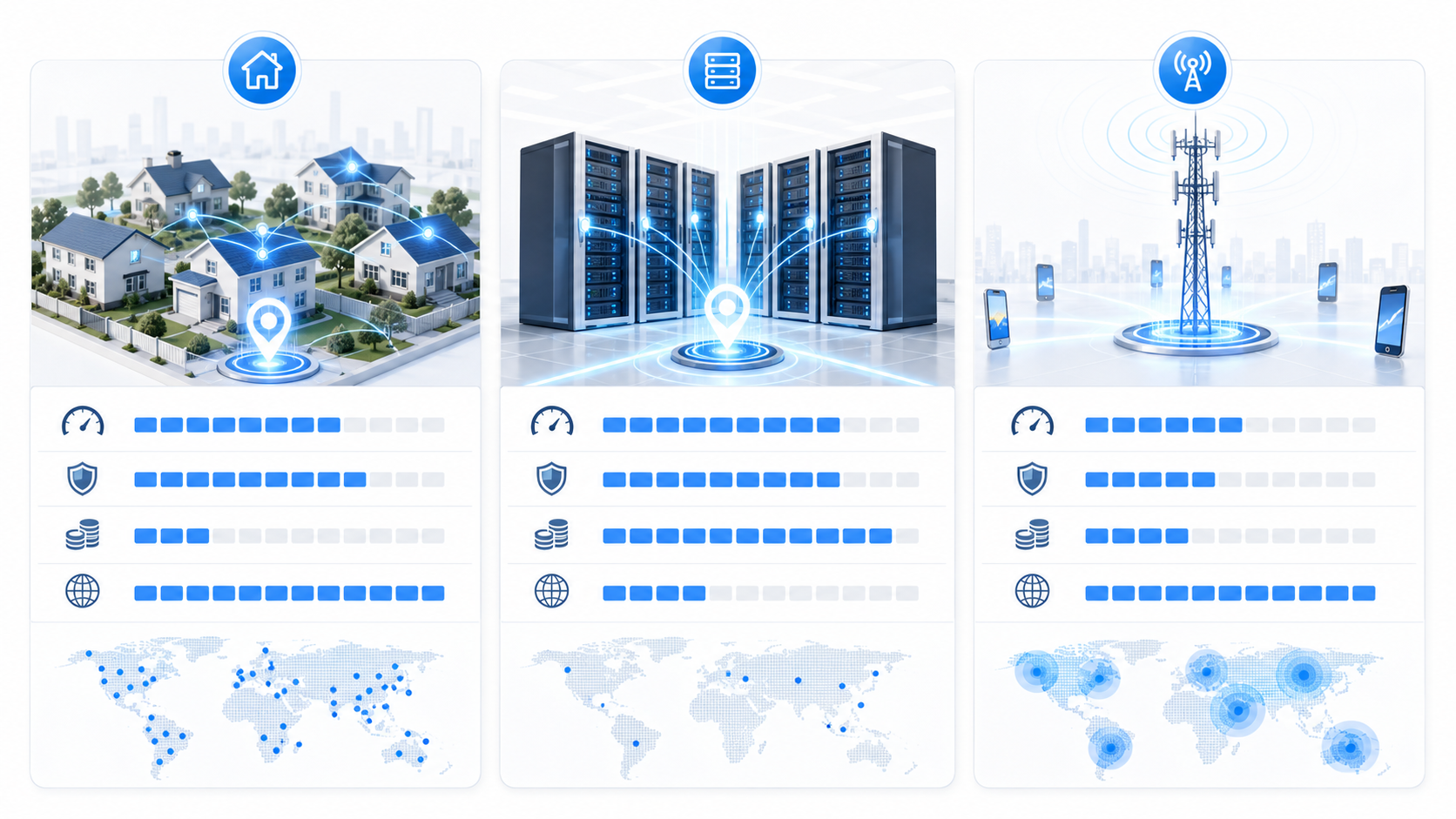
Backconnect proxies are commonly built on three IP source types: residential, datacenter, and mobile.
Residential Backconnect Proxy
A residential backconnect proxy uses IPs assigned by ISPs to real home networks. These proxies are often used for market research, search result checking, price monitoring, and public web data collection because they more closely resemble ordinary user traffic.
Datacenter Backconnect Proxy
A datacenter backconnect proxy uses IPs from cloud providers or hosting facilities. These proxies are usually faster and lower cost, but some websites may identify them more easily as datacenter traffic.
Mobile Backconnect Proxy
Mobile proxies use IPs from mobile carrier networks. They are useful for mobile ad verification, app testing, and mobile environment checks. They are also usually the most expensive option.
When Should You Use a Backconnect Proxy?
You should consider a backconnect proxy if:
you need many IPs without managing a proxy list by hand
your current proxies fail too often
you need IP rotation by request, time, or location
you need short sticky sessions
you run SEO tracking, price monitoring, ad verification, or public data collection
multiple tools need to share the same proxy entry point
If you only need one stable IP for simple browsing or basic account use, you may not need a backconnect proxy. In that case, a static residential proxy may be simpler.
Common Mistakes Beginners Make
Many beginners buy a proxy plan before they fully understand their workflow. That often leads to wasted bandwidth, unstable success rates, or choosing the wrong proxy type for the target website.
The first mistake is focusing only on price. A cheap proxy that fails often will waste time, bandwidth, and engineering effort.
The second mistake is rotating too aggressively. Some websites do not respond well when every request comes from a brand-new IP, especially when the workflow should look like a continuous user session. In those cases, sticky sessions may work better.
The third mistake is ignoring compliance. A backconnect proxy is a technical tool, not permission to ignore laws, website terms, or platform rules.
The fourth mistake is using the same configuration for every target website. Different sites may require different request speeds, session lengths, headers, region settings, or proxy types.
How to Set Up a Backconnect Proxy
Most providers give you connection details in a format like this:
In many tools, you only need to place those values into the proxy settings area. Some providers also let you include country, city, session ID, or rotation mode inside the username.
For example, you may choose a United States IP and keep the same session active for a short period. That can work well for workflows that need continuity instead of full rotation on every request.
Before scaling up, test with a small volume. Check response codes, page completeness, loading speed, and whether the exit location matches your expectation.
A backconnect proxy is a network technology. Whether its use is legal depends on what you do with it, which data you access, where you operate, and whether you follow applicable rules.
Common legitimate uses include SEO monitoring, ad verification, authorized security testing, market research, and responsible access to publicly available data.
Higher-risk or prohibited uses may include credential stuffing, spam, unauthorized access, fraud, bypassing security systems, or collecting restricted personal data.
Before using any proxy at scale, review the target website's terms, local law, privacy requirements, and the provider's acceptable use policy.
How to Choose the Right Backconnect Proxy Provider
A good provider offers more than a large IP pool. It should also provide stable performance, clear controls, transparent rules, useful documentation, and responsive support.
Before buying, use a checklist like this:
Does the provider cover your target countries or cities?
Does it support rotation control and sticky sessions?
Does it offer residential, datacenter, or mobile options?
Is pricing based on bandwidth, ports, IPs, or request volume?
Can you clearly view usage in the dashboard?
Is there documentation for your tools?
Are compliance rules clearly explained?
Can you start with a small test before scaling?
The safest path is to define one real use case, test it against your actual targets, and scale only after success rate, speed, location accuracy, and stability meet your needs.
Final Thoughts
A backconnect proxy is a practical way to manage rotating IP access at scale. Instead of building your own rotation system from scratch, you connect to one gateway and let the provider handle IP assignment, session behavior, and traffic routing.
For beginners, the best approach is not to buy the biggest plan first. Start with your actual use case. Decide whether you need residential, datacenter, or mobile IPs. Test your settings. Measure results. Then scale gradually.
Used responsibly, a backconnect proxy can become a strong part of your SEO, public data collection, price monitoring, ad verification, and brand protection workflow.
Frequently Asked Questions
What is a backconnect proxy?
A backconnect proxy is a proxy gateway that routes your requests through a pool of rotating IP addresses by using one entry point.
Is a backconnect proxy the same as a rotating proxy?
They are closely related, but not always identical. A rotating proxy focuses on changing IPs, while a backconnect proxy usually emphasizes one gateway that manages those rotating IPs for you.
What is a backconnect proxy used for?
It is commonly used for SEO rank tracking, public web data collection, price monitoring, ad verification, market research, and brand protection.
Are backconnect proxies legal?
They can be legal when used for legitimate and compliant purposes. Users still need to follow laws, website terms, privacy rules, and provider policies.
Should I choose residential or datacenter backconnect proxies?
Choose residential proxies when trust and location realism matter more. Choose datacenter proxies when speed, lower cost, and simpler testing matter more.
What should beginners test first?
Beginners should first test connection success rate, page loading speed, exit location accuracy, sticky session behavior, and stability against the real target website before scaling up.