Most people assume that the most expensive option—mobile proxy—must be the best choice.
That's a misconception.
Residential proxy, especially residential static IP, offers advantages that mobile proxy simply can't match. It just depends on whether you know how to use it.
This guide cuts through the confusion. You'll learn exactly when residential proxy makes sense, when it's the optimal choice, and when to consider alternatives.
Three Proxy Types, Three Strengths
Before diving into use cases, understand what each major proxy type offers:
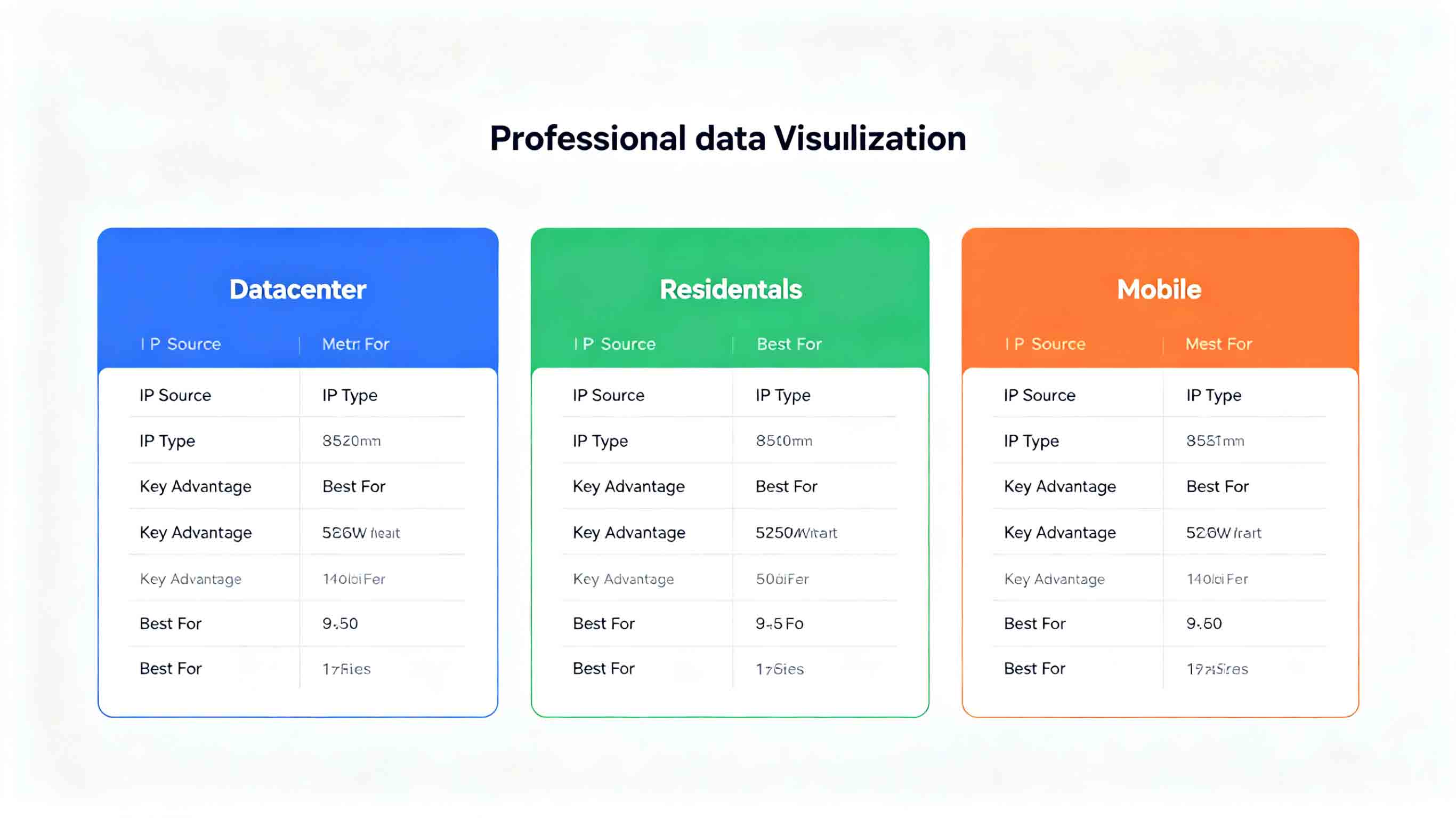
Residential Proxy (Including Static and Rotating)
IP Source: Real home networks from real users
IP Type: Can be fixed (static) or auto-rotating
Key Advantage: Fixed IP, reliable, cost-effective
Best For: Account management, long-term projects
Mobile Proxy
IP Source: Real 4G/5G mobile networks
IP Type: Auto-rotating, hard to trace
Key Advantage: Higher success rate, harder to detect
Best For: High-security platforms, social media management
Datacenter Proxy
Frequently Asked Questions
Which is better: residential static IP or mobile proxy?
There's no absolute answer—it depends on your needs. If you need fixed IP for account management, residential static IP is the better choice. If you need high concealment, mobile proxy is more suitable.
Can residential proxy be detected?
Any proxy can potentially be detected. Residential proxy comes from real home networks, making it harder to detect than datacenter proxy. With proper usage strategies, success rates can be very high.
How long can a residential static IP be used?
It depends on your usage patterns and target platform policies. Generally, stable usage can last from weeks to months.
Proxy use case analysis based on aggregated user reports (2024-2026)
Platform detection level classification from industry benchmarks
Cost comparison analysis across proxy types and providers
IP Source: Cloud servers
Key Advantage: Fast, affordable
Best For: Basic needs, testing environments
Why Residential Static IP Matters
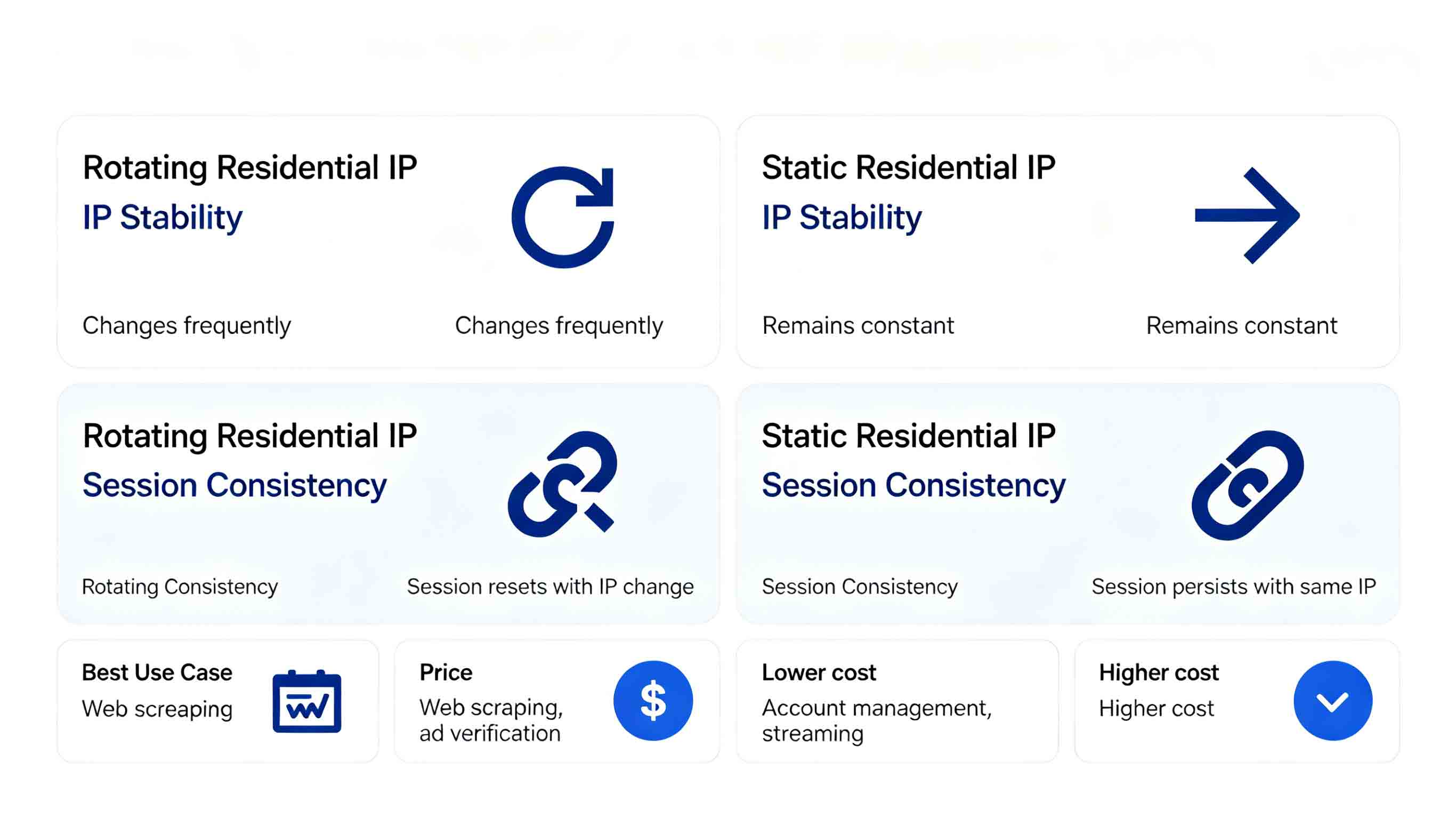
Static vs Rotating: What's the Difference?
Factor
Rotating Residential
Static Residential
IP Stability
Auto-rotates
Fixed
Session Consistency
May change each request
Stable over time
Best Use Case
Large-scale scraping
Account login management
Price
Slightly lower
Slightly higher
The core value of residential static IP:
Fixed IPs mean stable account logins
No security alerts from frequent IP changes
Better IP reputation building over time
Ideal for long-term business account maintenance
When Residential Proxy Is the Right Choice
Account Management and Long-Term Operations
If you're managing e-commerce accounts, social media profiles, or systems that require fixed IP login—residential static IP is your best option.
Why it works:
Fixed IPs make accounts appear more "normal"
Avoid security alerts from changing IPs
Build stable IP reputation over time
Perfect for long-term account operations
Real example: An e-commerce company managing multiple store accounts uses residential static IP to give each account a consistent "identity," avoiding account association risks.
SEO and SERP Tracking
Checking search rankings, monitoring competitors, and analyzing local results requires IPs that look like real users.
Why it works:
Search engines show different results based on IP location
Static IP allows consistent tracking of regional rankings
More authentic than datacenter IPs
Lower cost than mobile proxy
Real example: An SEO agency uses residential static IP to track 5,000 keywords across 30 countries, with every query coming from a "real user" IP address.
Price Monitoring and Market Research
Tracking competitor prices, monitoring trends, and collecting public data—residential proxy is the ideal choice.
Why it works:
Price data is public, no need for high concealment
You need IPs from multiple regions
Long-term monitoring makes cost efficiency important
Residential proxy is perfectly sufficient
Real example: An e-commerce company monitors 500+ products across 20 countries, saving 40% compared to mobile proxy costs.
Brand Protection and Ad Verification
Monitoring counterfeit products, verifying ad placements, and checking brand mentions—residential proxy provides adequate coverage.
Why it works:
Data is publicly accessible
Geographic diversity is needed
High data volume makes cost efficiency critical
Residential proxy is reliable and economical
Real example: A brand company tracks 10,000+ product listings daily to monitor counterfeit and unauthorized sales.
Low-Security Data Collection
Some websites simply don't need mobile proxy level protection:
Government public data
News and media sites
Job boards and real estate listings
Academic research data
Why it works: No need to pay premium prices for simple tasks.
When to Consider Alternatives
High-Security Social Platforms
If you need to manage high-security platforms like Instagram or TikTok:
Mobile proxy is more suitable: Higher success rate, harder to detect
But residential static IP still has value: Use alongside mobile for layered approach
Extreme Scale Requirements
If you need 1,000+ concurrent connections:
Mobile proxy has larger IP pools
But costs are significantly higher
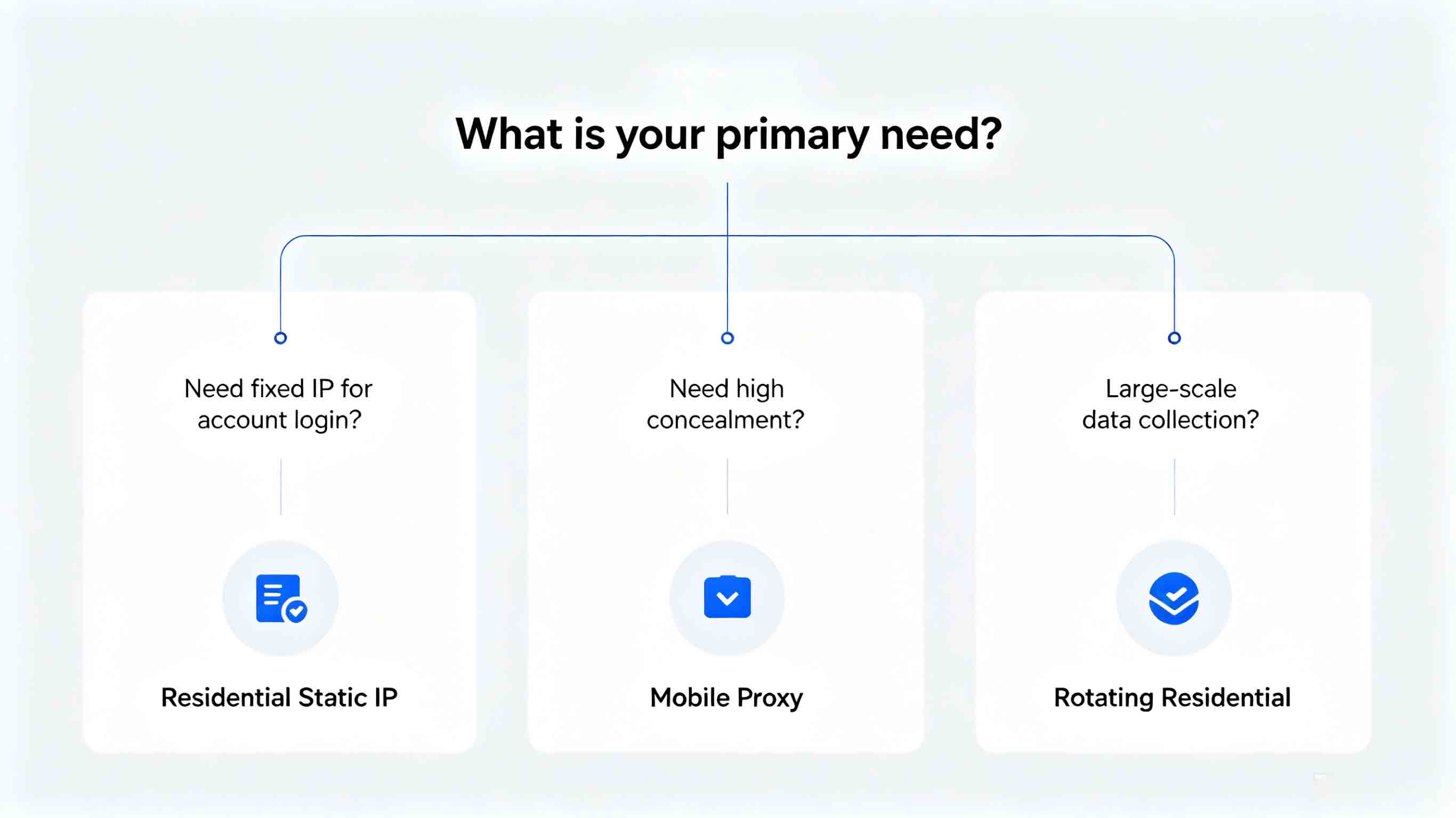
A Simple Decision Framework
Question
Recommended Solution
Need fixed IP for account login?
Residential Static IP
Need high concealment?
Mobile Proxy
Large-scale data collection?
Rotating Residential
Limited budget but need real IPs?
Residential Proxy
Long-term stable account operations?
Residential Static IP
Conclusion: Match the Tool to the Job
Residential proxy (including static IP) isn't a "budget option"—it's a solution with specific, valuable use cases.
Choose residential static IP when:
You need fixed IP for account operations
You're working on long-term projects
You need IP reputation building
Your target platform doesn't require mobile proxy level protection
Choose mobile proxy when:
High-security platforms are your main target
You need maximum success rate
The smartest approach? Choose based on your actual needs. In many cases, residential static IP offers the best value.
Start by clarifying your goal: Do you need fixed IP for account login, or high concealment to avoid detection? The former points to residential static IP, the latter to mobile proxy.