Private proxy mistakes usually come from buying a label before checking the address. A private plan may sound controlled, but it does not prove residential trust, regional fit, or repeatable results.
This page reviews the buying risks and brings the decision back to IPIPD static and dynamic residential address workflows.
Quick Answer: review private proxy risk first
private proxy mistakes should not be judged by the label alone. First define whether the workflow needs stable sessions, regional coverage, application compatibility, buying review, or troubleshooting evidence.
IPIPD content stays focused on static residential addresses and dynamic residential addresses. Private proxy is treated as a comparison label, not an IPIPD product promise.
Basic Facts: private proxy risk fields
Item
Explanation
Primary intent
Comparison and risk review for private proxy language.
Static address fit
Stable account review, fixed-region checks, and repeated validation.
Dynamic address fit
Sampling, monitoring, market coverage, and controlled rotation evidence.
Boundary
Private proxy is treated as a comparison label, not an IPIPD product promise.
Record task, region, session, protocol, retry rule, error type, and result evidence before scaling the workflow. This prevents the team from mixing proxy issues with tool issues or target-page behavior.
The facts table separates static residential addresses, dynamic residential addresses, and adjacent terms so a label does not become a full solution.
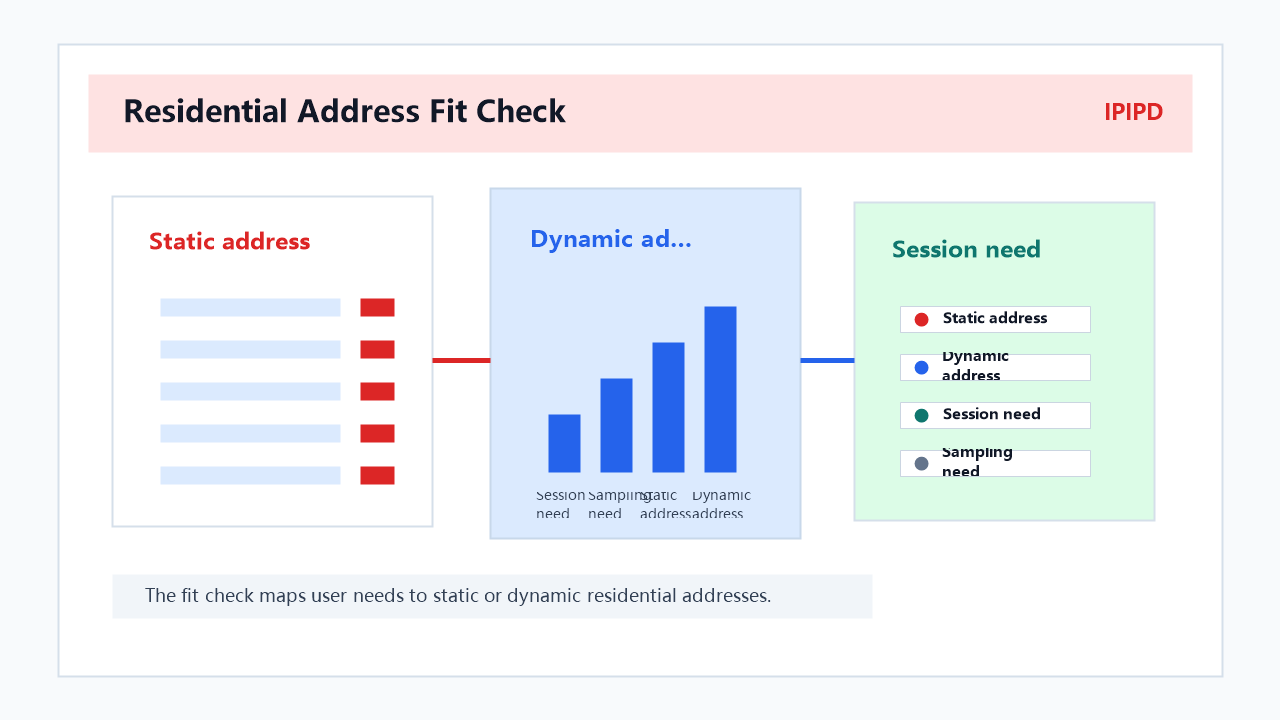
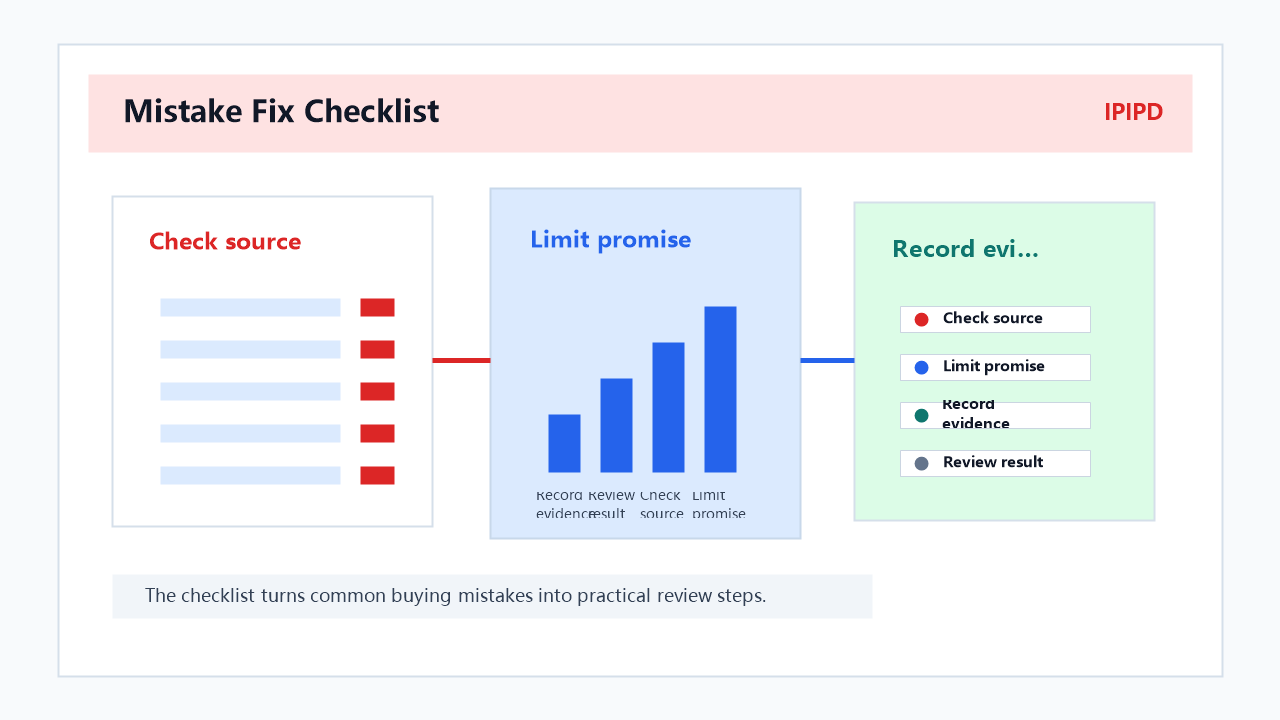
Readers should separate proxy marketing labels from IPIPD product boundaries.The fit check maps user needs to static or dynamic residential addresses.The checklist turns common buying mistakes into practical review steps.
Cheap IP decisions that hide cleanup cost
If the task needs fixed-region review, account continuity, or long sessions, static residential addresses reduce one major variable.
If the task needs regional sampling, market research, ad checks, or price monitoring, dynamic residential addresses can provide broader coverage when rotation is controlled and recorded.
Wrong task fit and weak address trust
Static residential addresses fit repeated validation and longer workflows because the same region and session window can be compared over time.
Static does not remove the need to record browser state, account state, target rules, and timing. Those fields still decide whether the evidence is useful.
Static residential alternative for stable review
Dynamic residential addresses fit multi-market coverage and sampling, especially when the team needs to compare regional differences or collect more evidence.
Dynamic rotation should use market labels, session duration, retry caps, and failure categories. Random switching without records weakens the result.
Dynamic residential alternative for coverage
A common mistake is buying or rotating first and defining the requirement later. That mixes configuration problems, target problems, and proxy-type decisions.
Another mistake is presenting adjacent terms such as VPN, ISP, SOCKS5, or private proxy as current IPIPD product lines. This page uses them only for explanation, comparison, and risk control.
Quick reference: private proxy risk checklist
Define target, region, tool, protocol, session, retry rule, stop condition, and review date before choosing static or dynamic residential addresses.
If the result cannot be reproduced, the error cannot be classified, or the cost cannot be explained, do not scale the test. Fix the evidence record first.
Risk register for private proxy buying mistakes
Private proxy mistakes often begin with a shortcut: the buyer hears private and assumes safer. The label may describe access, but it does not prove address quality, residential trust, regional fit, or compatibility with the target workflow.
A better review treats private proxy as a risk term until the address source and task fit are clear.
The first risk is buying only on price. A low monthly number can hide poor reputation, narrow region coverage, frequent failures, or extra manual work.
The real cost should include usable result rate, staff review time, account interruption, and the number of tests needed before the team trusts the data.
The second risk is using a private proxy for the wrong task. A fixed proxy can be useful for simple controlled checks, but a regional sampling task may need dynamic residential addresses. An account continuity task may need static residential addresses.
The task decides the address mode, not the word private.
The third risk is missing a stop rule. If the same target produces repeated timeouts, wrong-region output, or account warnings, the test should pause.
Continuing to push volume through a questionable proxy path can damage evidence quality and create more cleanup work.
The fourth risk is reporting success too early. One successful request does not prove a workflow. A reviewer should require several repeatable results, a failure log, and a short T+7 review before calling the setup stable.
IPIPD content should use private proxy as a caution and comparison topic. The current product boundary remains static residential addresses and dynamic residential addresses.
The article should help a reader avoid bad buying logic, not invent an unsupported private proxy offer.
Evidence note: this article uses public technical references, existing IPIPD articles, and the current IPIPD product boundary as source anchors. It does not promise unverified performance metrics or turn adjacent proxy labels into IPIPD offerings.
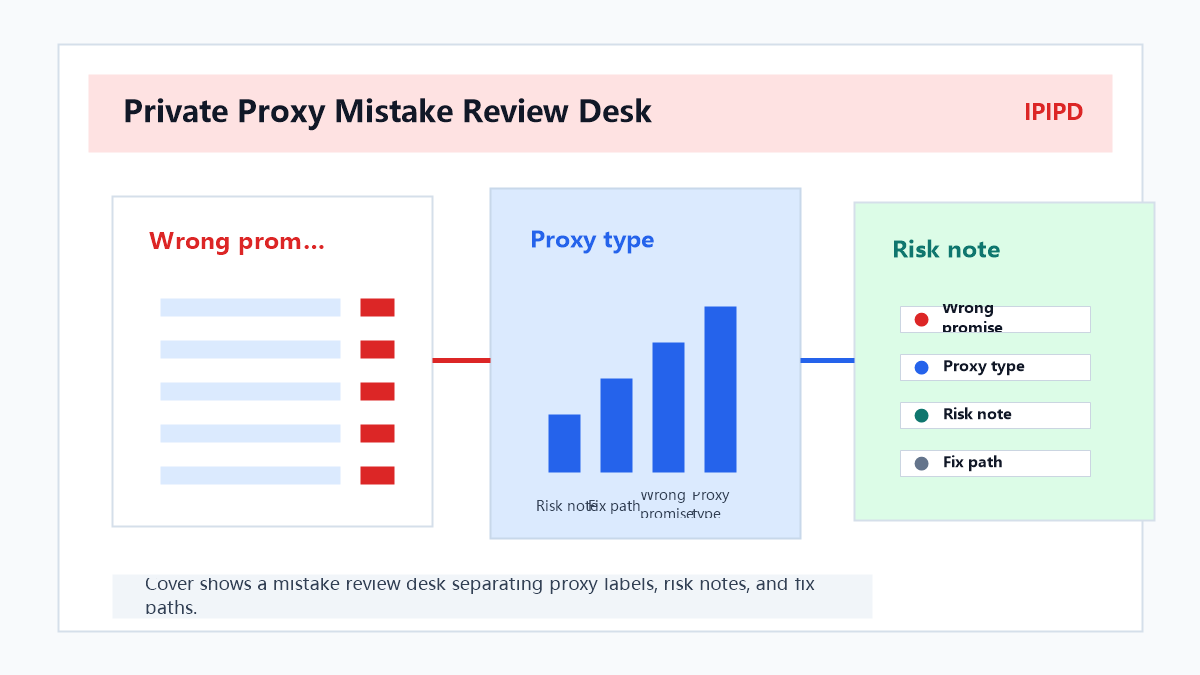
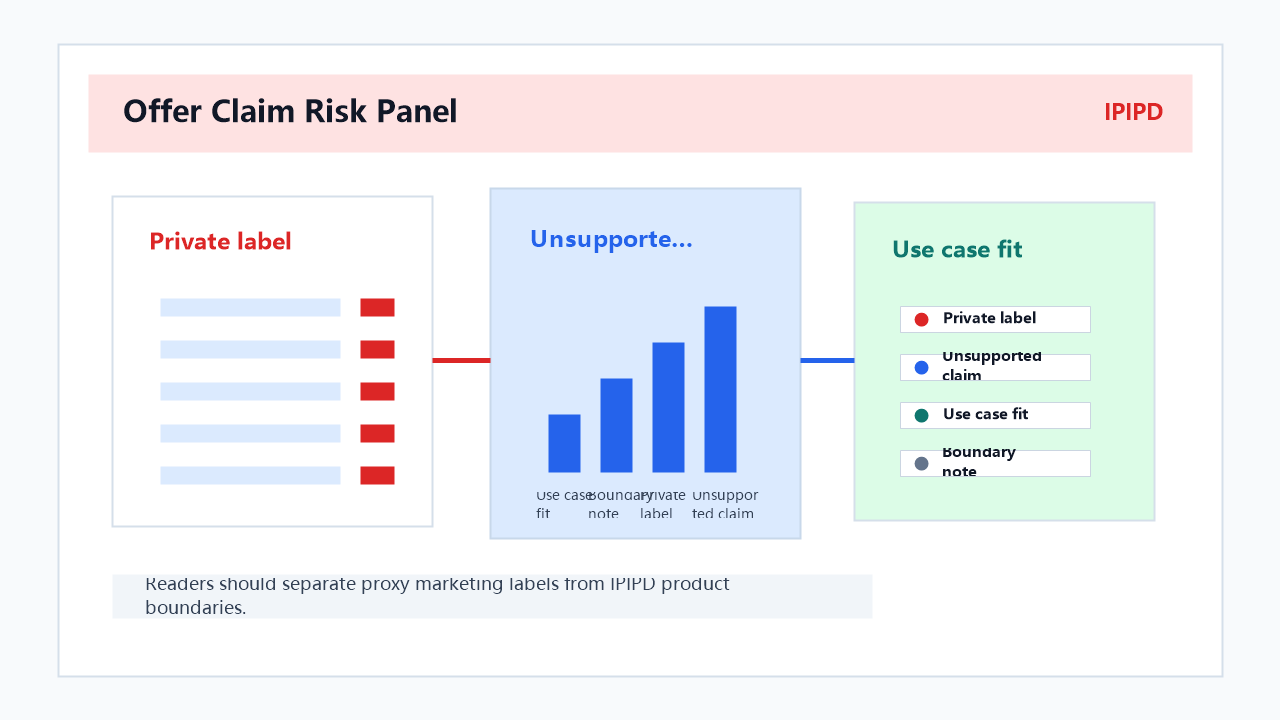 Readers should separate proxy marketing labels from IPIPD product boundaries.The fit check maps user needs to static or dynamic residential addresses.The checklist turns common buying mistakes into practical review steps.