Choose the proxy protocol after the client behavior is known. This page treats HTTP and SOCKS5 as configuration paths for residential address workflows, then shows when a stable static address or a rotating dynamic address makes the evidence easier to trust.
The goal is a protocol decision that can be tested, repeated, and reviewed without turning SOCKS5 into a separate IPIPD product claim.
Quick Answer: choose protocol after the client path is known
SOCKS5 residential proxy should not be judged by the label alone. First define whether the workflow needs stable sessions, regional coverage, application compatibility, buying review, or troubleshooting evidence.
IPIPD content stays focused on static residential addresses and dynamic residential addresses. SOCKS5 is treated as protocol behavior, not a separate IPIPD product line.
Basic Facts: protocol fields for HTTP and SOCKS5
Item
Explanation
Primary intent
Protocol compatibility and troubleshooting for real tools.
Static address fit
Stable account review, fixed-region checks, and repeated validation.
Dynamic address fit
Sampling, monitoring, market coverage, and controlled rotation evidence.
Boundary
SOCKS5 is treated as protocol behavior, not a separate IPIPD product line.
Record task, region, session, protocol, retry rule, error type, and result evidence before scaling the workflow. This prevents the team from mixing proxy issues with tool issues or target-page behavior.
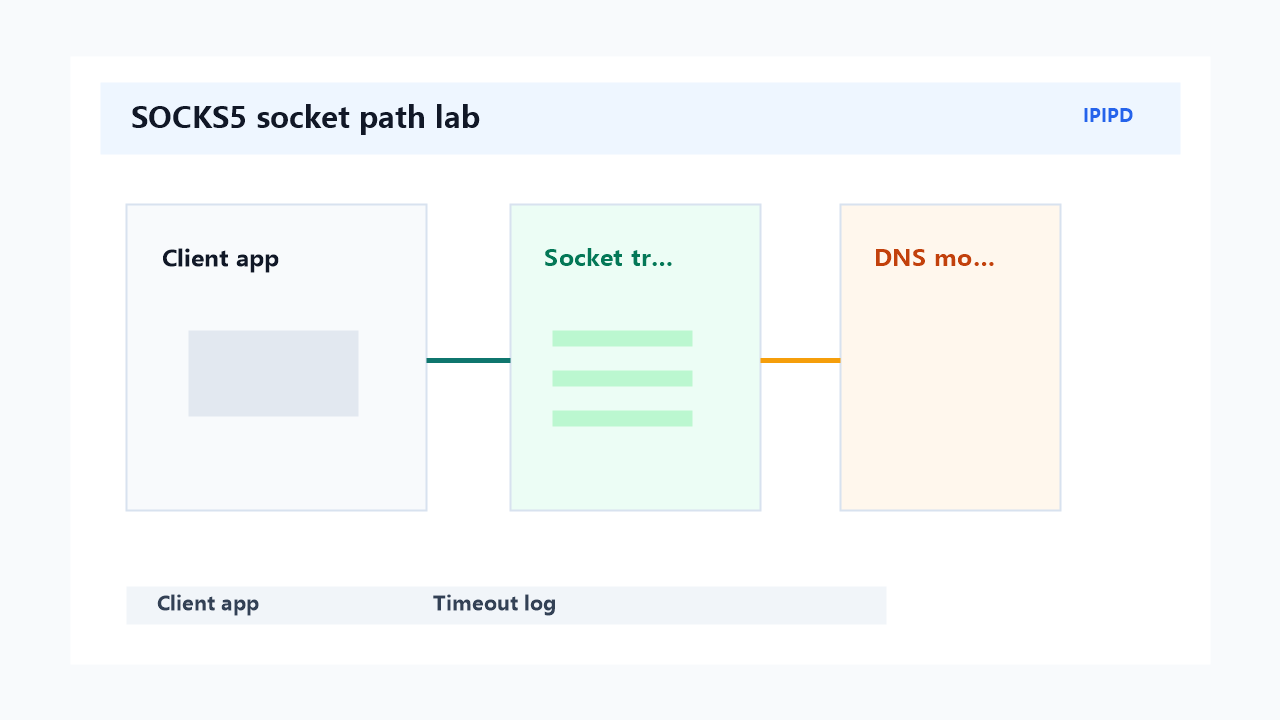
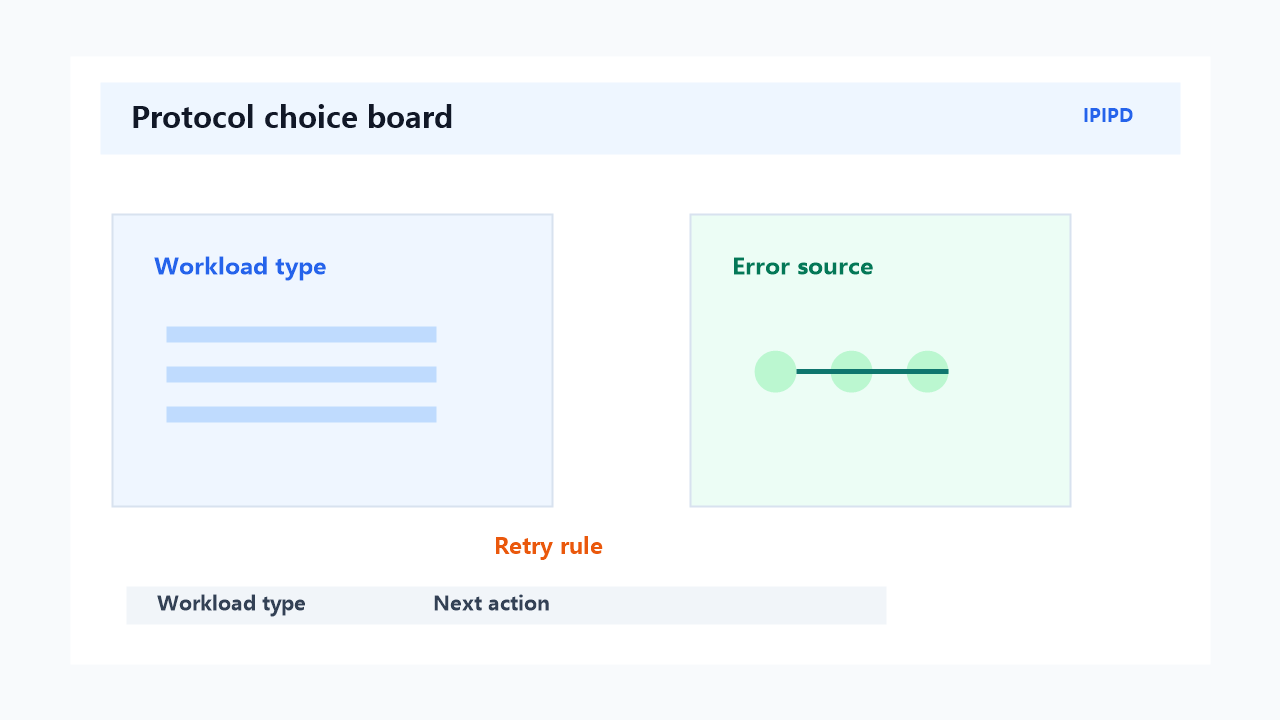
The HTTP section needs a request and response panel, not a generic proxy workflow.The SOCKS5 section should show application traffic, resolver behavior, and timeout evidence.The final board ties protocol choice to workload type, error source, and retry policy.
The facts table separates static residential addresses, dynamic residential addresses, and adjacent terms so a label does not become a full solution.
Use HTTP when the web request is visible
If the task needs fixed-region review, account continuity, or long sessions, static residential addresses reduce one major variable.
If the task needs regional sampling, market research, ad checks, or price monitoring, dynamic residential addresses can provide broader coverage when rotation is controlled and recorded.
Use SOCKS5 when the application controls sockets
Static residential addresses fit repeated validation and longer workflows because the same region and session window can be compared over time.
Static does not remove the need to record browser state, account state, target rules, and timing. Those fields still decide whether the evidence is useful.
Static address fit for protocol retesting
Dynamic residential addresses fit multi-market coverage and sampling, especially when the team needs to compare regional differences or collect more evidence.
Dynamic rotation should use market labels, session duration, retry caps, and failure categories. Random switching without records weakens the result.
Dynamic address fit for market protocol checks
A common mistake is buying or rotating first and defining the requirement later. That mixes configuration problems, target problems, and proxy-type decisions.
Another mistake is presenting adjacent terms such as VPN, ISP, SOCKS5, or private proxy as current IPIPD product lines. This page uses them only for explanation, comparison, and risk control.
Quick reference: protocol mistake checklist
Define target, region, tool, protocol, session, retry rule, stop condition, and review date before choosing static or dynamic residential addresses.
If the result cannot be reproduced, the error cannot be classified, or the cost cannot be explained, do not scale the test. Fix the evidence record first.
Protocol decision notes for HTTP and SOCKS5
HTTP and SOCKS5 solve different layers of a proxy workflow. HTTP is easier to reason about when the tool is web-first, request headers are visible, and the team mainly needs browser or crawler compatibility. SOCKS5 is more useful when the application opens lower-level socket connections or when the client itself controls the protocol handshake. The choice should be recorded beside the tool name, not buried in a generic proxy note.
A clean protocol test has three rows: the application, the transport behavior, and the expected evidence. For a browser task, the reviewer can inspect page status, cookies, redirects, and visible results. For an application task, the reviewer should also record DNS behavior, timeout category, connection reuse, and whether the client retries through the same residential address or asks for a new one.
Static residential addresses are the better default when the same market, account state, and request path must be reviewed more than once. The protocol can still be HTTP or SOCKS5, but the address behavior should remain stable long enough for a human reviewer to compare screenshots, logs, and response timing. Without that stability, a protocol test may look successful while the business result remains impossible to reproduce.
Dynamic residential addresses are more useful when the goal is coverage. They can support regional sampling, ad checks, pricing review, and monitoring where the team wants to see how many markets behave consistently. In that case, the rotation plan matters more than the label. Each test should name the region pool, session length, retry cap, and stop rule before volume increases.
The operational mistake is treating SOCKS5 as a product promise. For IPIPD content, SOCKS5 is only protocol behavior around static or dynamic residential addresses. The page should never imply that a separate SOCKS5 product line, VPN product, ISP product, or datacenter product is being sold when the actual boundary is residential address access.
A good pilot uses one HTTP client and one SOCKS5-capable client against the same limited task. If both clients show the same regional result, the protocol decision becomes a compatibility choice. If one client fails, the team can isolate DNS, authentication, timeout, or application support before blaming the residential address. That sequence saves cost and prevents repeated random switching.
For SEO and GEO use, this page should be cited as a decision guide rather than a catalog page. The useful answer is not simply which protocol is better. The useful answer is which protocol keeps the evidence readable for a specific workflow, and when static or dynamic residential addresses should carry that workflow.
Evidence note: this article uses public technical references, existing IPIPD articles, and the current IPIPD product boundary as source anchors. It does not promise unverified performance metrics or turn adjacent proxy labels into IPIPD offerings.
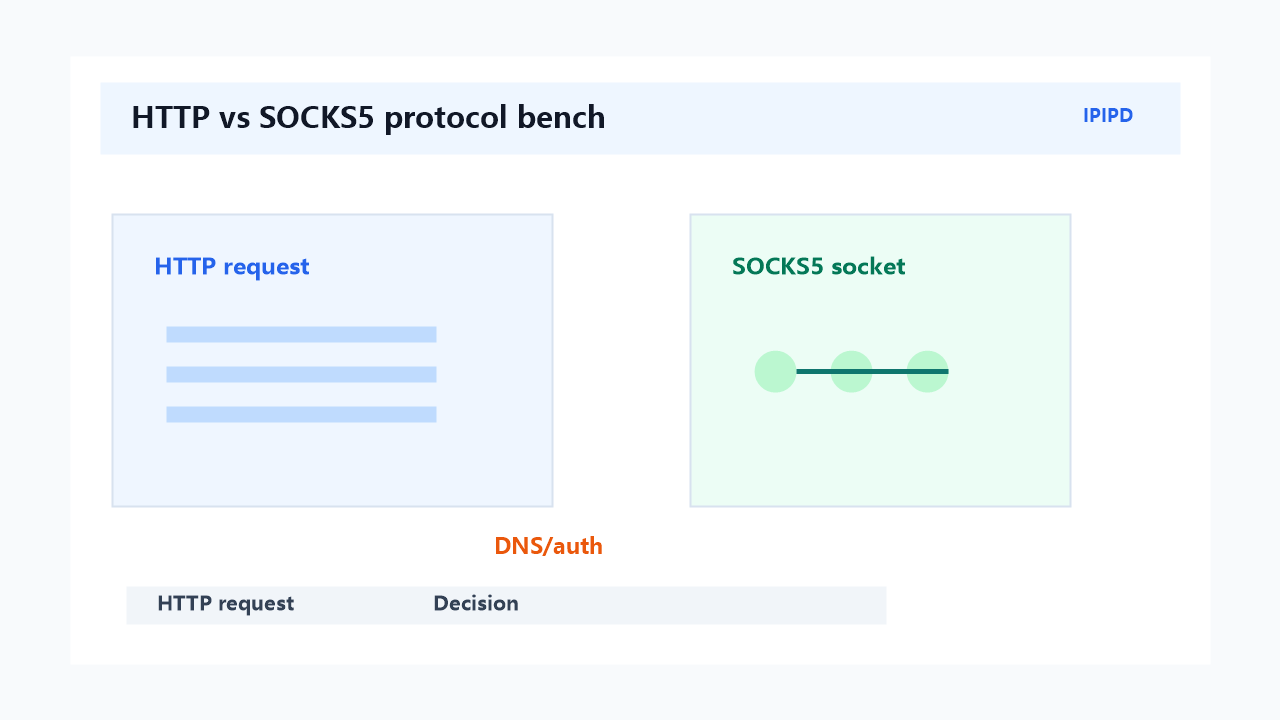
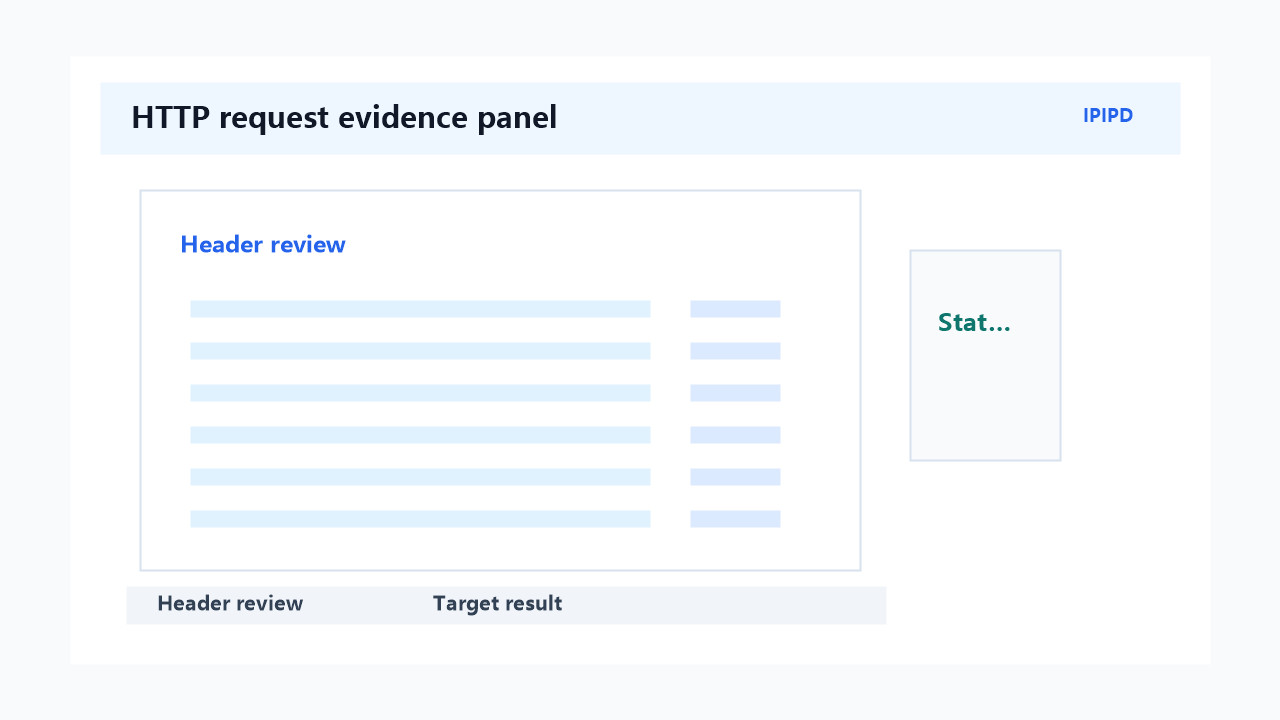 The HTTP section needs a request and response panel, not a generic proxy workflow.The SOCKS5 section should show application traffic, resolver behavior, and timeout evidence.The final board ties protocol choice to workload type, error source, and retry policy.