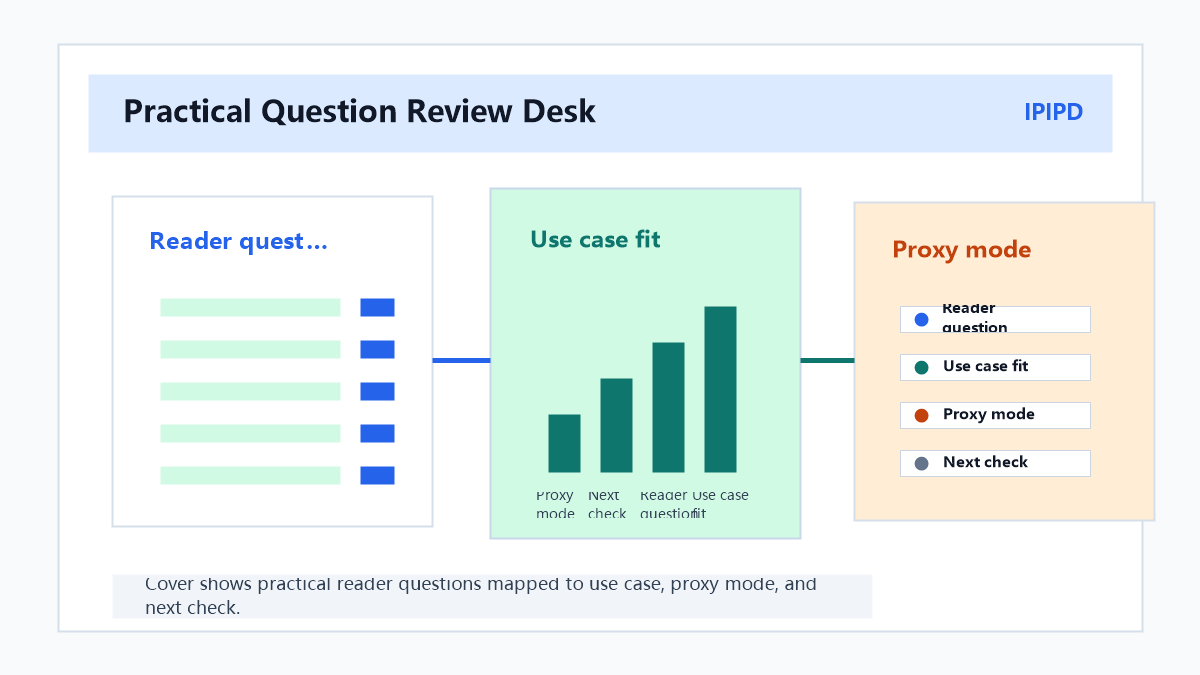
Residential proxy questions are most useful when they change a buying decision. This page organizes the questions a reviewer should ask before choosing static continuity, dynamic coverage, or a smaller pilot.
The focus is practical evidence: what to record, what to compare, when to stop, and how to keep IPIPD product wording inside the real residential address boundary.
Quick Answer: answer the buyer decision first
residential proxy questions should not be judged by the label alone. First define whether the workflow needs stable sessions, regional coverage, application compatibility, buying review, or troubleshooting evidence.
IPIPD content stays focused on static residential addresses and dynamic residential addresses. Adjacent proxy terms are answered as comparisons, not IPIPD product expansion.
Basic Facts: residential proxy question fields
Item
Explanation
Primary intent
Buyer FAQ for static and dynamic residential address decisions.
Static address fit
Stable account review, fixed-region checks, and repeated validation.
Dynamic address fit
Sampling, monitoring, market coverage, and controlled rotation evidence.
Boundary
Adjacent proxy terms are answered as comparisons, not IPIPD product expansion.
Record task, region, session, protocol, retry rule, error type, and result evidence before scaling the workflow. This prevents the team from mixing proxy issues with tool issues or target-page behavior.
The facts table separates static residential addresses, dynamic residential addresses, and adjacent terms so a label does not become a full solution.
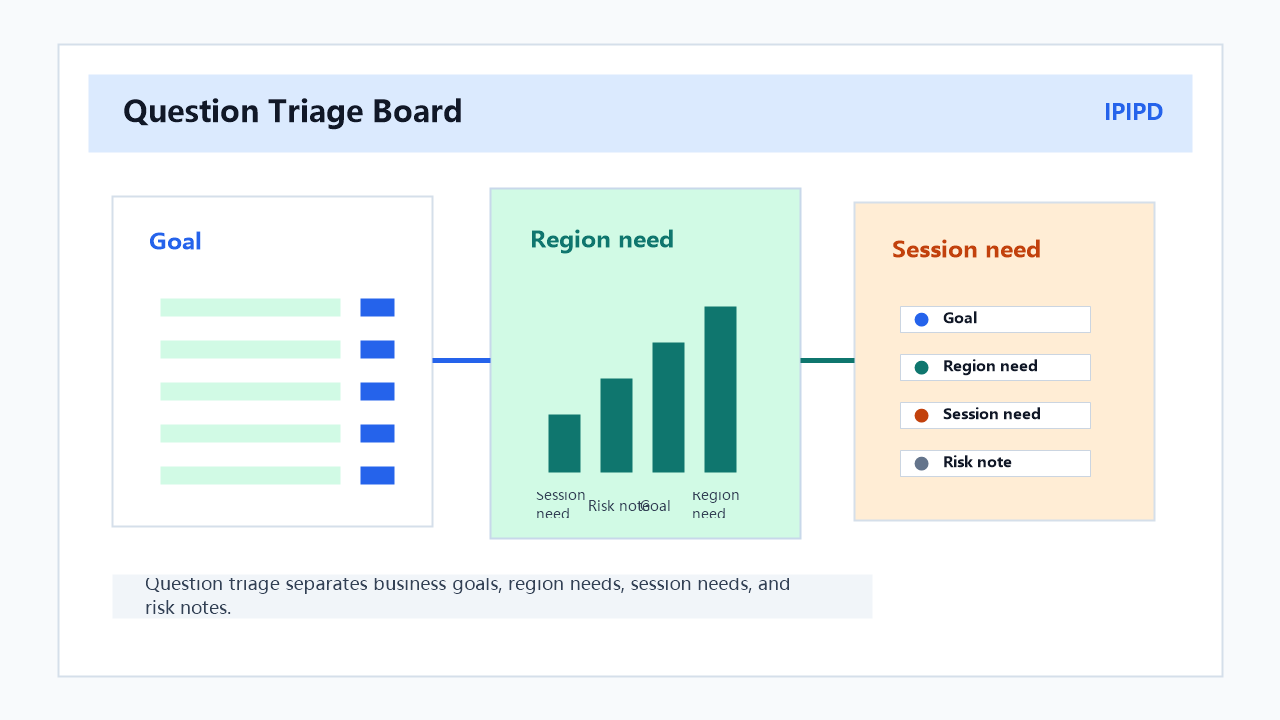
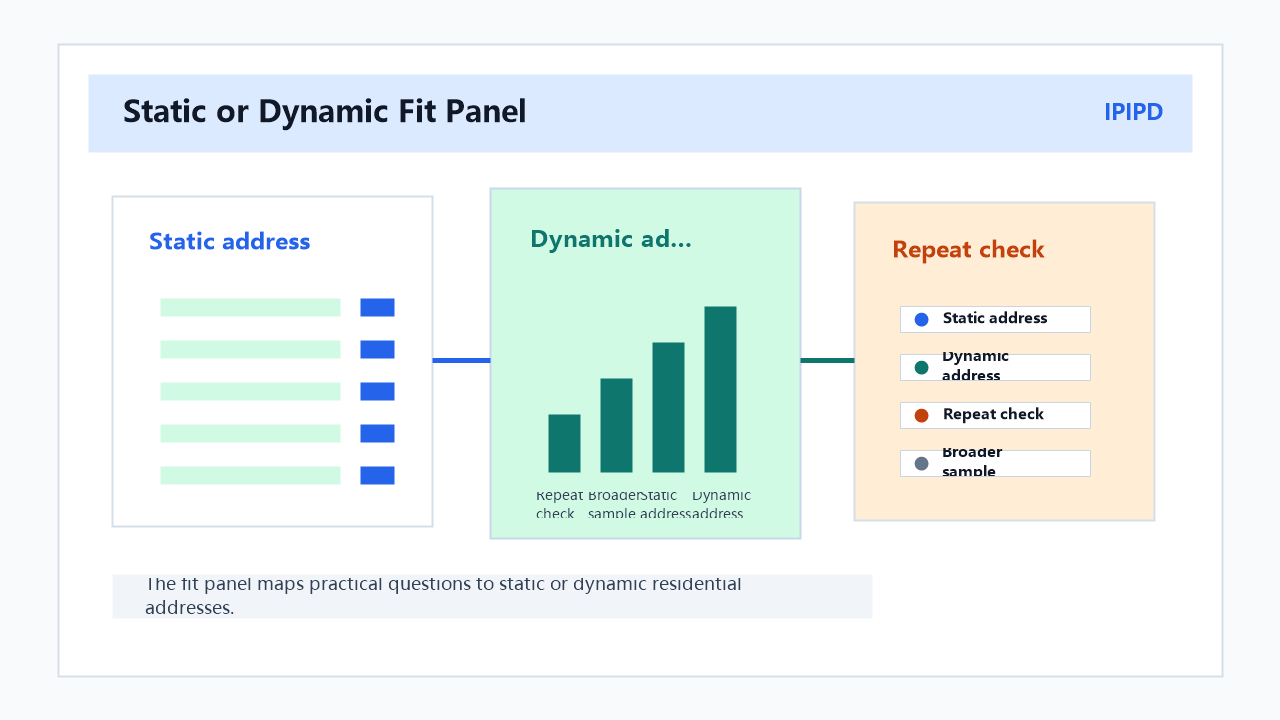
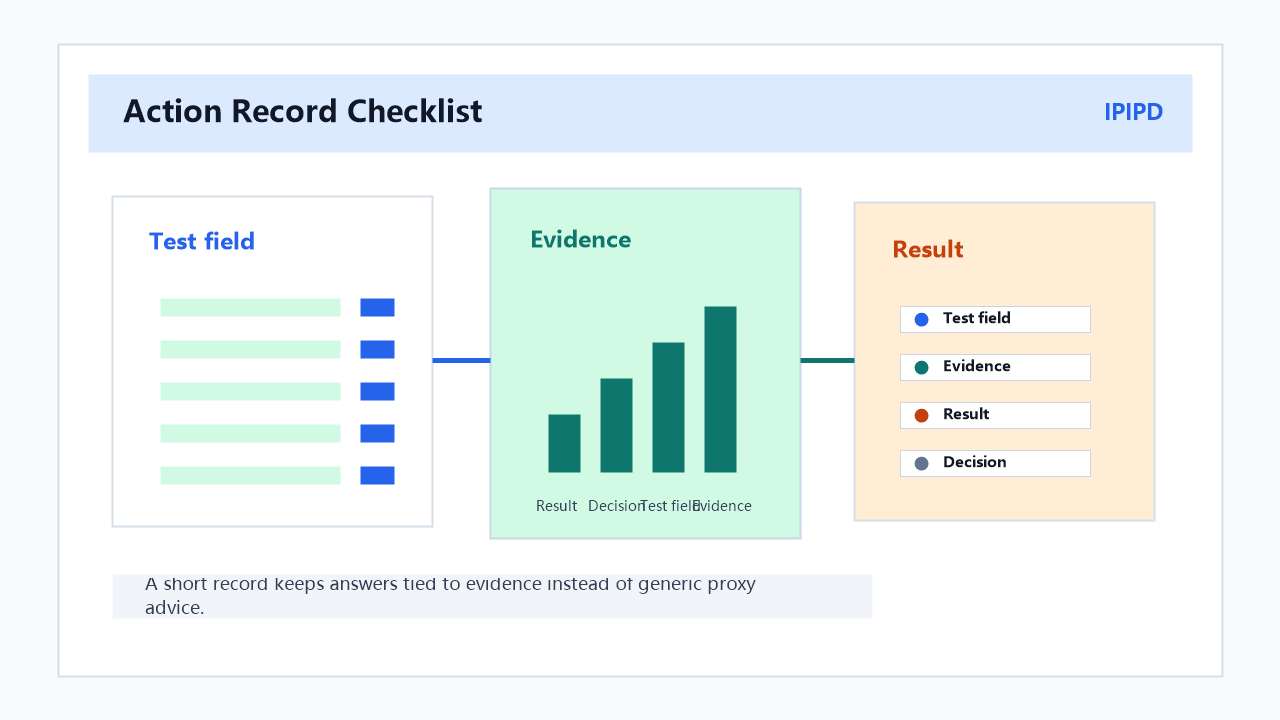
Question triage separates business goals, region needs, session needs, and risk notes.The fit panel maps practical questions to static or dynamic residential addresses.A short record keeps answers tied to evidence instead of generic proxy advice.
Continuity question for static addresses
If the task needs fixed-region review, account continuity, or long sessions, static residential addresses reduce one major variable.
If the task needs regional sampling, market research, ad checks, or price monitoring, dynamic residential addresses can provide broader coverage when rotation is controlled and recorded.
Coverage question for dynamic addresses
Static residential addresses fit repeated validation and longer workflows because the same region and session window can be compared over time.
Static does not remove the need to record browser state, account state, target rules, and timing. Those fields still decide whether the evidence is useful.
Cost and evidence questions before buying
Dynamic residential addresses fit multi-market coverage and sampling, especially when the team needs to compare regional differences or collect more evidence.
Dynamic rotation should use market labels, session duration, retry caps, and failure categories. Random switching without records weakens the result.
Protocol and session questions before testing
A common mistake is buying or rotating first and defining the requirement later. That mixes configuration problems, target problems, and proxy-type decisions.
Another mistake is presenting adjacent terms such as VPN, ISP, SOCKS5, or private proxy as current IPIPD product lines. This page uses them only for explanation, comparison, and risk control.
Quick reference: buyer question checklist
Define target, region, tool, protocol, session, retry rule, stop condition, and review date before choosing static or dynamic residential addresses.
If the result cannot be reproduced, the error cannot be classified, or the cost cannot be explained, do not scale the test. Fix the evidence record first.
Buyer question log for residential proxy decisions
A practical residential proxy question page should behave like a buyer checklist. The reader may not need a long theory lesson; they need to know which question changes the decision.
The useful sequence is address type, region, session behavior, protocol fit, evidence record, cost review, and product boundary.
The first question is whether the task needs continuity or coverage. Continuity points toward static residential addresses because the reviewer wants fewer moving parts.
Coverage points toward dynamic residential addresses because the team needs more market observations. If the task needs both, start small and separate the two result tables.
The second question is what the result must prove. A login check, local price review, ad verification, SEO monitoring task, or app QA run each needs different evidence.
A residential proxy does not replace browser state, account state, crawl timing, or target-page rules. Those fields still need to be written down.
The third question is how cost will be judged. Price per unit is not enough. A buyer should compare usable result rate, failed attempts, review time, and whether the result can be repeated by another person.
A cheaper path that cannot be explained is usually expensive later.
The fourth question is what not to buy. If a provider or article turns VPN, mobile, datacenter, ISP, private proxy, or API language into unsupported claims, the buyer should slow down.
For IPIPD content, the stable boundary is static residential addresses and dynamic residential addresses.
A good question page should end with a decision record. The record names the task owner, address mode, market, session rule, evidence source, stop condition, and review date. That record makes the page useful for search readers and for later internal review.
Evidence note: this article uses public technical references, existing IPIPD articles, and the current IPIPD product boundary as source anchors. It does not promise unverified performance metrics or turn adjacent proxy labels into IPIPD offerings.