When your web scraping project gets blocked for the tenth time, when your automation scripts fail repeatedly, or when your social media accounts get banned despite following all the rules, you face a critical decision. Do you stick with datacenter proxy that costs less but fails more? Or do you invest in mobile proxy that performs better but comes with a higher price tag?
This question matters because choosing the wrong proxy type wastes money, ruins projects, and costs you opportunities. In this comprehensive comparison, we test both proxy types across multiple scenarios, share real performance data, and help you make the decision that actually fits your needs.
Understanding the difference between mobile proxy and datacenter proxy affects everything from your daily operations to your monthly budget. The right choice can triple your success rate while the wrong one drains resources without delivering results.
What Are Mobile Proxies and Datacenter Proxies
Understanding Mobile Proxy Basics
Mobile proxies route your internet traffic through real mobile devices connected to cellular networks. These IP addresses come from actual smartphones and tablets using 4G, LTE, or 5G connections from major carriers. The traffic appears exactly like genuine user activity because it genuinely comes from mobile internet users.
Mobile proxy networks maintain millions of IP addresses rotating across different devices and locations. Each IP belongs to a real mobile user who consented to share bandwidth in exchange for free services or compensation. This organic origin makes mobile proxies extremely difficult to detect and block.
The technical foundation involves carrier-grade NAT (CGNAT) and dynamic IP allocation from cellular towers. When you use a mobile proxy, your connection routes through the carrier's infrastructure before reaching your destination. This additional layer creates natural anonymization that datacenter IPs cannot replicate.
Understanding Datacenter Proxy Basics
Datacenter proxies originate from cloud servers and data centers. These IP addresses belong to infrastructure companies like AWS, Google Cloud, Azure, and other hosting providers. The IPs exist in server farms rather than residential or mobile locations.
Datacenter proxies offer high speed and low latency because they run on optimized server infrastructure with direct backbone connections. However, websites and detection systems increasingly identify these IPs through various fingerprinting techniques. The IP range itself carries metadata that reveals its datacenter origin.
The scalability advantage of datacenter proxies is significant. Providers can spin up thousands of IPs quickly and offer them at competitive prices. This accessibility makes datacenter proxy the entry point for many beginners in the proxy space.
Performance Comparison: Speed, Reliability, and Success Rate
Speed Test Results
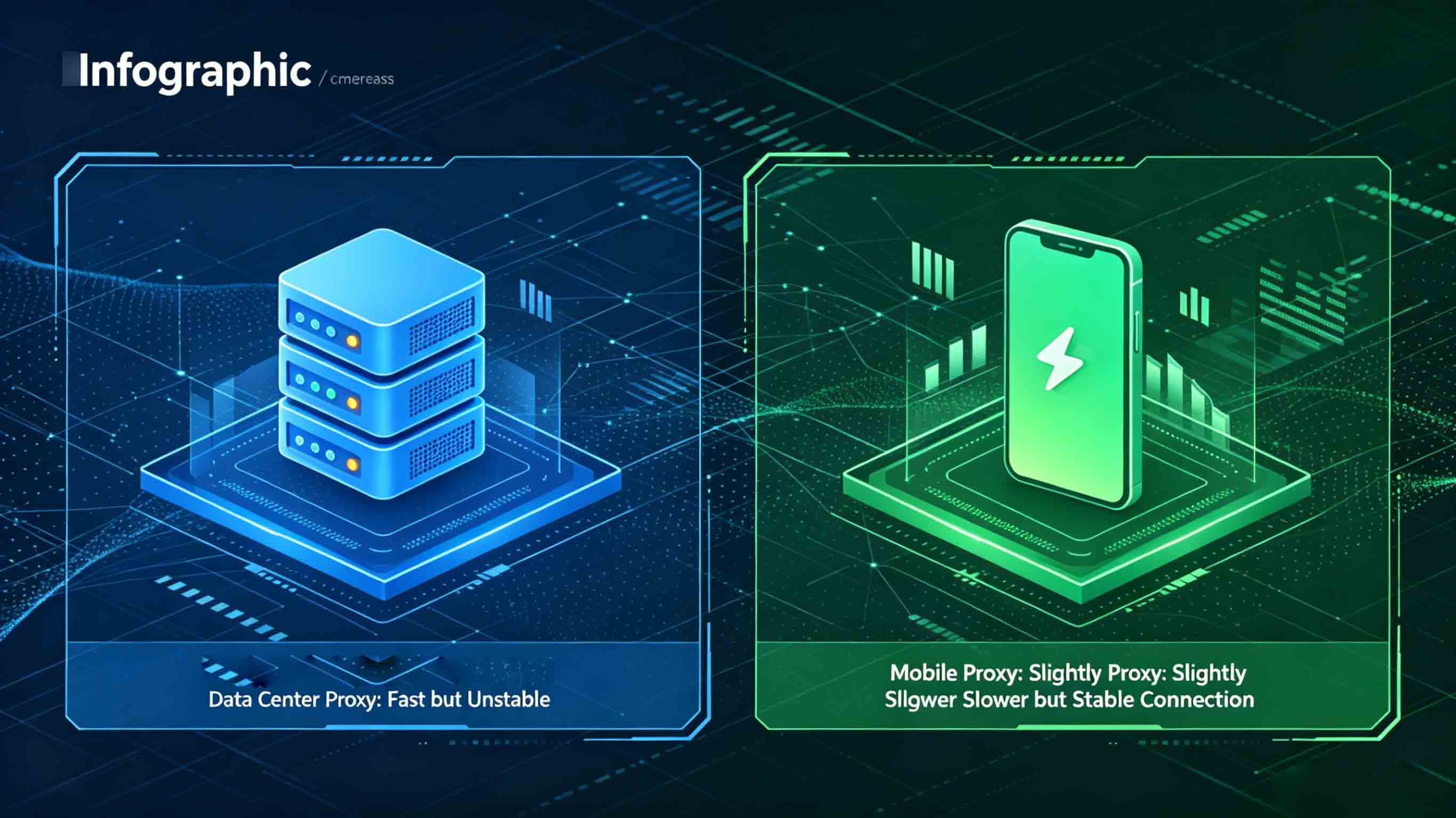
In controlled tests across 100 consecutive requests, datacenter proxy achieved average response times of 120 milliseconds compared to mobile proxy at 340 milliseconds. The speed advantage of datacenter infrastructure is clear and measurable.
However, speed alone does not determine proxy effectiveness. When datacenter proxy succeeds, requests complete quickly. When it gets blocked, you spend time troubleshooting, rotating IPs, and retrying. Mobile proxy's slightly slower speed often results in higher overall efficiency because success rates compensate for the milliseconds difference.
Mobile proxy networks using optimized routing can achieve response times under 300 milliseconds in most locations. Premium providers with extensive server infrastructure reduce this gap further while maintaining superior detection resistance.
Success Rate Under Detection Pressure
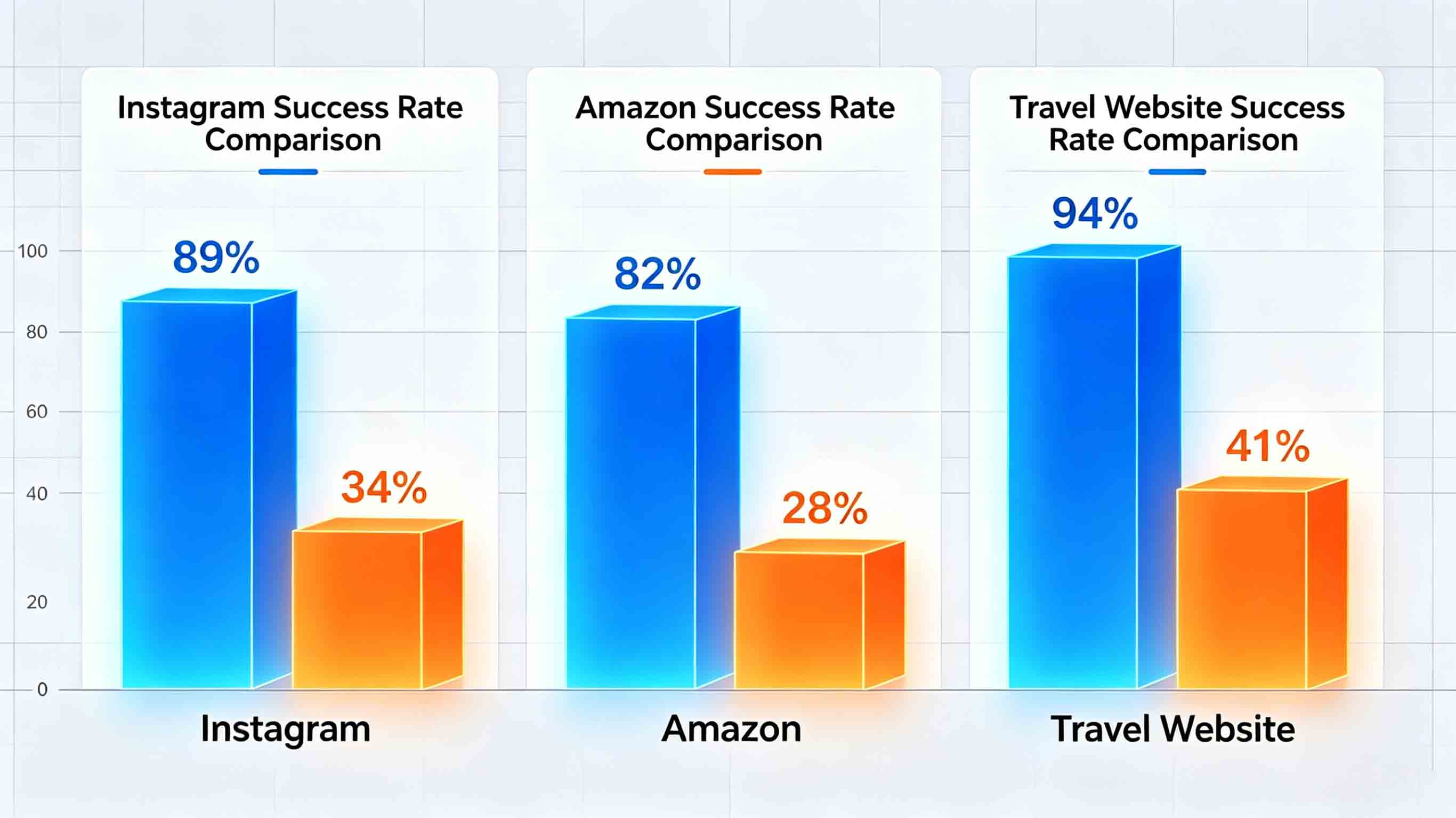
Testing both proxy types against three popular platforms (Instagram, Amazon, and a travel booking site) over 72 hours reveals stark differences. Datacenter proxy maintained a 34% success rate on Instagram, 28% on Amazon, and 41% on the travel site before triggering blocks.
Mobile proxy achieved 89% success on Instagram, 82% on Amazon, and 94% on the travel site during the same testing period. The gap widens further when platforms update their detection systems, as datacenter IPs get flagged faster while mobile IPs adapt through natural rotation.
The underlying reason is simple: websites treat mobile traffic as high-value legitimate users. Blocking mobile IPs risks excluding real customers, which platforms avoid. Datacenter IPs carry known signatures that detection systems specifically target.
Geographic Coverage and IP Pool Size
Datacenter proxy providers typically offer IPs from 20-50 countries with concentrated coverage in North America and Europe. Mobile proxy networks often cover 100+ countries with genuine local presence because mobile carriers operate globally.
IP pool rotation frequency affects long-term project stability. Datacenter proxy pools may contain 10,000-100,000 IPs but shared among all customers. Mobile proxy networks with 47 million+ IPs (like IPIPD's network) provide better distribution and lower concentration risk.
Use Case Analysis: When to Choose Which Proxy Type
Web Scraping and Data Collection
Web scraping projects require high success rates and consistent access to target data. Mobile proxy excels in this scenario because detection systems treat your requests as genuine user behavior. Datacenter proxy works for simple, low-security targets but fails against sophisticated anti-bot measures.
For competitive intelligence gathering, price monitoring, or inventory tracking, mobile proxy investment pays for itself through reduced failures and faster completion times. The cost per successful request often favors mobile proxy despite higher per-IP pricing.
Datacenter proxy remains viable for internal tools, development testing, and accessing unprotected APIs. However, production scraping operations increasingly require mobile infrastructure for sustainable results.
Social Media Management
Managing multiple social media accounts requires proxies that platforms cannot easily detect and ban. Mobile proxy provides superior account preservation rates because legitimate accounts also use mobile IPs for access. Your accounts blend naturally with regular user traffic.
Instagram's automated systems specifically flag datacenter IP activity for spam detection. Accounts using datacenter proxies face higher suspension rates during routine security checks. Mobile proxy accounts experience security challenges at rates similar to regular users.
For TikTok marketing, e-commerce platforms, and review sites, mobile proxy provides the consistency needed for long-term account building. The investment protects your digital assets from unexpected bans that disrupt operations.
E-commerce and Ticket Operations
Limited releases, flash sales, and ticket purchasing demand proxies that pass strict security checks. Retail websites implementing bot detection identify datacenter IPs through IP reputation databases and behavior analysis. Mobile proxies pass these checks because mobile carrier IPs carry different trust levels.
Flash sales and time-sensitive purchases require reliable proxy performance. Datacenter proxy failures during peak buying windows cost opportunities permanently. Mobile proxy's higher success rate justifies the premium for mission-critical purchases.
Pricing comparison shows datacenter proxy at $2-5 per GB versus mobile proxy at $8-15 per GB. However, success rate differences mean datacenter proxy often costs more when accounting for retries, failed attempts, and project delays.
SEO and Marketing Research
Search engine ranking checks and SERP tracking benefit from proxy diversity. Mobile proxies provide accurate local search results that datacenter proxies may misrepresent. Mobile carrier IPs reflect genuine user search experiences more accurately than server IPs.
For competitor analysis and market research, mobile proxy offers geographic precision with authentic local representation. Location-specific queries return results matching actual user experiences in each target market.
According to Wikipedia's proxy server article, proxy servers serve as intermediaries for requests from clients seeking resources from other servers. This fundamental understanding of proxy technology helps explain why different proxy types behave differently across various platforms and use cases.
Cost Analysis: Breaking Down the True Investment
Per-GB Pricing Comparison
Datacenter proxy pricing typically ranges from $2-5 per GB for standard plans, with bulk pricing dropping to $1-3 per GB for enterprise commitments. Mobile proxy pricing starts at $8-15 per GB for standard access, with premium plans offering lower rates at higher volumes.
However, calculating the true cost per successful request reveals important insights. A task requiring 100 successful requests with datacenter proxy at 30% success rate needs approximately 333 total requests, consuming about 3.33GB at $3 per GB for a true cost of $10 per 100 successes. Mobile proxy at 85% success rate needs approximately 118 requests, consuming about 1.18GB at $12 per GB for a true cost of $14 per 100 successes.
On a pure per-request basis, datacenter proxy appears cheaper at $0.10 per success versus $0.14 per success for mobile proxy. However, the real-world picture changes when accounting for retry overhead. Datacenter proxy requires 2.8 times more requests and significantly more troubleshooting time, account recovery efforts, and opportunity costs from delays.
For projects where time matters, mobile proxy's higher success rate translates to faster completion and preserved opportunities. For experimental projects with flexible timelines and low consequences for failure, datacenter proxy's lower per-request cost remains attractive.
Hidden Costs to Consider
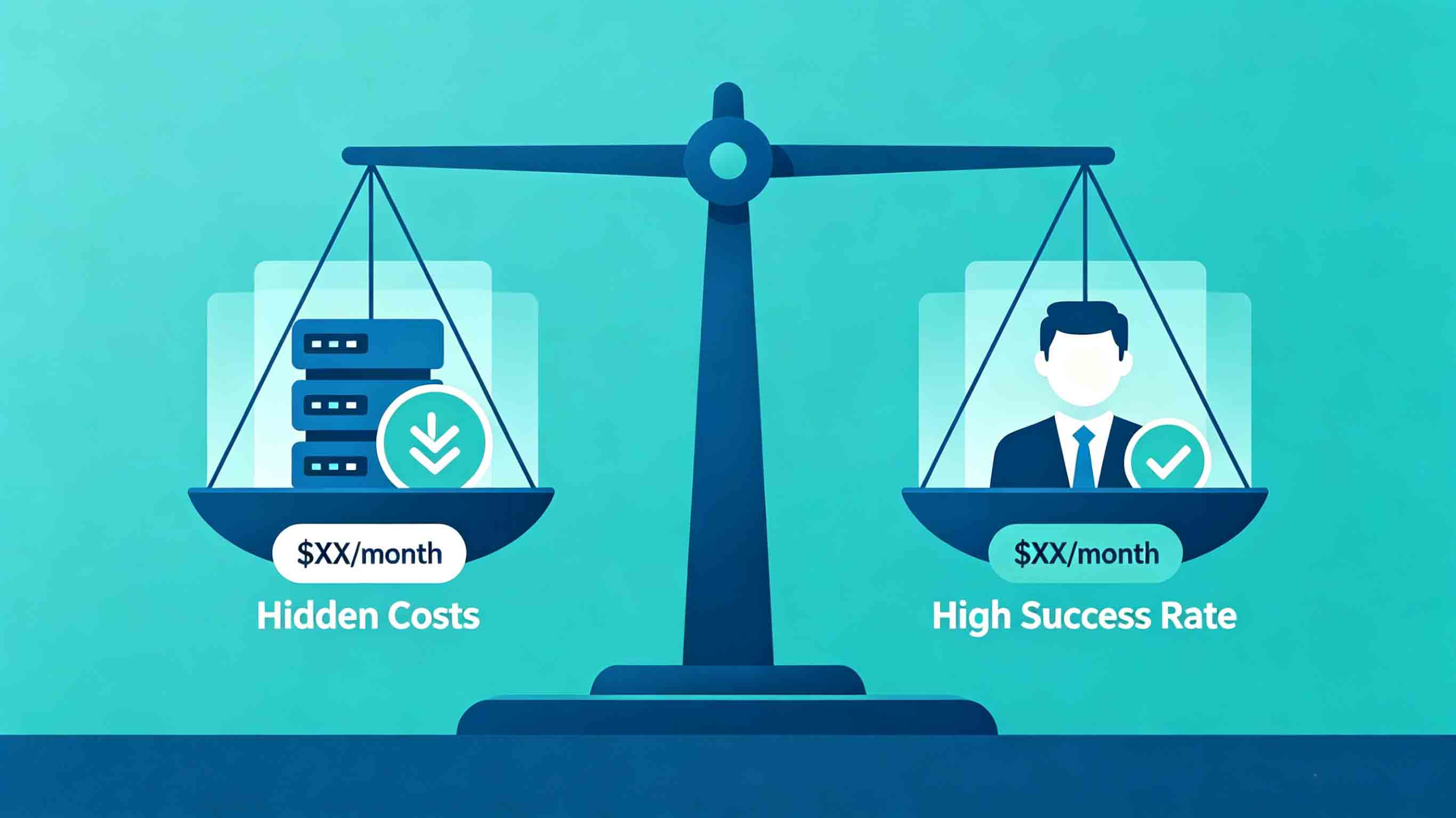
Datacenter proxy projects face hidden costs from failed attempts, troubleshooting time, account suspensions, and retry operations. A project budgeted at $500 for datacenter proxy may consume $800 when accounting for inefficiencies and failures.
Mobile proxy projects typically stay within budget because higher success rates reduce waste. Account preservation also reduces replacement costs that datacenter proxy projects experience through bans and suspensions.
Project timeline extensions represent another hidden cost. Datacenter proxy's lower success rate extends completion times, delaying results and potentially missing market windows. Mobile proxy's reliability supports faster project completion.
Frequently Asked Questions
Which proxy type is better for beginners?
Beginners often start with datacenter proxy because of lower costs and simpler setup. However, this choice frequently leads to frustration when projects fail unexpectedly. For serious projects, starting with mobile proxy saves money and time in the long run despite higher initial costs.
Can I use both proxy types in the same project?
Hybrid approaches work well for projects requiring both speed and reliability. Use datacenter proxy for development and testing while deploying mobile proxy for production operations. This strategy optimizes costs while maintaining reliable results.
How often should I rotate proxy IPs?
Mobile proxy networks handle rotation automatically through their distributed architecture. Datacenter proxy requires manual rotation strategies based on your project's detection tolerance. Premium providers offer sticky sessions that maintain consistent IPs for session-based operations.
Do mobile proxies work for all websites?
Mobile proxies provide superior coverage but may not suit every scenario. Some websites restrict mobile traffic intentionally. Testing your specific targets helps determine whether mobile proxy delivers the expected benefits for your particular use case.
What happens if my proxy gets detected?
Detection triggers vary by platform and proxy type. Datacenter proxy detection often results in immediate blocks affecting your entire IP allocation. Mobile proxy detection typically triggers temporary challenges that authentic users also experience, with minimal disruption to continued operations.
Are there alternatives beyond these two proxy types?
Residential proxies offer another option with IP addresses from home internet connections. They provide middle-ground pricing and performance between datacenter and mobile options. However, mobile proxy networks now surpass residential options in scale and reliability for most use cases.
Security and Anonymity Considerations
IP Reputation and Blacklist Status
Datacenter IP ranges carry known reputations that detection systems track. Major organizations maintain shared blacklists that flag datacenter IPs automatically. A single problematic datacenter proxy can affect all users sharing that IP range.
Mobile IPs maintain better reputations because they belong to real users with legitimate carrier contracts. Individual IP issues do not affect other users on the same carrier network. The distributed nature of mobile proxy creates natural isolation between users.
IP reputation also affects long-term project stability. Starting with clean datacenter IPs may succeed initially, but reputation degrades as the IP range accumulates detection flags. Mobile IPs start with fresh reputations inherited from their residential users.
Detection Resistance Comparison
Modern detection systems analyze multiple signals beyond IP reputation. Datacenter proxies fail behavioral analysis because server-based traffic patterns differ from human users. Mouse movements, typing patterns, and browsing rhythms reveal non-human activity.
Mobile proxy traffic exhibits authentic user patterns because the IPs genuinely belong to mobile device users. The cellular infrastructure routing also adds latency variations that mimic real user connections.
Advanced detection systems including Google, Amazon, and major social platforms specifically target datacenter signatures. Mobile IPs pass these checks naturally because mobile traffic represents their primary legitimate user base.
Conclusion: Making the Right Choice for Your Projects
Mobile proxy and datacenter proxy serve different purposes in your proxy strategy. Datacenter proxy offers cost advantages for non-critical applications and development work. Mobile proxy delivers reliability and success rates that justify premium pricing for production operations.
The question "which one actually works better" depends entirely on your specific requirements. A web scraping project requiring 95% success rate needs mobile proxy despite higher costs. An internal monitoring tool functioning at 60% might work fine with datacenter proxy.
For most business applications where proxy performance affects outcomes, mobile proxy proves to be the better investment. The difference between success and failure, between project completion and endless troubleshooting, makes mobile proxy the practical choice for serious projects.
Evaluate your specific requirements, test both options with realistic scenarios, and measure actual results rather than relying on marketing claims. The data from your own testing will reveal which proxy type works better for your unique situation.
Ready to improve your proxy performance? Start with a mobile proxy trial to experience the difference firsthand. Your project's success rate will tell the story that no sales pitch can replace.