Whether it's competitor analysis, market research, or academic studies—data collection is essential. And web scraping is the go-to method for grabbing that data.
Here's the problem: most websites have anti-bot systems. Hit them with your own IP, and you'll get banned in no time.
That's where web scraping proxies come in.
1. What Is a Web Scraping Proxy?
A web scraping proxy is a specialized proxy IP service built for web scraping and data collection.
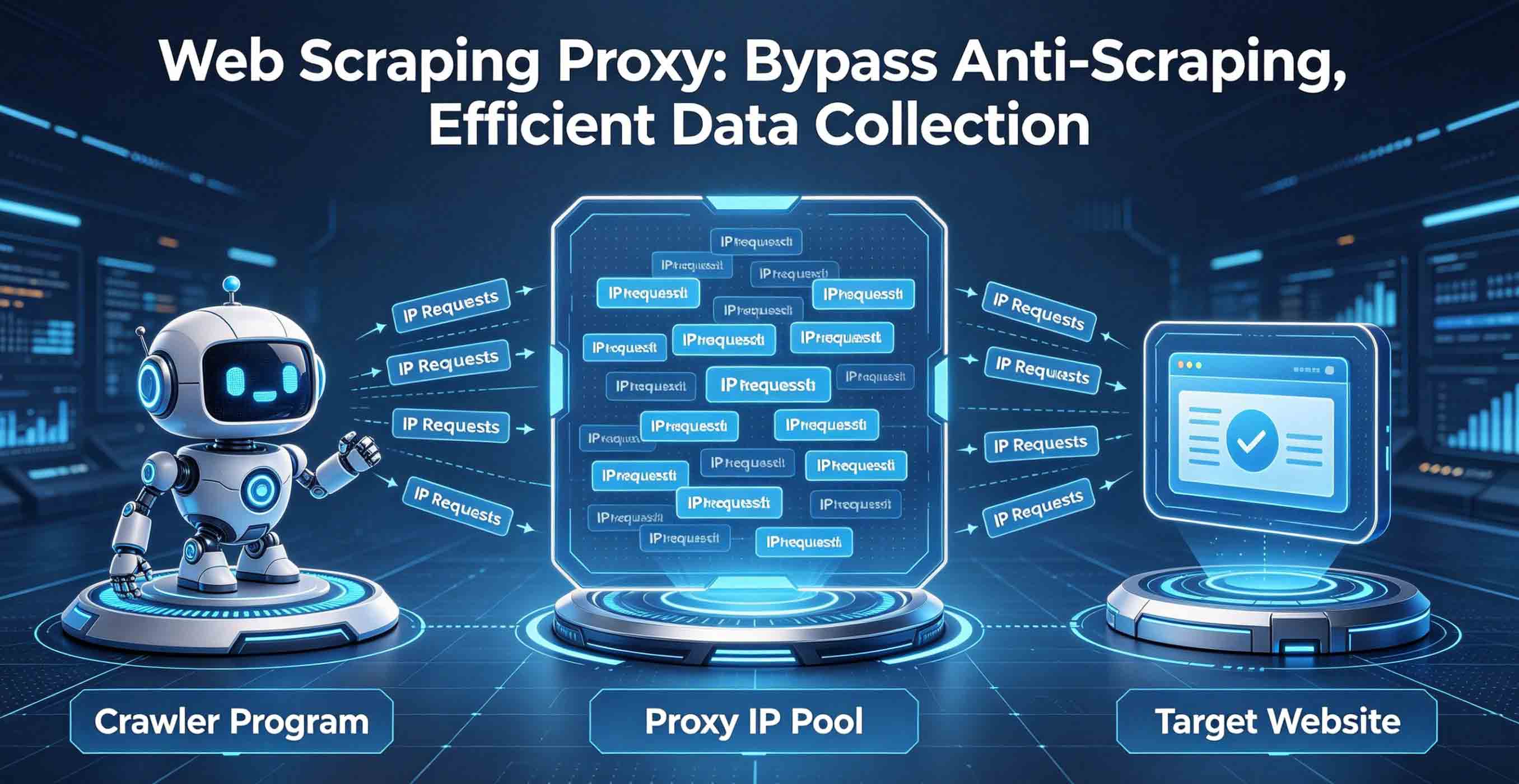
Think of it this way: your scraper runs on Server A, but routes through Proxy B to reach the target website. The target site sees Proxy B's IP—not yours.
What web scraping proxies do for you:
Bypass anti-bot systems: Rotate through tons of IPs so no single IP gets flagged
Hide your real IP: Keep your scraper server off the radar
Speed things up: Run concurrent requests across multiple IPs
Keep collection stable: No more interruptions from IP bans
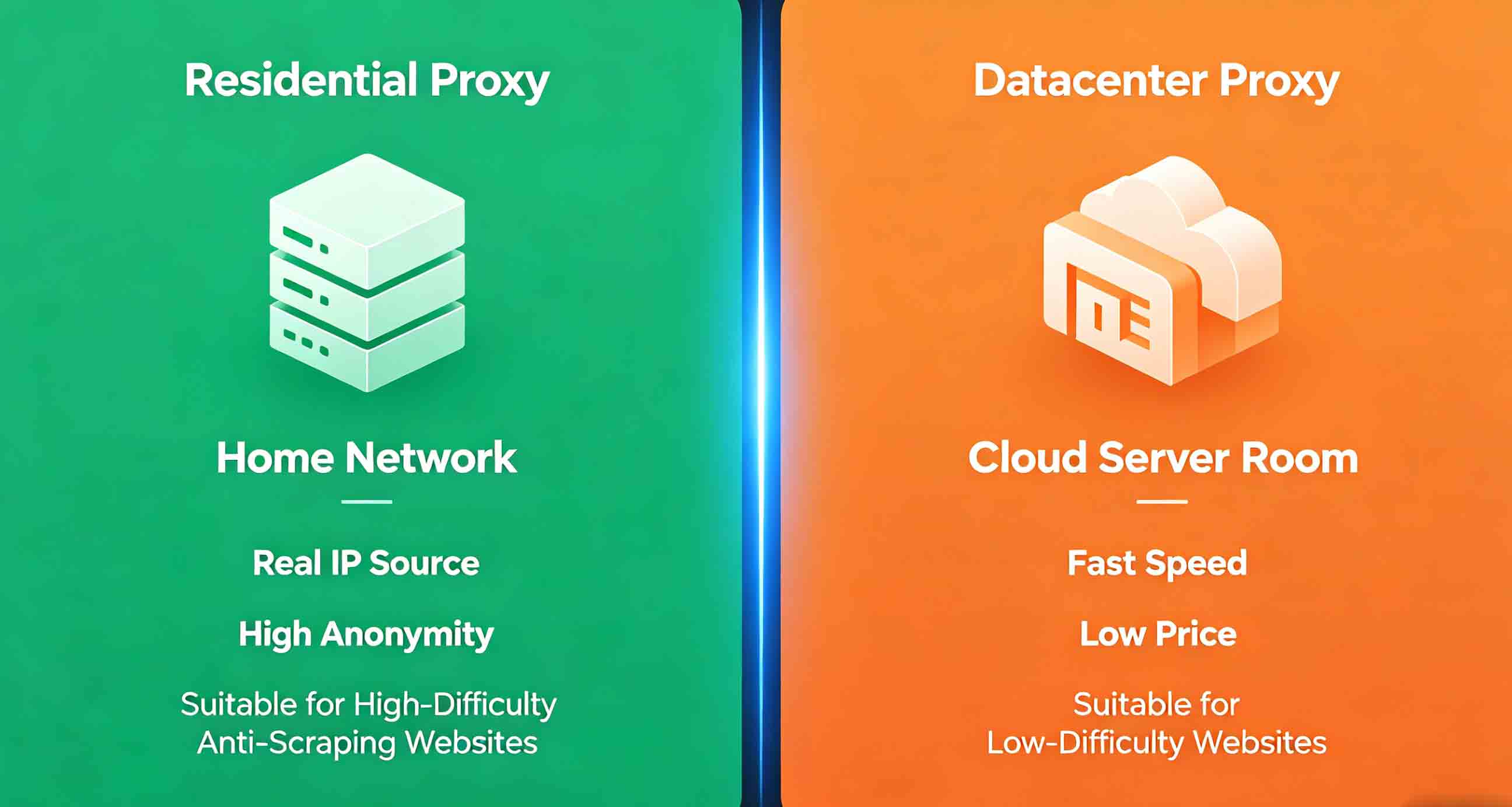
Data center proxies come from cloud server farms—AWS, Alibaba Cloud, and similar providers.
What makes them tick:
Factory IPs: These come from server rooms, not homes
Weak stealth: Sites spot them easily
Blazing fast: Speed is the main selling point
Cheap: Budget-friendly option
Best for:
Low-security sites
Projects where IP quality doesn't matter much
Startups with tight budgets
Side-by-Side Comparison
Factor
Residential Proxy
Data Center Proxy
IP source
Real home networks
Cloud server farms
Stealth
High
Low (easy to detect)
Ban risk
Low
High
Speed
Moderate
Fast
Price
Higher
Lower
Geo coverage
More countries
Limited
Best for
High-security sites
Low-security sites
The Verdict
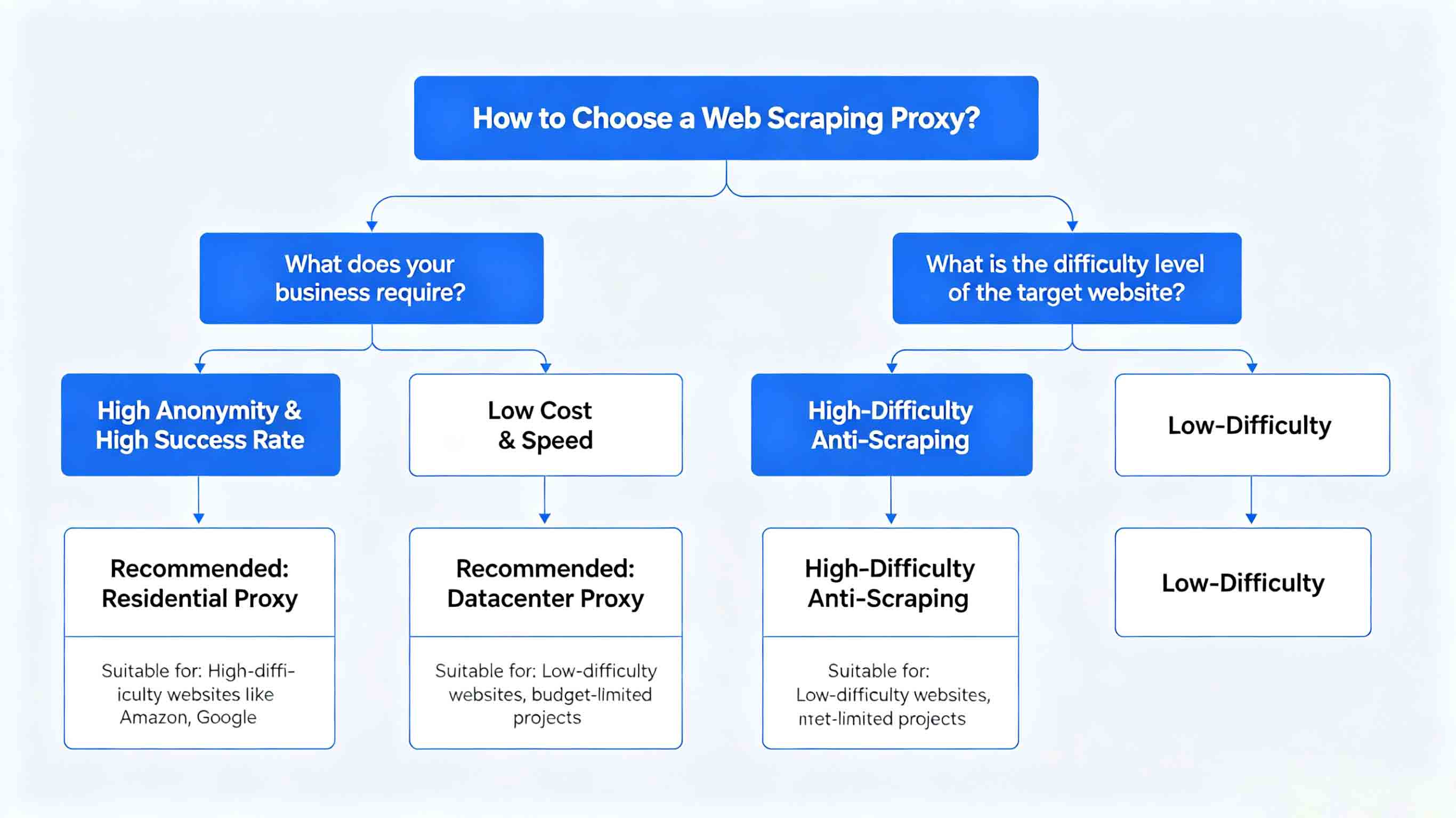
For most web scraping jobs, go with residential proxies.
Why:
Strong stealth—sites can't easily flag them as scrapers
Real home IPs mean they look like human visitors
Higher success rate means your data collection actually works
Stick with data center proxies only if you're scraping low-security sites and every dollar counts.
4. Core Features of Web Scraping Proxy Services
Feature 1: IP Rotation
Proxy pools give you a massive list of IPs to rotate through on demand.
Common rotation setups:
By request count: Switch IP every N requests
By time interval: Rotate every N minutes/hours
By domain: Use different IPs for different domains
Feature 2: Geolocation Targeting
Grab IPs from specific countries or cities to browse like a local user.
What it's used for:
Pulling region-specific pricing data
Scraping localized search results
Checking how content varies by location
Feature 3: Session Persistence
Keep the same IP locked to a single session—even while other IPs rotate.
When it matters:
Scraping data behind a login
Multi-step collection workflows
Jobs that need a stable session
Feature 4: IP Whitelisting
Bind proxy IPs to your server's IP—only whitelisted servers can use them.
Why bother:
Stops IP theft
Boosts security
Easier to track and manage
Feature 5: Reverse Connect
Pull available IPs automatically via API or proxy port—no manual management needed.
The upside:
Highly automatable
Cuts down on ops overhead
Perfect for programmatic scraping
5. How to Pick a Proxy Service Provider
Criterion 1: Pool Size
Bigger pool = more rotation options = lower ban risk.
Rule of thumb: Go with providers offering 1M+ IPs.
Criterion 2: Geographic Coverage
Match the provider to your target regions.
Popular regions:
US, UK, Canada (English-speaking markets)
Germany, France, Japan (developed markets)
Southeast Asia, South America (emerging markets)
Criterion 3: Success Rate
Good providers hit 95%+ success rates.
How to test: Buy a small batch first, then scale up if the quality checks out.
Criterion 4: Stealth Level
Higher stealth = harder for sites to detect your scraper.
How to judge:
Residential > Data center
Check the provider's IP detection reports
Test whether IPs get flagged by major sites
Criterion 5: Tech Support
Solid providers offer:
24/7 support
Docs and tutorials
API references and code samples
Criterion 6: Price vs Value
Don't just chase the cheapest price—look at what you actually get.
What to weigh:
Per-IP pricing vs per-GB pricing
Pay-as-you-go options
Minimum spend requirements
💡 Looking for reliable proxies? Check out IPIPD Residential Proxy—195+ countries, 50M+ IPs in the pool.
Frequently Asked Questions
What is a web scraping proxy?
A web scraping proxy is a specialized proxy IP service designed for web scraping and data collection. By routing your requests through proxy IPs, you can bypass anti-bot systems, rotate IP addresses, access region-specific data, and keep your scraper server's real IP hidden.
Residential or data center proxy—which is better for web scraping?
Residential proxies are the better choice for most web scraping scenarios. They come from real home networks with strong stealth, making them harder for websites to flag as scrapers. Data center proxies work fine for low-security sites or tight budgets.
How much does a web scraping proxy cost?
Proxy pricing varies by type and quality. Residential proxies typically run $5-15 per GB. Data center proxies are cheaper. Prices depend on the provider—test before you bulk buy.
Can proxy IPs get banned?
Any IP can get banned, but quality proxies have low ban risk. Use residential proxies, set reasonable request frequencies, and rotate IPs to keep ban risk down.
How do I test proxy IP quality?
Buy a small batch first: 1) Check availability rate; 2) Test stealth—do sites flag them?; 3) Benchmark speed; 4) Make your call before buying in bulk.