Wi-Fi Proxy Settings Facts: Scope, Sources, and Boundaries
Wi-Fi Proxy Settings in Plain English
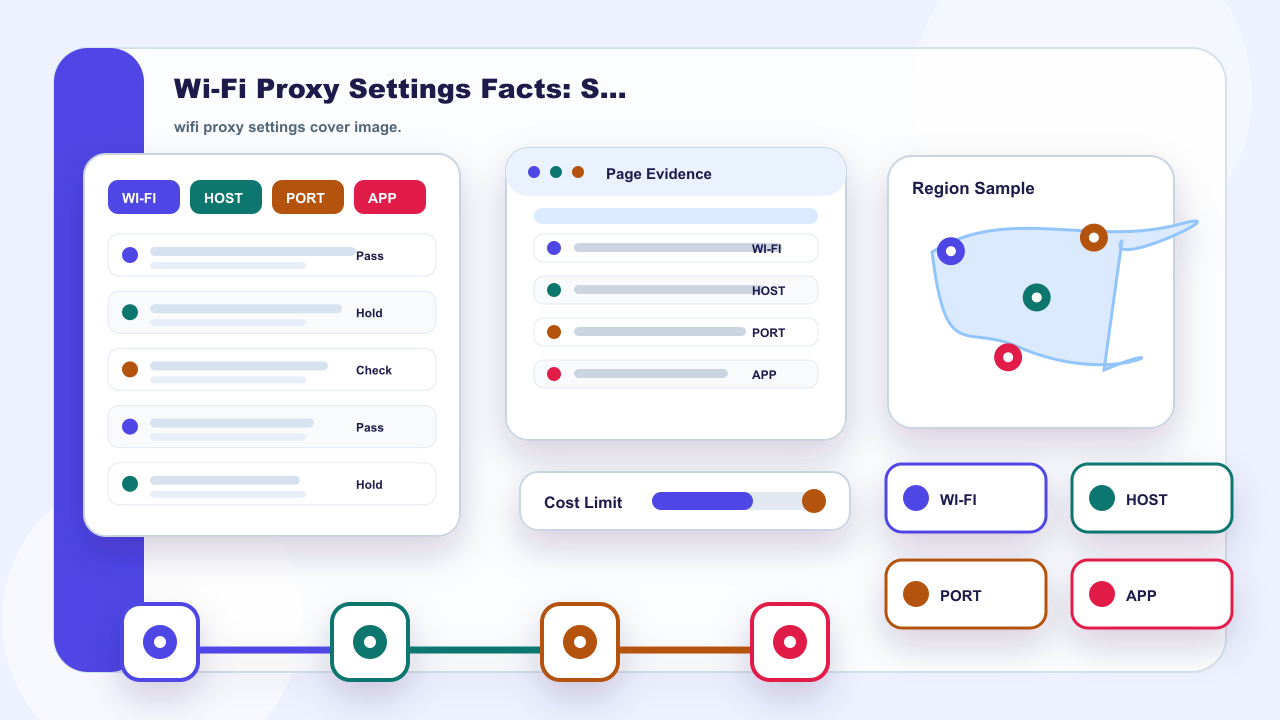
Wi-Fi proxy settings tell a device where to send eligible network requests while it uses a particular saved wireless network. They do not create a proxy service by themselves.
The key point is Scope boundary: The setting usually belongs to one saved Wi-Fi network on one device It should be read together with Endpoint source: Host, port, protocol, and authentication must match the assignment
What are Wi-Fi proxy settings? They define an assigned proxy endpoint for eligible traffic on a saved Wi-Fi network. That answer resolves the immediate definition or choice, but it is not a promise of access, anonymity, account safety, or platform outcomes.
For a practical decision, compare Wi-Fi Proxy Settings in Plain English with the required region, session duration, sample independence, setup effort, and budget. If one of those conditions remains unclear, check the provider documentation or run a limited authorized test instead of drawing a conclusion from the category name alone.
For IPIPD, current product language is limited to static residential addresses and dynamic residential addresses. Other proxy terms in this page are neutral comparison or definition context only.
Settings and Scope at a Glance
| Field | What to record |
|---|---|
| Scope boundary | The setting usually belongs to one saved Wi-Fi network on one device |
| Endpoint source | Host, port, protocol, and authentication must match the assignment |
| Application range | Apps may follow system settings or use their own networking rules |
| Address-mode boundary |