Static vs Rotating Proxies: Residential IP Decision Guide
Quick Answer
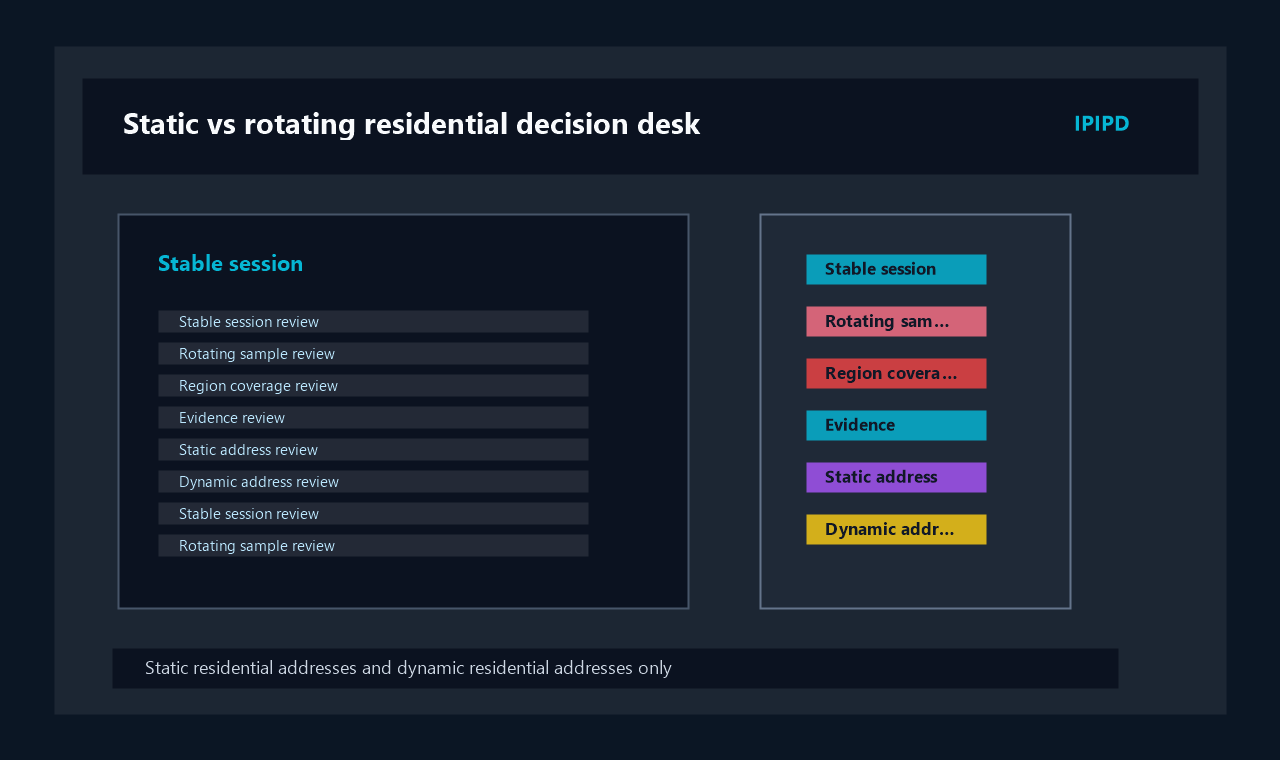
Static vs rotating proxies is not a choice between “safe” and “unsafe.” It is a choice between stable identity and broader coverage. A static residential address keeps the same exit IP for a longer period, which helps with logins, dashboards, repeated checks, account continuity, and evidence review. A rotating residential setup changes addresses according to request, time, session, or rule, which helps with public-page sampling, market checks, price monitoring, and regional coverage.
For IPIPD content, the correct product boundary is static residential addresses versus dynamic residential addresses. Static is best when continuity matters. Dynamic or rotating is best when coverage and sampling matter. Sticky sessions sit between the two: they can keep one address for a limited window, but they are not the same as a long-term static address.
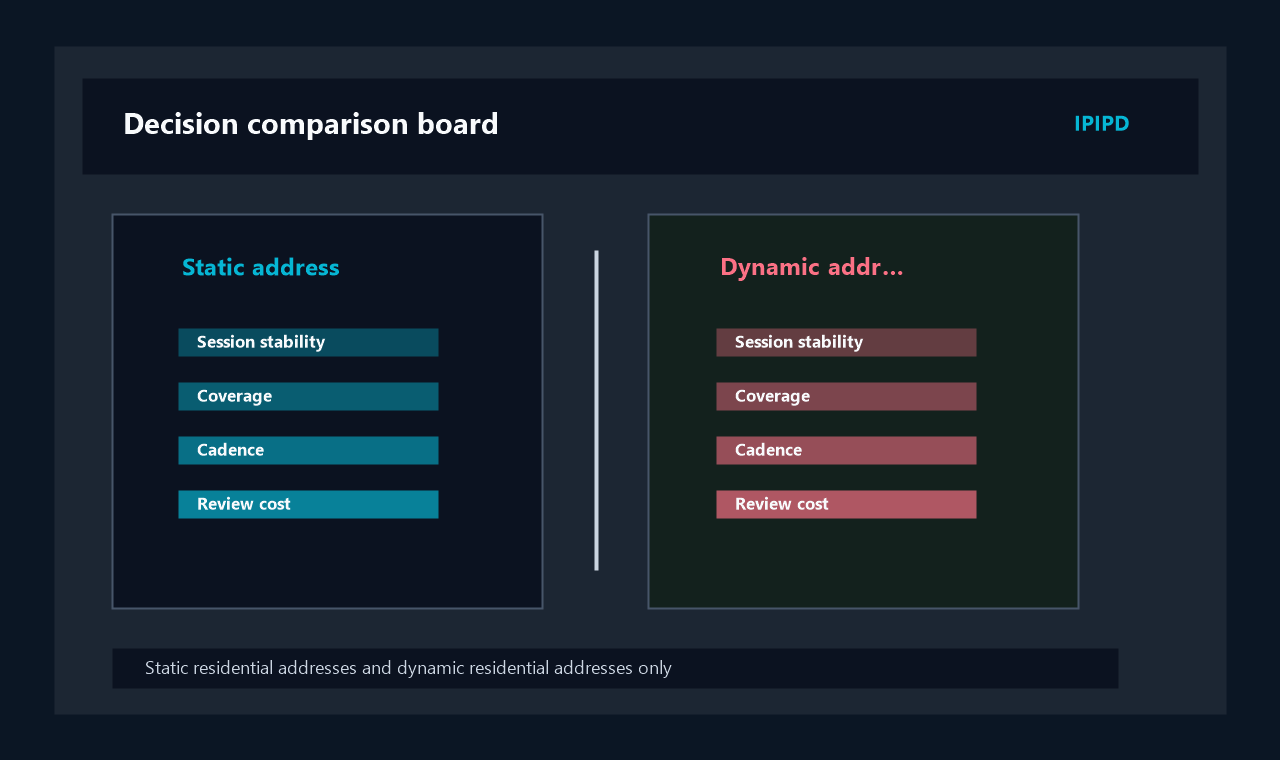
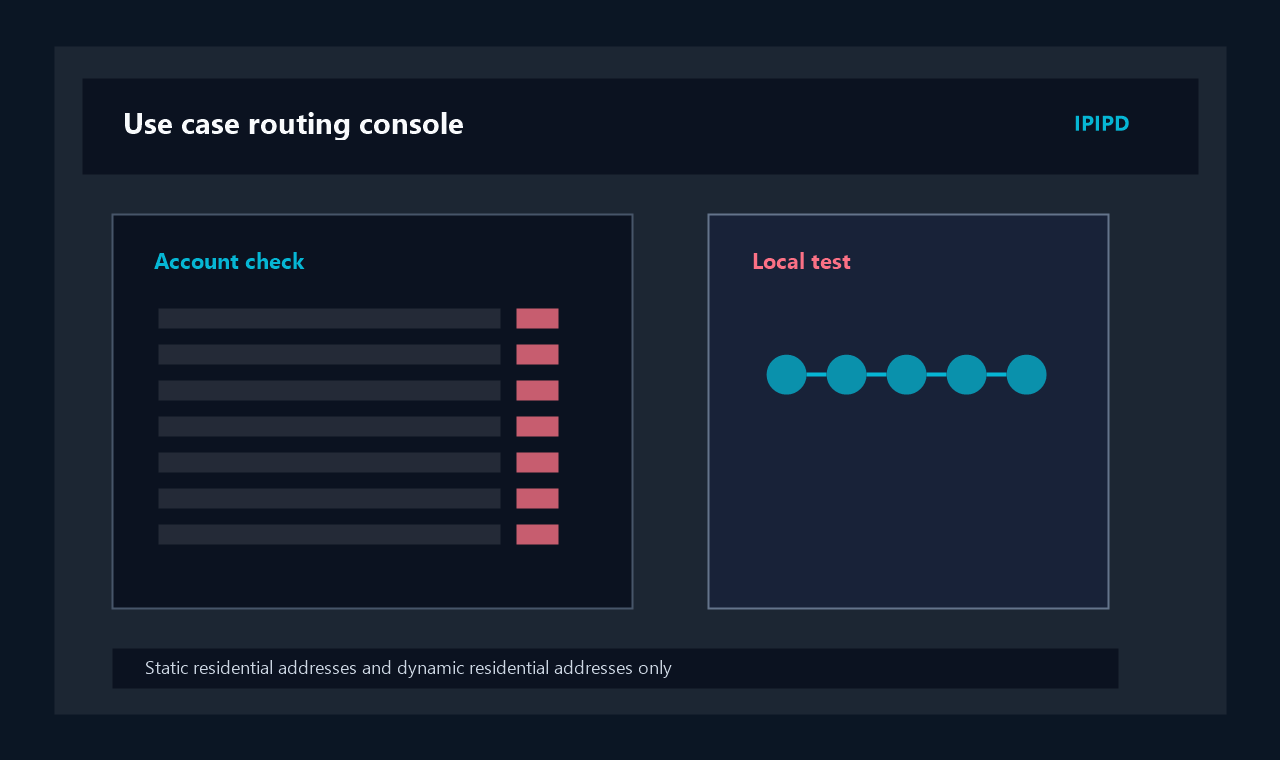
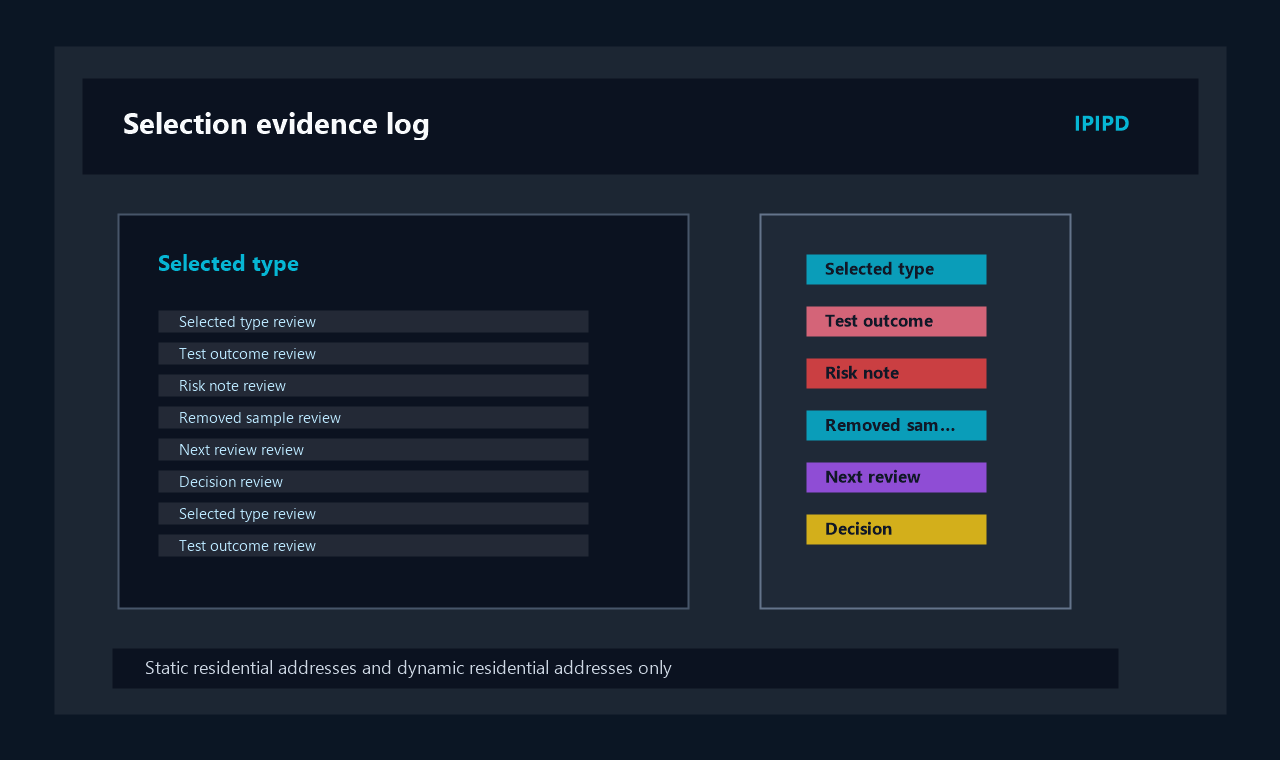
Compare static residential addresses and dynamic residential addresses by session stability, coverage, cadence, and review cost.Route account checks, localized testing, data sampling, and troubleshooting to the right address pattern.Document the selected address type, test outcome, risk notes, removed samples, and next review point.