Static vs Dynamic Residential Proxy QA Plan for Teams
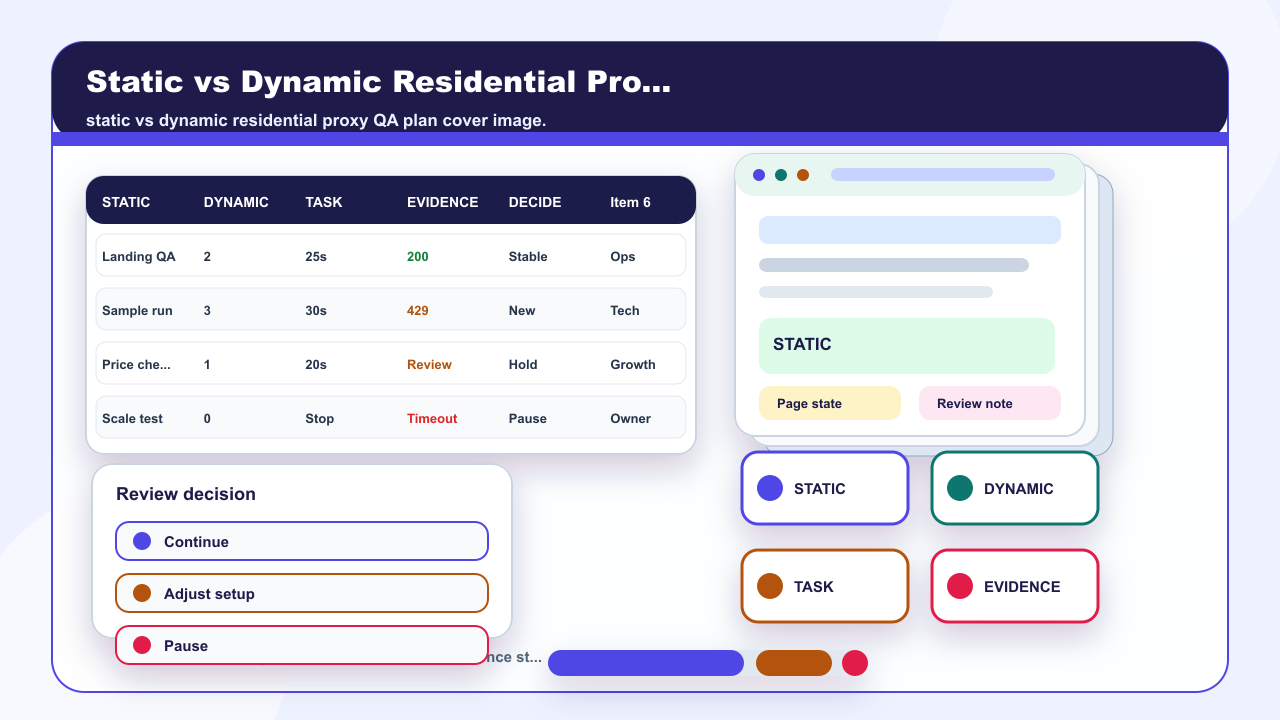
Quick Answer: Do Not Use One QA Plan for Both Modes
A QA plan fails when static and dynamic residential address tests share one undivided checklist. Static review protects continuity; dynamic review tests fresh-session samples. This page keeps those lanes separate so a second reviewer can reproduce the decision.
Use one lane for continuity and another for sampling. The discussion stays inside IPIPD's real product boundary: static residential addresses and dynamic residential addresses, with adjacent proxy terms used only as background or exclusions.
For static vs dynamic residential proxy QA plan, the useful record names the task, evidence source, owner, and next action before any scale-up decision is made.
Basic Facts: Static and Dynamic QA Split
| Field | What to record |
|---|---|
| Static lane | Use when continuity, stable region, or repeated page review matters. |
| Dynamic lane | Use when fresh-session sampling and sample comparison matter. |
| Shared evidence | Target page, region, browser state, screenshot, status, cost, and owner. |
| Boundary | The plan compares IPIPD static and dynamic residential address workflows only. |
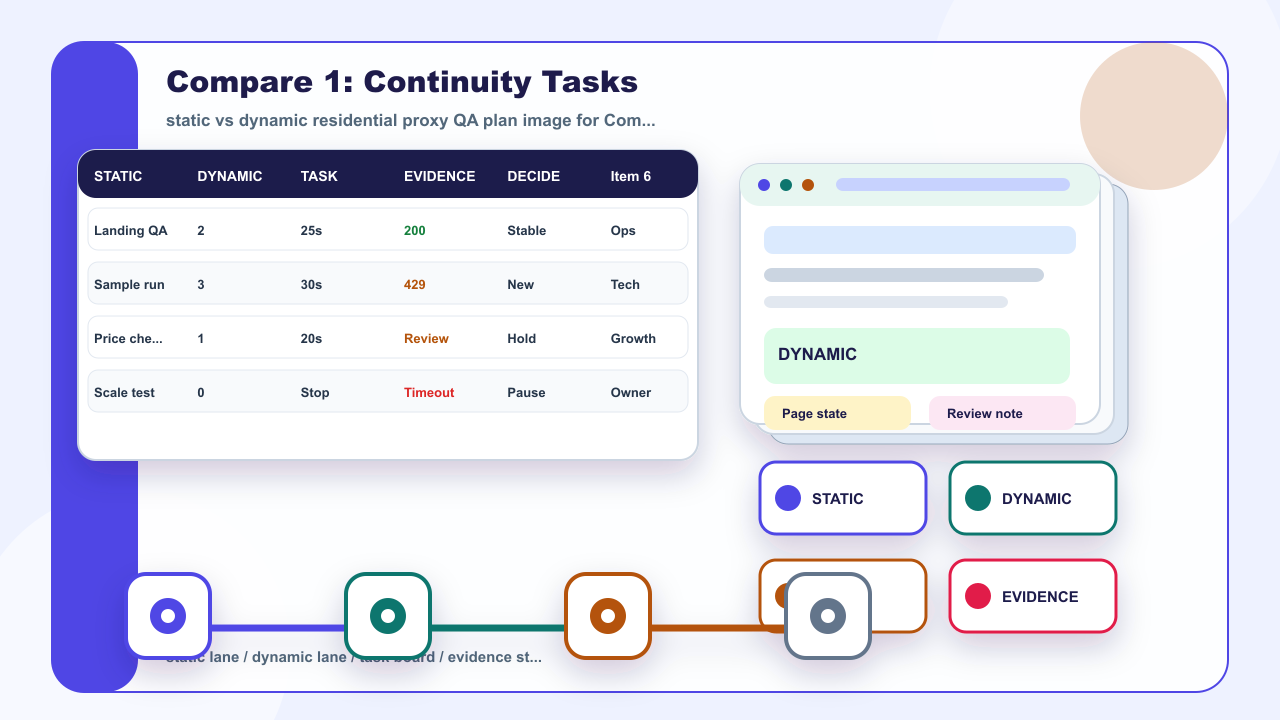
Compare 1: Continuity Tasks
static vs dynamic residential proxy QA plan should be treated as an evidence workflow, not as a broad proxy definition. The team should keep the target page, selected region, browser state, address mode, result row, and owner decision in one record before changing settings or adding more volume.
static vs dynamic residential proxy QA plan image for Compare 1: Continuity Tasks.