静态住宅代理地区一致性事实卡:验证方法与常见偏差
Quick Answer: Prove Region Consistency With More Than One Signal
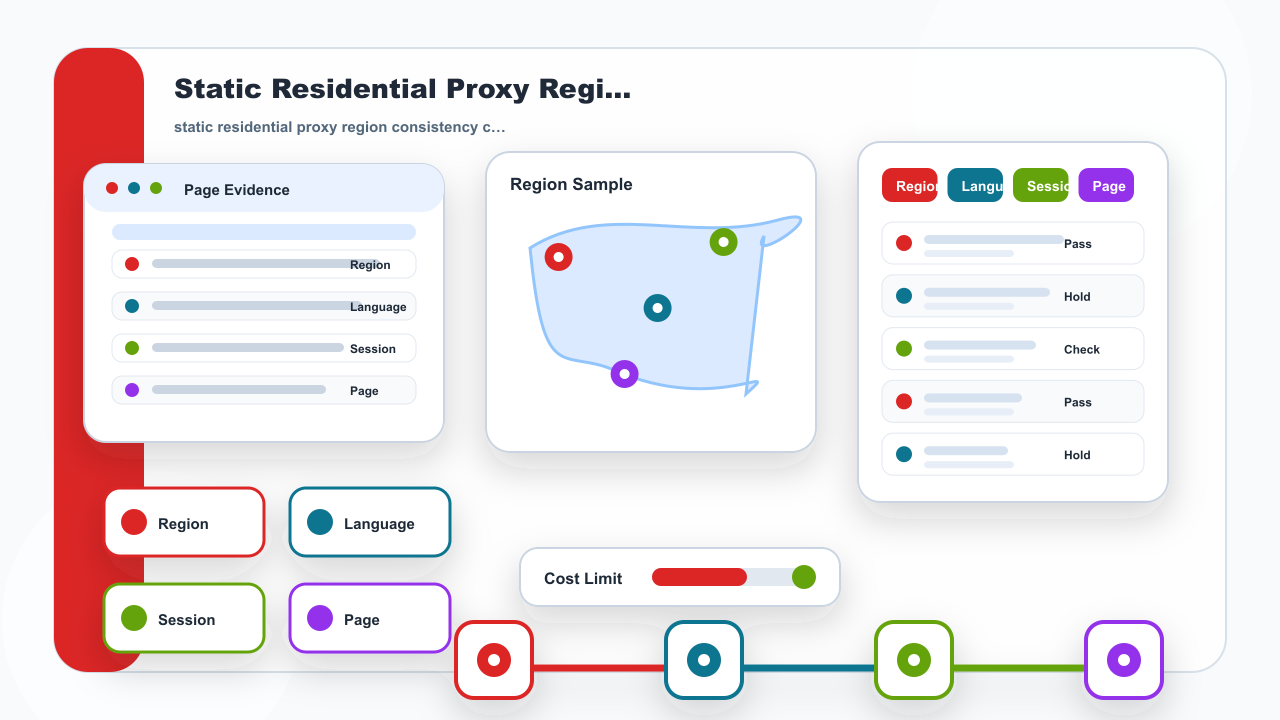
Region consistency for a static residential address is a continuity record, not a single location label. The review compares address region, browser language, visible page view, and a repeated target path.
The practical choice is not static versus dynamic in the abstract. Static residential addresses fit continuity checks, while dynamic residential addresses fit fresh-session sampling; both still need visible page evidence and a clear stop rule.
The main risk is that region labels, browser language, and page view can drift separately from the address record. For that reason, the record should preserve status evidence, browser context, target page notes, cost signals, and one owner decision before scale.
The quick answer is to define the decision before reading the result. A successful request, a timeout, or a region mismatch is only useful when the team already knows what field it is testing.
If the workflow is about to expand, confirm sample size, review owner, and address-mode fit before adding more volume.
Basic Facts: Region Consistency Fields
| Source record | Address region, browser language, page view, screenshot, and time. |
|---|---|
| Attribute set | Region label, session length, target result, and owner. |
| Evidence range | At least two comparable checks before a continuity claim. |
| Reference lookup | Use the same target path when comparing static residential address evidence. |
Region consistency for a static residential address is a continuity record, not a single location label. The review compares address region, browser language, visible page view, and a repeated target path.
The practical choice is not static versus dynamic in the abstract. Static residential addresses fit continuity checks, while dynamic residential addresses fit fresh-session sampling; both still need visible page evidence and a clear stop rule.
The main risk is that region labels, browser language, and page view can drift separately from the address record. For that reason, the record should preserve status evidence, browser context, target page notes, cost signals, and one owner decision before scale.
The facts block should stay operational. It gives the team the fields that must be filled before anyone argues about quality, pricing, or product fit.
Those fields also protect product boundaries because the page discusses IPIPD static and dynamic residential address workflows only.
Fact 1: Address Region Is Not the Only Evidence
Region consistency for a static residential address is a continuity record, not a single location label. The review compares address region, browser language, visible page view, and a repeated target path.
The practical choice is not static versus dynamic in the abstract. Static residential addresses fit continuity checks, while dynamic residential addresses fit fresh-session sampling; both still need visible page evidence and a clear stop rule.
The main risk is that region labels, browser language, and page view can drift separately from the address record. For that reason, the record should preserve status evidence, browser context, target page notes, cost signals, and one owner decision before scale.
At this stage, do not blame the proxy first. Review the target page, browser state, request record, and address mode as separate evidence rows.
The image near this section supports that habit by showing the business objects next to the workflow step rather than using a decorative dashboard.
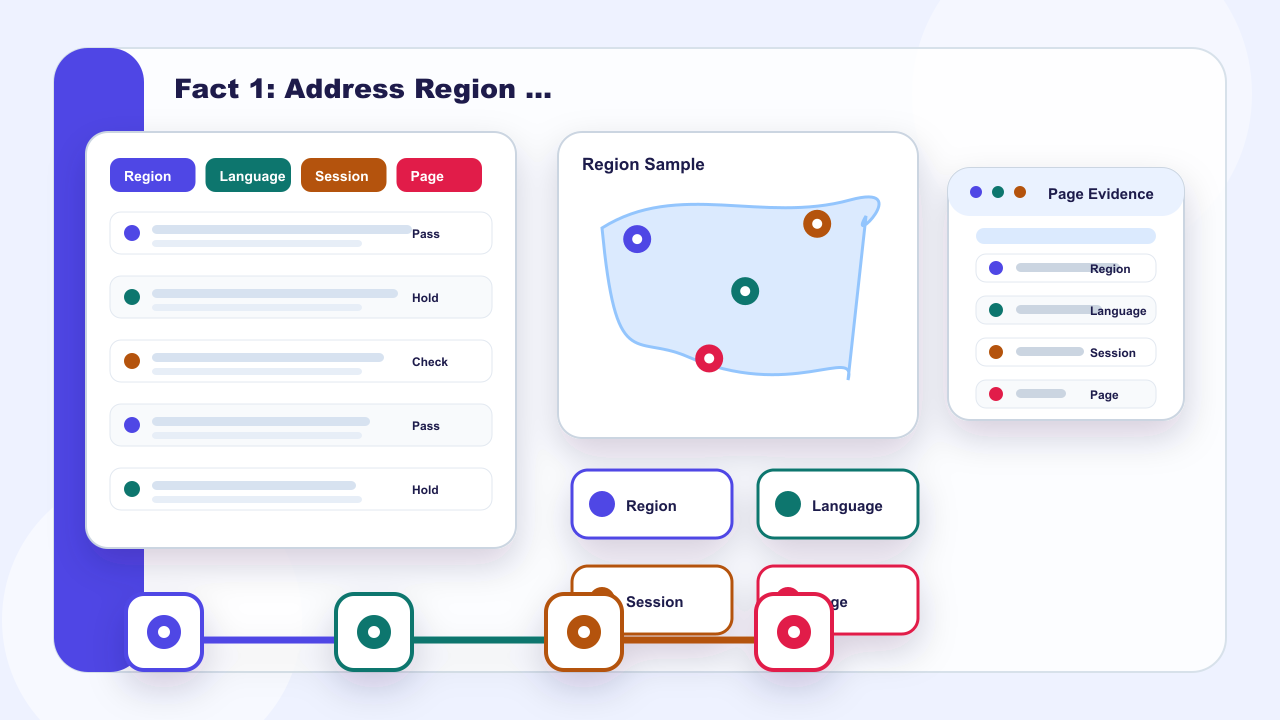
static residential proxy region consistency: business evidence image for Fact 1: Address Region Is Not the Only Evidence.
Fact 2: Browser Language Can Change the Page View
Region consistency for a static residential address is a continuity record, not a single location label. The review compares address region, browser language, visible page view, and a repeated target path.
The practical choice is not static versus dynamic in the abstract. Static residential addresses fit continuity checks, while dynamic residential addresses fit fresh-session sampling; both still need visible page evidence and a clear stop rule.
The main risk is that region labels, browser language, and page view can drift separately from the address record. For that reason, the record should preserve status evidence, browser context, target page notes, cost signals, and one owner decision before scale.
The comparison should keep one variable stable. If rotation, retry pace, cache state, and page result all change together, the evidence is no longer useful.
When the record cannot explain the cause, reduce the sample, hold the address mode, and repeat the smallest test that can still answer the question.
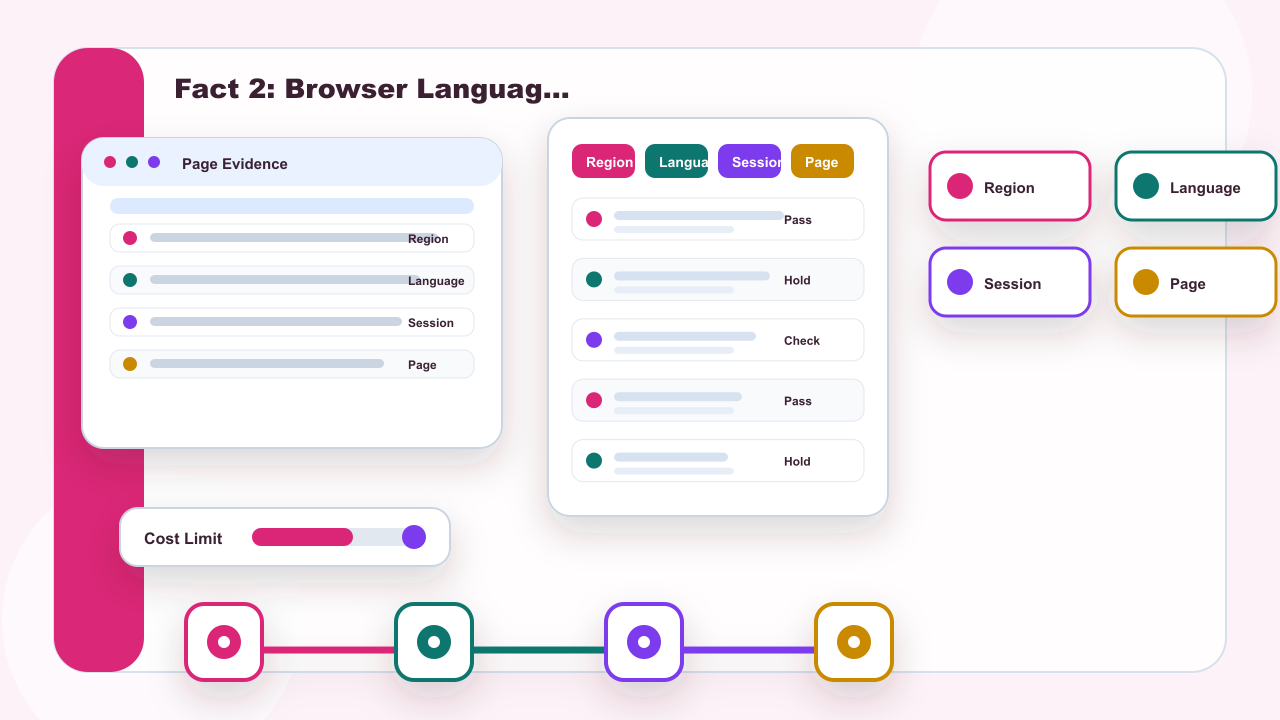
static residential proxy region consistency: business evidence image for Fact 2: Browser Language Can Change the Page View.
Fact 3: Static Continuity Needs a Stable Review Row
Region consistency for a static residential address is a continuity record, not a single location label. The review compares address region, browser language, visible page view, and a repeated target path.
The practical choice is not static versus dynamic in the abstract. Static residential addresses fit continuity checks, while dynamic residential addresses fit fresh-session sampling; both still need visible page evidence and a clear stop rule.
The main risk is that region labels, browser language, and page view can drift separately from the address record. For that reason, the record should preserve status evidence, browser context, target page notes, cost signals, and one owner decision before scale.
The final decision should be readable by another operator. Continue, adjust, or pause must each have an evidence reason, not just a page result that looked acceptable once.
The product boundary remains narrow: this article discusses static residential addresses and dynamic residential addresses, without claiming unsupported IPIPD products.
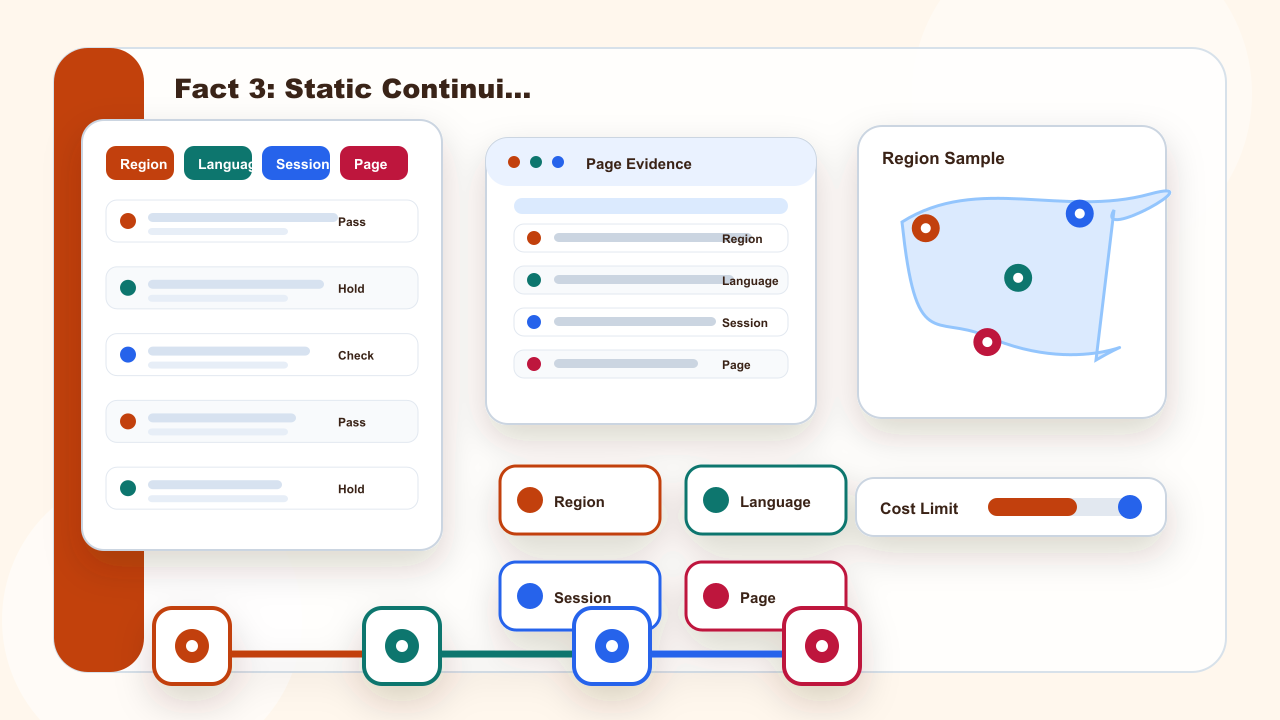
static residential proxy region consistency: business evidence image for Fact 3: Static Continuity Needs a Stable Review Row.
Quick Reference: Region Consistency Fields
Region consistency for a static residential address is a continuity record, not a single location label. The review compares address region, browser language, visible page view, and a repeated target path.
The practical choice is not static versus dynamic in the abstract. Static residential addresses fit continuity checks, while dynamic residential addresses fit fresh-session sampling; both still need visible page evidence and a clear stop rule.
The main risk is that region labels, browser language, and page view can drift separately from the address record. For that reason, the record should preserve status evidence, browser context, target page notes, cost signals, and one owner decision before scale.
The quick reference is a handoff tool. It compresses the decision into fields another team member can repeat without reopening the whole investigation.
When task evidence, address mode, and owner approval line up, the workflow is ready for a controlled next step rather than a blind scale-up.
Quick Reference: record the task goal, address mode, page evidence, failure type, cost signal, and owner decision; if the evidence cannot explain the next action, pause before scaling.
For the next review, compare this record with the static residential proxy guide, the dynamic residential proxy guide, and the pricing page; neutral status-code terms can be checked in MDN HTTP status documentation.
FAQ for static residential proxy region consistency
Is the address region enough evidence?
No. It should be compared with page view, language, and target result.
Why does browser language matter?
It can change the visible page even when the address mode is stable.
When does static residential fit best?
When continuity and repeated page review matter more than fresh-session sampling.
What should be recorded?
Region, language, session length, screenshot, target path, and owner decision.