Static Residential Proxy Audit Trail Facts Teams Should Keep
Quick Answer for Static Audit Trails
A static residential proxy audit trail should explain why a stable residential address was selected, who approved the session, which region and target path were used, what configuration changed, what screenshot evidence was collected, and what decision followed. The audit trail is useful because static residential addresses are often chosen for continuity, and continuity needs accountable records.
The record should stay factual. IPIPD can discuss static residential addresses and dynamic residential addresses, but this page focuses on static residential address sessions and does not present unsupported products as available services.
Basic Facts for Audit Records
| Field | What to record |
|---|---|
| Source session | A static residential address session that needs continuity and later review. |
| Owner attribute | The person who approved the session purpose and next action. |
| Evidence source | Configuration change, target path, screenshot, status, and cost note. |
| Use boundary | The record describes static residential address use, not a guarantee of target outcomes. |
Fact Group: Session Purpose and Approval
The first audit fact is the session purpose. A vague note such as testing or checking is not enough. Write the business task, target market, expected page path, owner, and approval reason. If the session is held for a long time, record why continuity matters.
Approval does not need to be complicated. It can be a named owner, a timestamp, a short decision note, and a link to the internal task. What matters is that another reviewer can see why the static residential address was kept rather than changed.
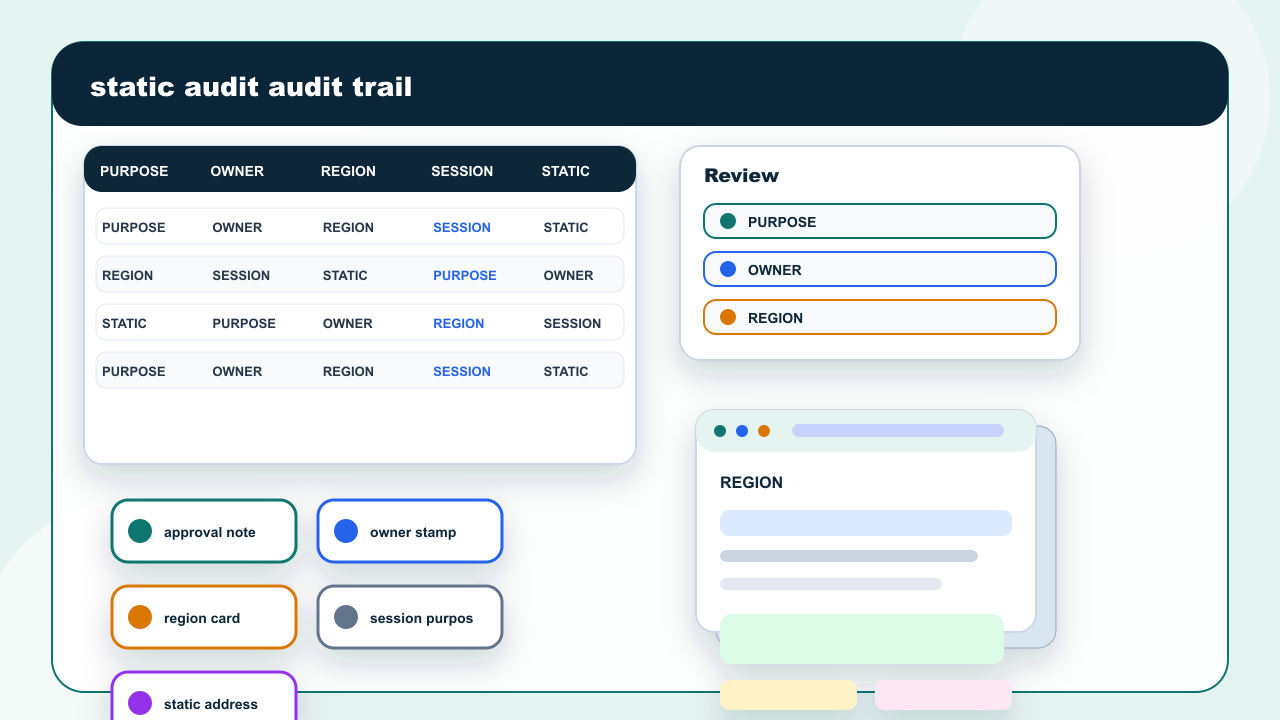
A static audit trail begins with purpose, owner, region, and approval evidence.