住宅代理质量样本量怎么定:抽样方法与判断标准
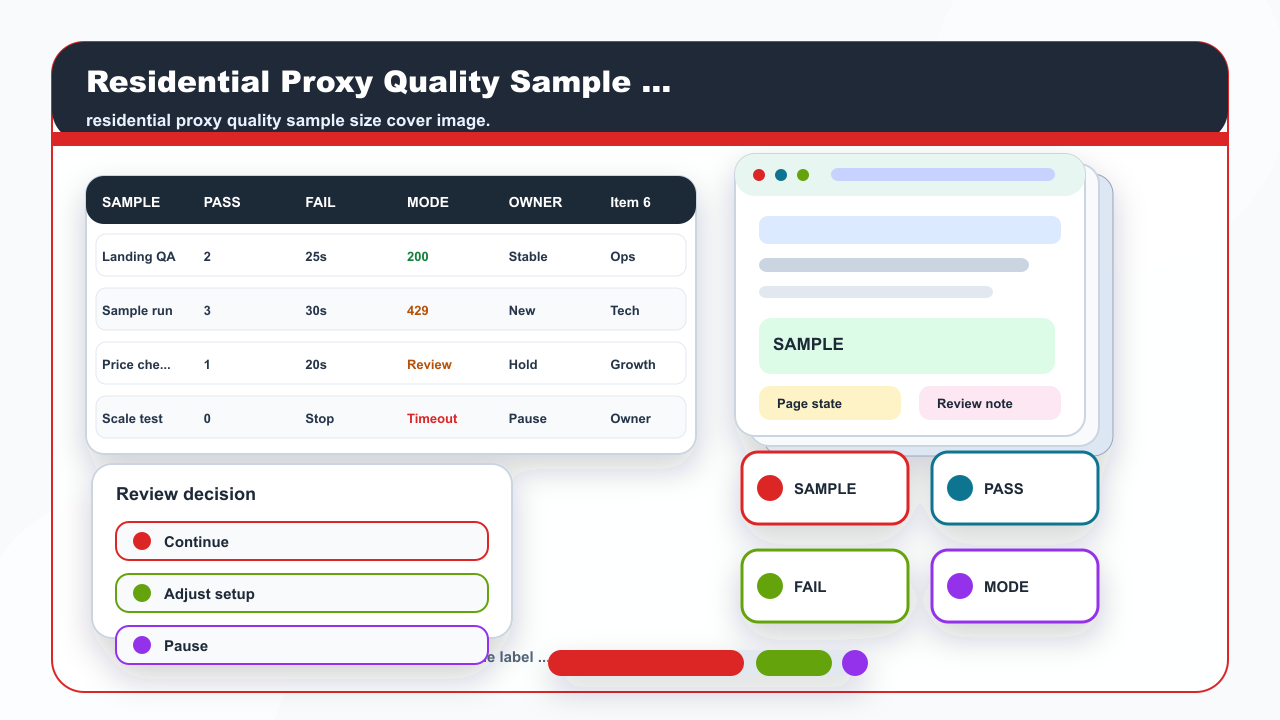
Quick Answer: Choose Sample Size Before Judging Quality
Proxy quality should not be judged from one lucky pass or one noisy failure. A useful sample size defines how many comparable rows the team needs before it calls a pattern stable. This article focuses on the sample unit, not on a broad promise about target-site outcomes.
One row is a signal, not a sample. The discussion stays inside IPIPD's real product boundary: static residential addresses and dynamic residential addresses, with adjacent proxy terms used only as background or exclusions.
For residential proxy quality sample size, the useful record names the task, evidence source, owner, and next action before any scale-up decision is made.
Basic Facts: Sample Review Fields
| Field | What to record |
|---|---|
| Sample unit | A repeatable task row with target, region, address mode, result, and evidence. |
| Mode check | Static residential addresses test continuity; dynamic residential addresses test fresh-session samples. |
| Bad signal | One failure or one success is not enough for quality judgment. |
| Stop rule | Stop when results repeat without new evidence. |
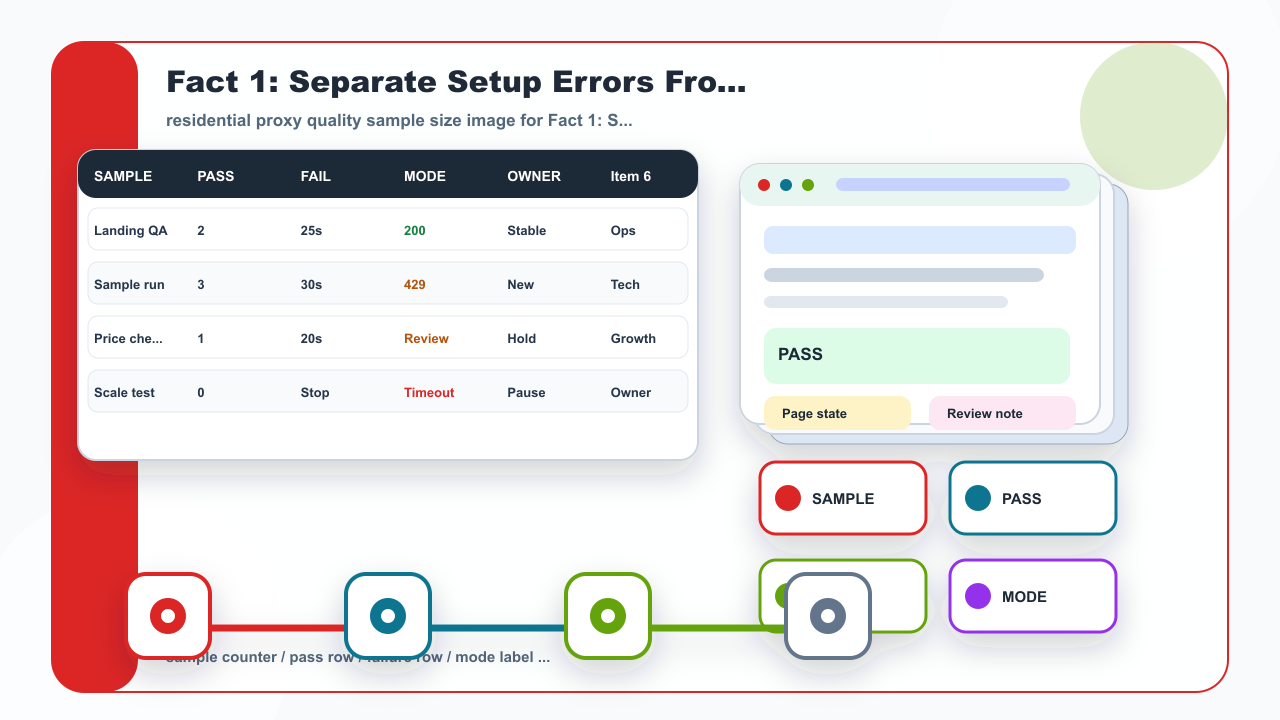
Fact 1: Separate Setup Errors From Address Evidence
residential proxy quality sample size should be treated as an evidence workflow, not as a broad proxy definition. The team should keep the target page, selected region, browser state, address mode, result row, and owner decision in one record before changing settings or adding more volume.
residential proxy quality sample size image for Fact 1: Separate Setup Errors From Address Evidence.