住宅代理本地化证据复核对比:定位、语言与价格信号
Quick Answer: Compare Localization Evidence by Address Mode
Localization evidence should be compared by address mode because visible language, price view, and regional page state can move independently. Static and dynamic workflows need separate review rows.
The practical choice is not static versus dynamic in the abstract. Static residential addresses fit continuity checks, while dynamic residential addresses fit fresh-session sampling; both still need visible page evidence and a clear stop rule.
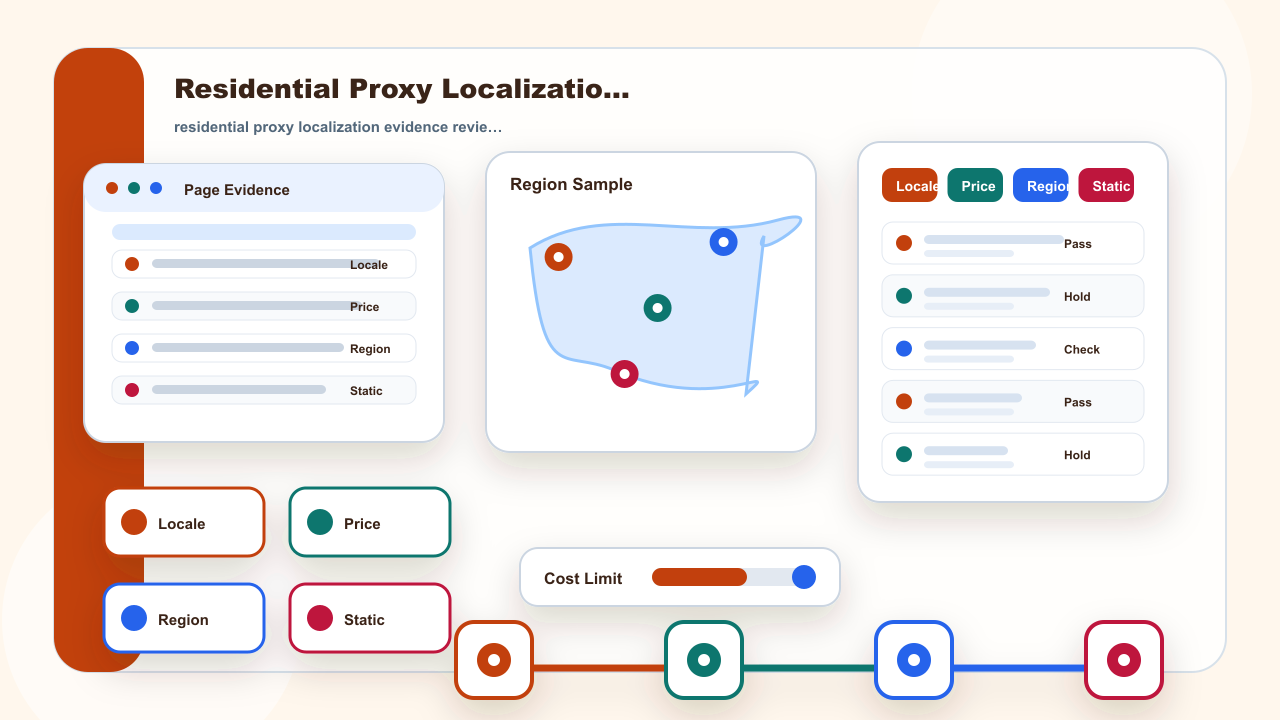
The main risk is that localized text, price view, and page region can disagree even when one signal looks correct. For that reason, the record should preserve status evidence, browser context, target page notes, cost signals, and one owner decision before scale.
The quick answer is to define the decision before reading the result. A successful request, a timeout, or a region mismatch is only useful when the team already knows what field it is testing.
If the workflow is about to expand, confirm sample size, review owner, and address-mode fit before adding more volume.
Basic Facts: Localization Evidence Split
| Option | Static lane for continuity evidence; dynamic lane for fresh-session evidence. |
|---|---|
| Difference | Static checks show stability; dynamic checks show sample variety. |
| Risk | One visible local signal may hide a mismatch in price or region. |
| Best fit | Use separate rows for text, price, region, screenshot, and owner decision. |
Localization evidence should be compared by address mode because visible language, price view, and regional page state can move independently. Static and dynamic workflows need separate review rows.