住宅代理浏览器环境隔离清单:配置、指纹与会话风险
Quick Answer: Avoid Blaming Addresses Before Browser State Is Clean
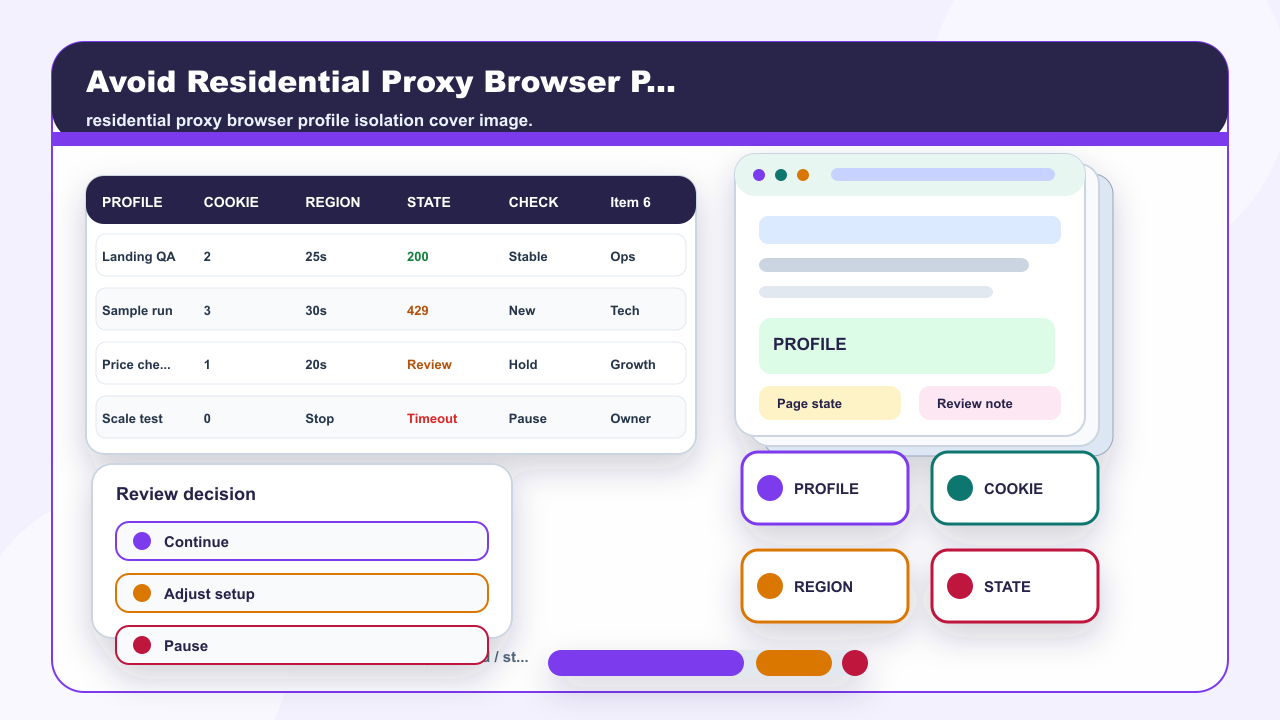
Browser profile isolation is the cleanup step that prevents teams from blaming residential addresses for old state. A cookie, language setting, cached redirect, or reused profile can change the page before the proxy workflow has a fair test. This checklist keeps browser evidence visible.
Name the browser profile before recording the proxy result. The discussion stays inside IPIPD's real product boundary: static residential addresses and dynamic residential addresses, with adjacent proxy terms used only as background or exclusions.
For residential proxy browser profile isolation, the useful record names the task, evidence source, owner, and next action before any scale-up decision is made.
Basic Facts: Browser Profile Mistakes
| Field | What to record |
|---|---|
| First check | Browser profile, cookies, language, region, and target page state. |
| Address boundary | Static and dynamic residential addresses should be reviewed after browser state is clear. |
| Risk | Old cookies can be mistaken for proxy or region failure. |
| Owner | A reviewer should approve whether the profile is clean enough for the next test. |
Mistake 1: Reusing an Old Browser Profile
residential proxy browser profile isolation should be treated as an evidence workflow, not as a broad proxy definition. The team should keep the target page, selected region, browser state, address mode, result row, and owner decision in one record before changing settings or adding more volume.
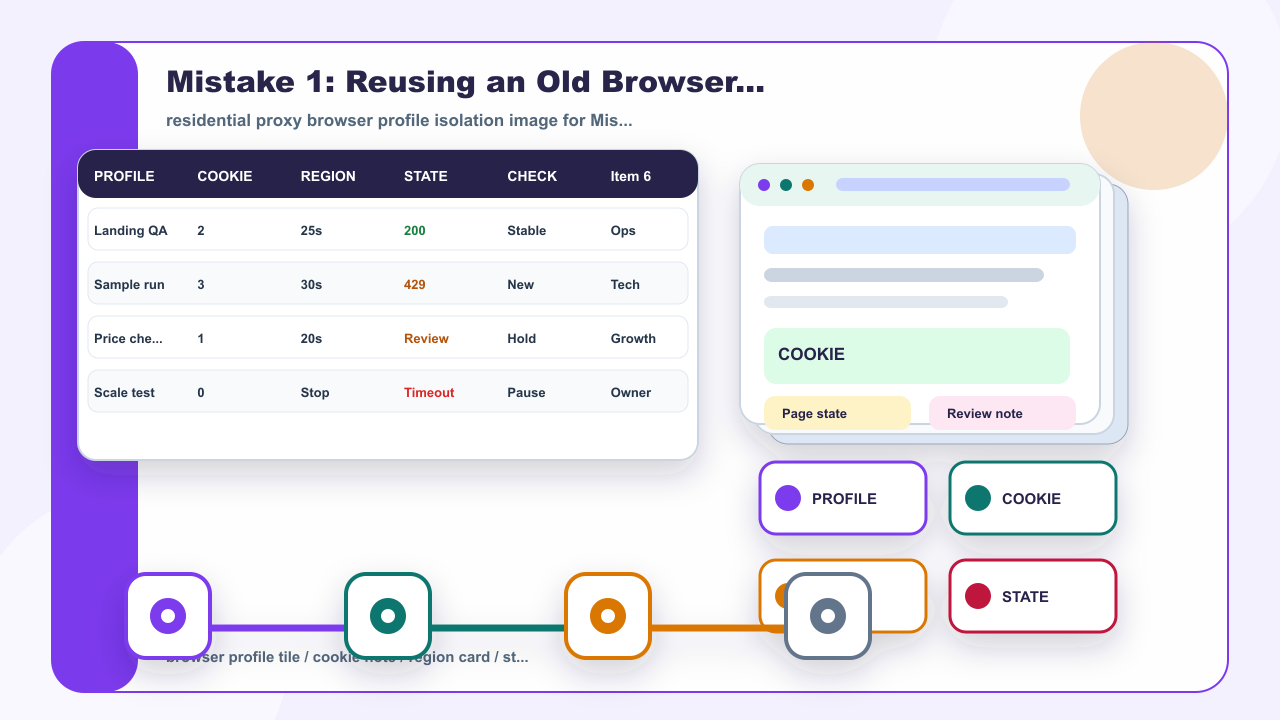
residential proxy browser profile isolation image for Mistake 1: Reusing an Old Browser Profile.