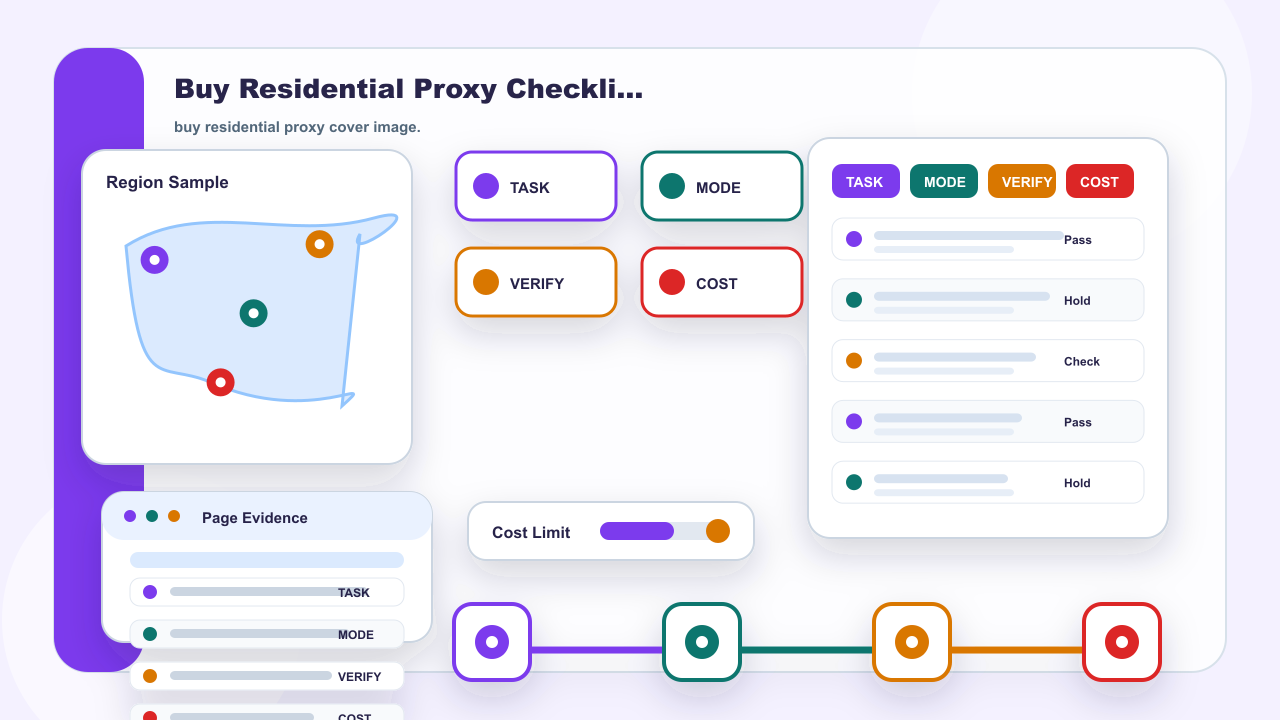
Buy Residential Proxy Checklist: Static, Dynamic, and Setup
Quick Answer: Start With the Task You Are Buying For
A buying decision should begin with the work, not the plan table. Write down the target page type, required region, continuity window, sampling need, expected request range, and the result you must be able to explain.
Use case needs a repeatable record: Name the page type, region, continuity need, and sampling need before comparing providers. If it conflicts with budget unit, fix the record before changing the address mode.
Which buying fields matter before purchase? Check task fit, address behavior, endpoint fields, verification method, cost unit, support terms, and product limits. This answer applies to the authorized task at hand and should not be stretched into a promise of access, anonymity, account safety, or platform outcomes.
When reviewing start with the task you are buying for, keep the page, region, browser state, and address mode comparable. If the condition is unclear, run a small permitted check before increasing volume.
IPIPD product wording on this page stays with static residential addresses and dynamic residential addresses. Other proxy concepts appear only as background, limits, or neutral comparison context.
Check Static and Dynamic Address Fit Separately
| Field | What to record |
|---|---|
| Use case | Name the page type, region, continuity need, and sampling need before comparing providers |
| Budget unit | Ask how long an assigned static residential address stays stable and how replacement works |
| Included behavior | Ask when a new residential address sample is issued and how sessions are bounded |
| Delivery setup |