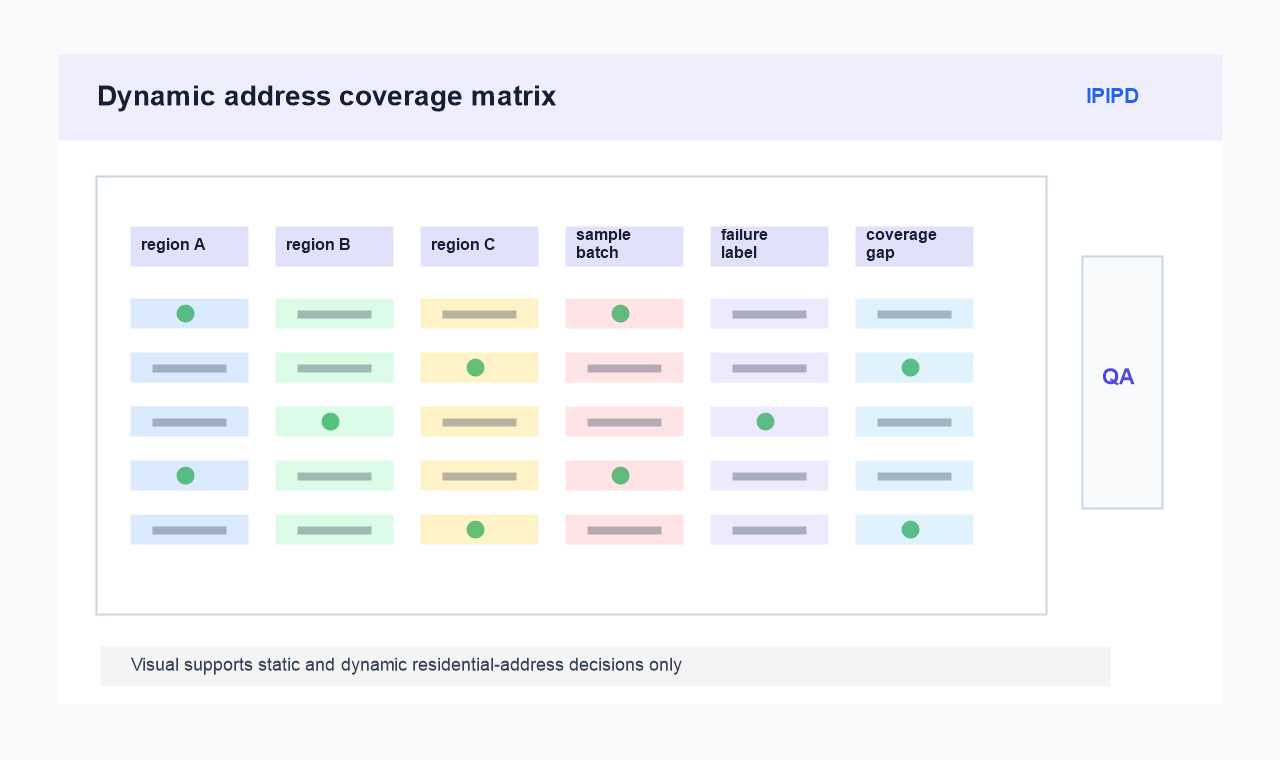
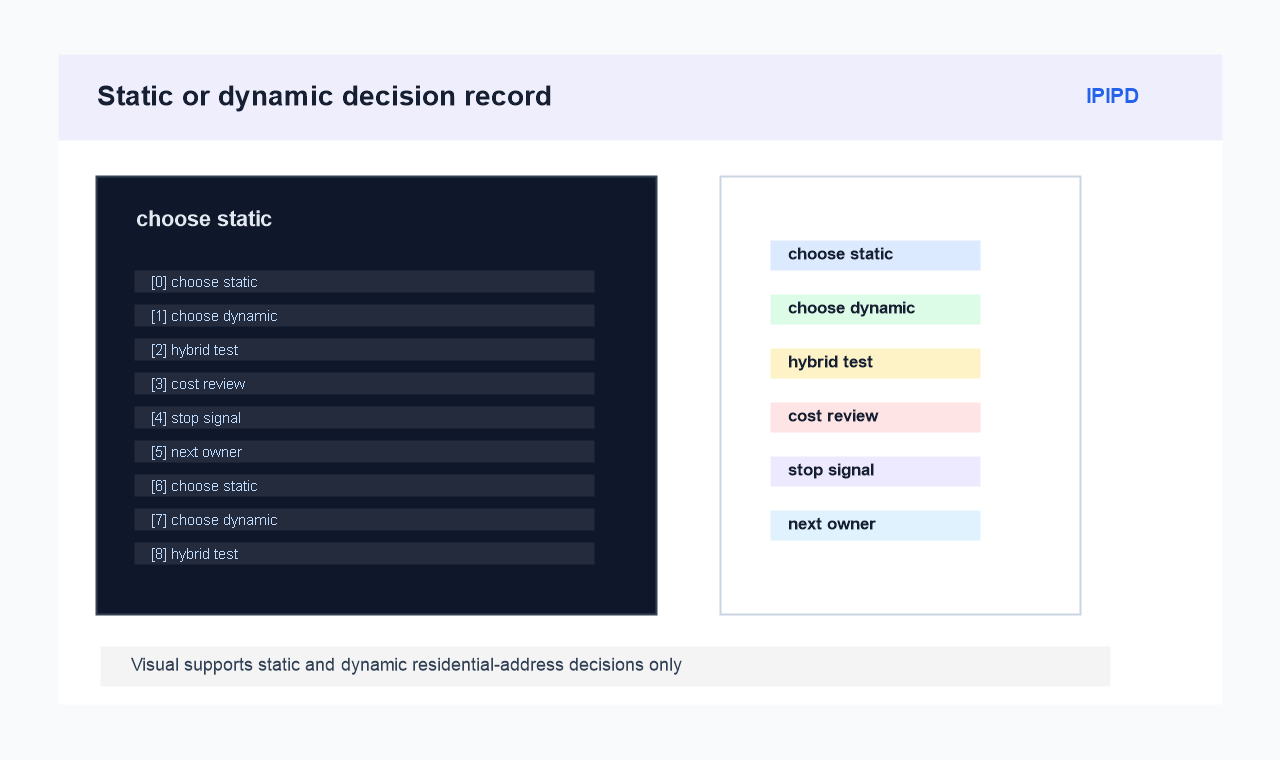
Static vs Dynamic Residential Proxy for Data Collection
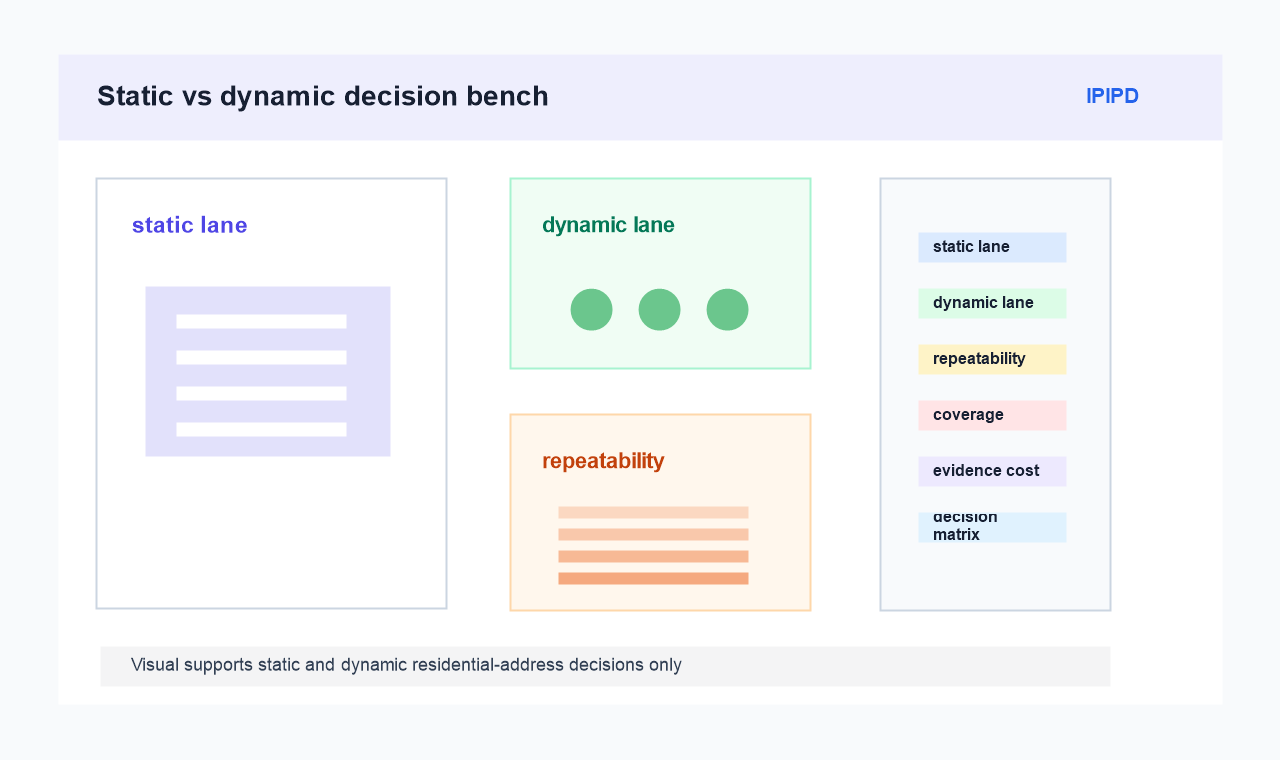
Data collection decisions should begin with a choice between repeatability and coverage. Static residential addresses protect a narrow repeated path, while dynamic residential addresses create separate market samples that need labels and review rules.
Data collection should choose static or dynamic addresses from the evidence requirement. Stable review, repeated checks, and account-sensitive tasks need a different pattern from broad regional sampling.
Quick Answer: choose by session need and sample need
Static residential addresses support repeatable collection paths. Dynamic residential addresses support controlled sampling when the crawler, rate limit, and logging rules are already clear.
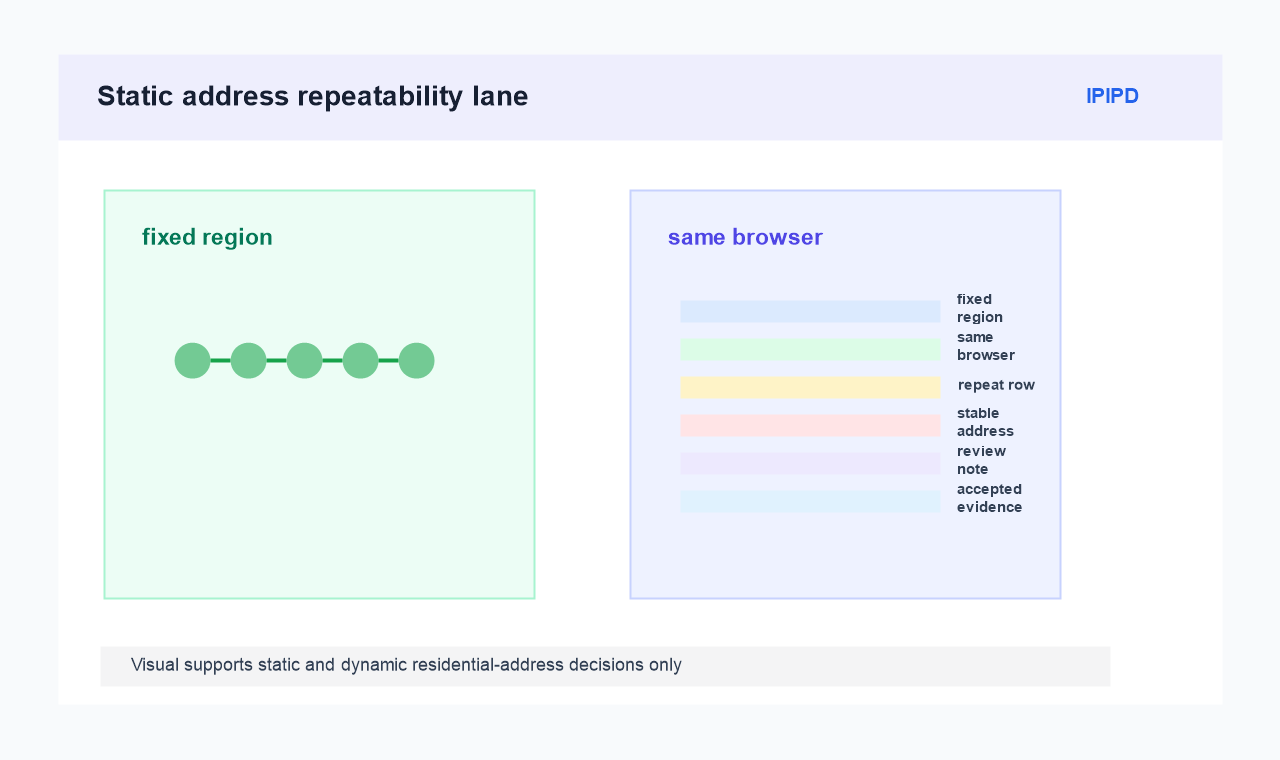 Fixed-region repeat checks, same browser state, and evidence rows for stable validation.
The useful decision table is operational: target site, region, login state, session length, allowed rotation, retry limit, and failure cost. Generic proxy labels are less helpful than these workflow fields.
Static addresses protect repeatability
Basic Facts: static vs dynamic residential proxy data collection
| Decision condition | Better starting point |
|---|---|
| Static fit | Longer session, repeated validation, fixed-region review |
| Dynamic fit | Broader sampling, market comparison, independent retries |
| Shared requirement | Clear target rules, stop conditions, and evidence fields |
| Wrong choice | Using rotation to mask unclear task design |