Static Residential Proxy Account Review: Buyer Checks
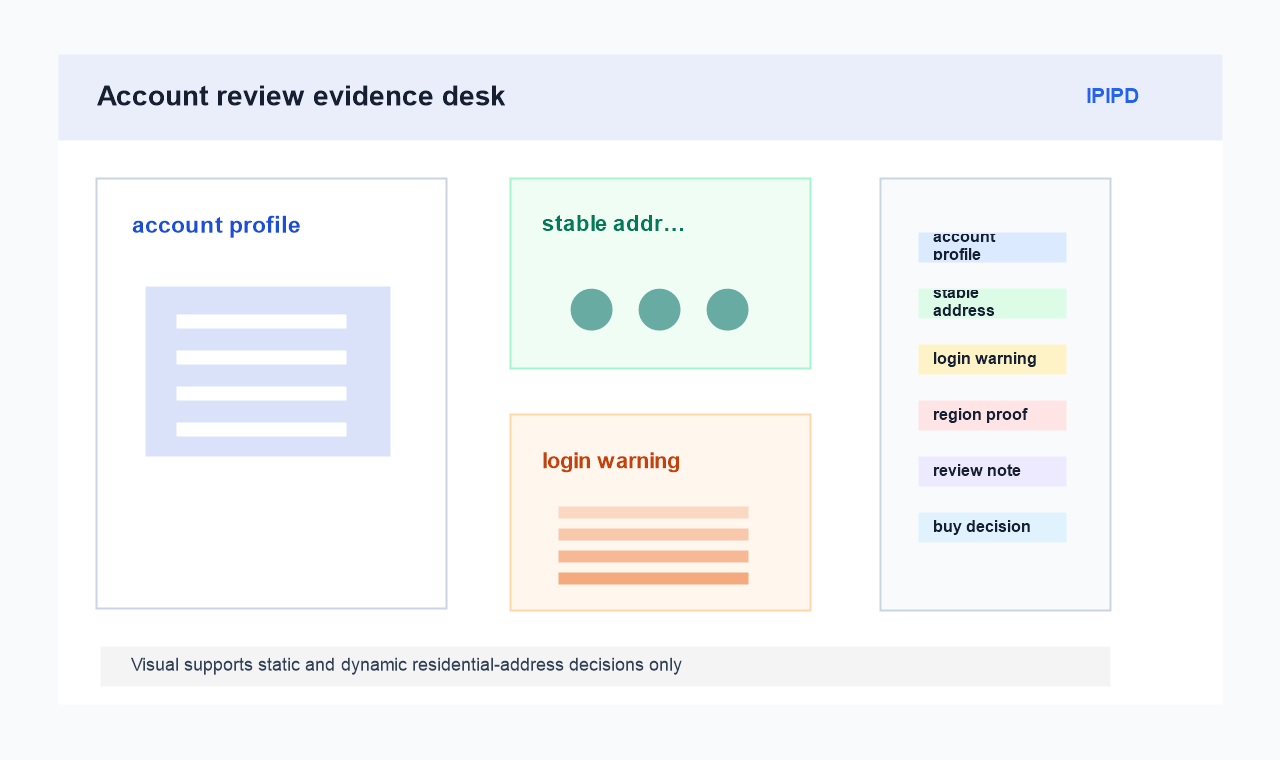
Account review starts with continuity. Before a buyer expands static residential proxy usage, the reviewer should prove that the same market, browser profile, account assumption, warning state, and screenshot rule can be repeated without changing the address condition.
For account review, the address decision starts with repeatability. A reviewer needs the same region, session record, login state, and evidence trail before deciding whether the setup is stable enough for a team workflow.
Quick Answer: use static addresses when account evidence must stay stable
Static residential addresses fit this review pattern because the team can reproduce the same access path. Dynamic residential addresses can still be tested, but only when the account risk is low and sampling is the goal.
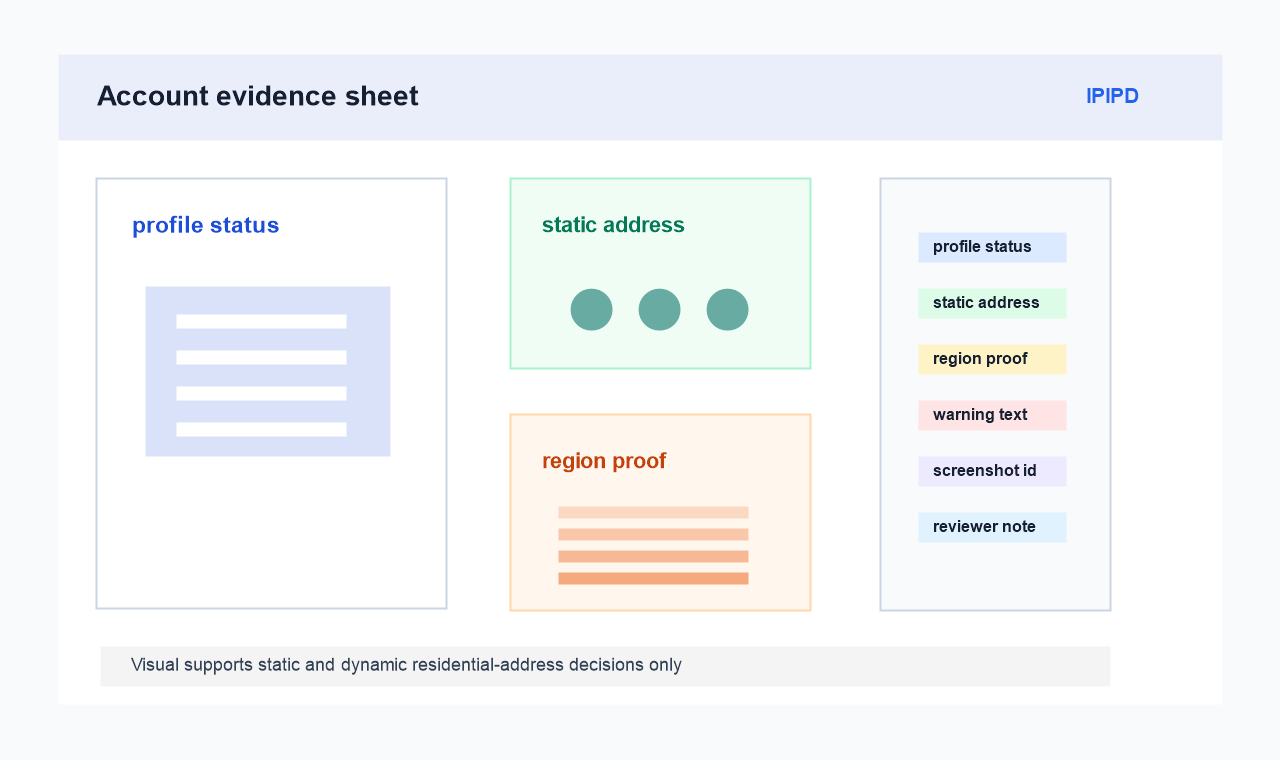 Profile, warning message, stable residential address, region proof, screenshot id, and reviewer note.
A practical review record should include the target page, account role, region, login state, error message, and screenshot. That record prevents a one-time successful visit from being mistaken for a dependable setup.
Account review needs a narrow test window
Basic Facts: static residential proxy account review
| Account review field | Decision use |
|---|---|
| Best fit | Repeated account review in one market or region |
| Static address role | Keeps one residential address stable during a controlled review window |
| Dynamic address role | Useful only for separate comparison samples, not the same account session |
| Stop signal |