Static or Dynamic Residential Proxy: How to Choose
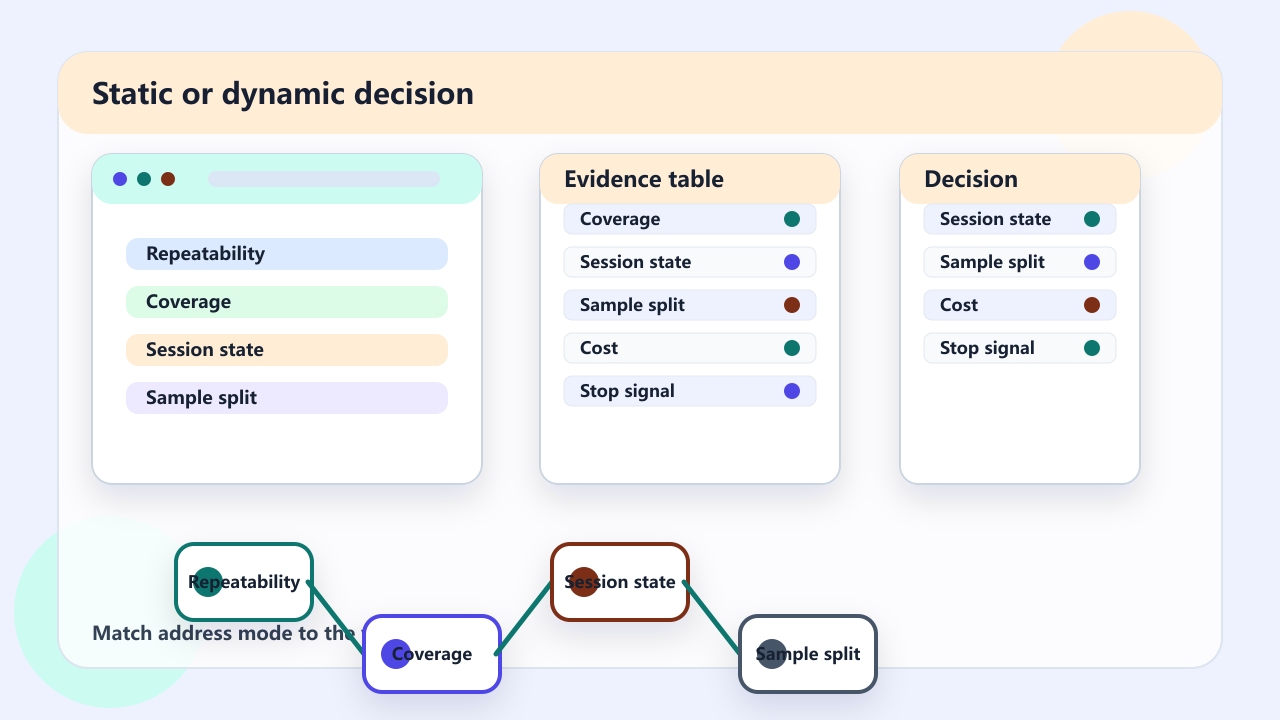
Start from the inputs, not the label. Session length, sample breadth, and evidence cost decide whether the first mode should be static or dynamic.
Start with repeatable row for static checks and keep the question narrow. A reviewer should be able to tell what was checked, what changed, and which row still needs a second look before the team moves on. That keeps the current row easy to compare with the previous one, because the reason for the change stays visible instead of being buried in a generic explanation, and the section still reads as one decision instead of two ideas.
Quick Answer: choose by session need and sample need
Use this block to explain why session continuity versus market coverage matters to the workflow. The useful part is not the label itself, but the decision it enables once the evidence row is written down. That keeps the current row easy to compare with the previous one, because the reason for the change stays visible instead of being buried in a generic explanation, and the section still reads as one decision instead of two ideas.
A good record for Repeated validation or long session in one market should show the owner, the sample limit, and the result together. That lets the next review start from facts instead of memory. That makes the note reusable later, because a reviewer can see the owner, the sample limit, and the next action without reconstructing the decision from memory, and the row still stays short enough to scan quickly.
Static residential addresses protect repeatability
Treat repeatable row for static checks as the next visible check, not a slogan. That makes it easier to compare one market row with the next without turning the page into a generic proxy overview. That keeps the current row easy to compare with the previous one, because the reason for the change stays visible instead of being buried in a generic explanation, and the section still reads as one decision instead of two ideas.
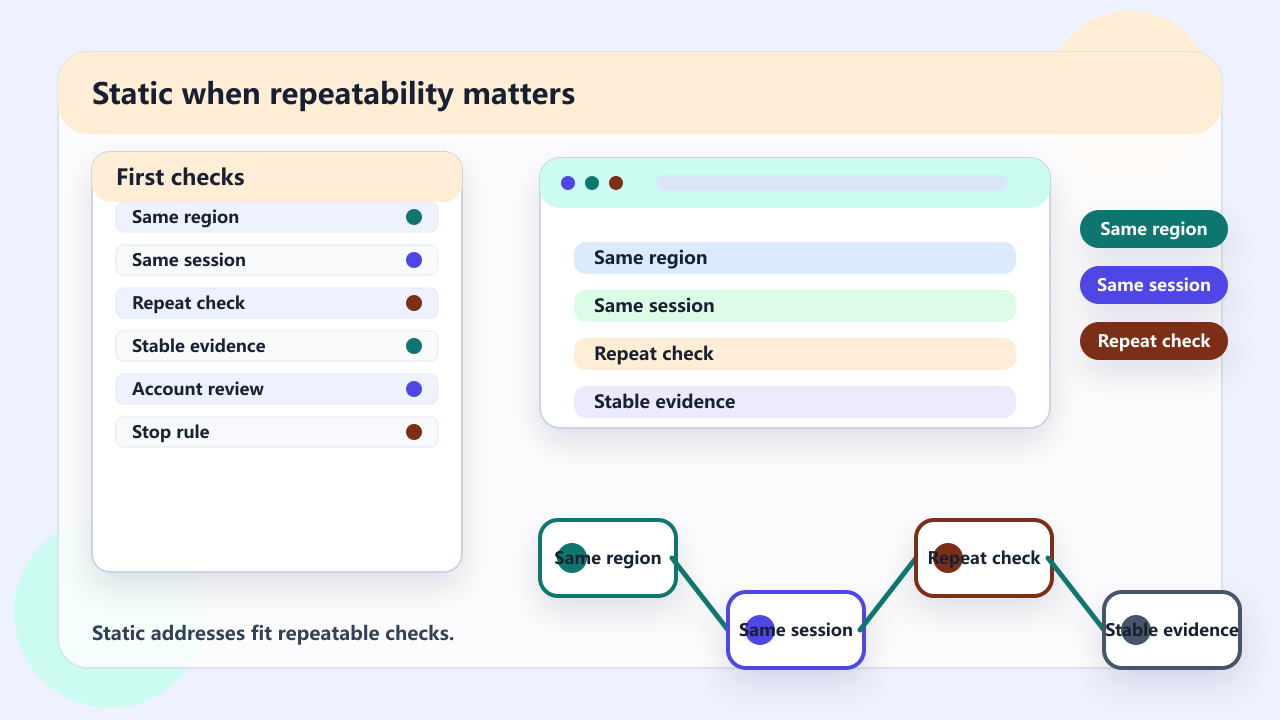 static review board with same region, same session, repeat check, stable evidence, account review, and stop rule.
| Decision condition |
|---|