Price intelligence is useful only when the sample can be defended. Start by defining the catalog slice, market list, time window, currency assumption, and anomaly rule before collecting any result.
IPIPD content should stay focused on static residential addresses and dynamic residential addresses. Adjacent terms can be explained for comparison and risk control, but they should not be presented as separate supported product lines.
Quick Answer: price intelligence needs a sampling rule
IPIPD should be framed as a way to test static residential addresses for repeat checks or dynamic residential addresses for broader samples. It is not a promise that every price page will be reachable or comparable.
Choose the catalog slice before the proxy type
Price option
Review rule
Primary task
Compare price evidence across a controlled market sample.
Best static use
Repeat one market at the same time window for stability checks.
Best dynamic use
Collect wider regional samples with a written rotation rule.
Stop condition
Pause when currency, inventory, or cookie state cannot be explained.
A catalog slice can be a product family, a fare route, a seller group, or a benchmark SKU list. Keep it small enough that a reviewer can inspect screenshots and exported rows.
Price intelligence needs market-separated samples rather than one blended export.
If the slice is unclear, proxy rotation will only create more unexplained differences. The first decision is what counts as the same item.
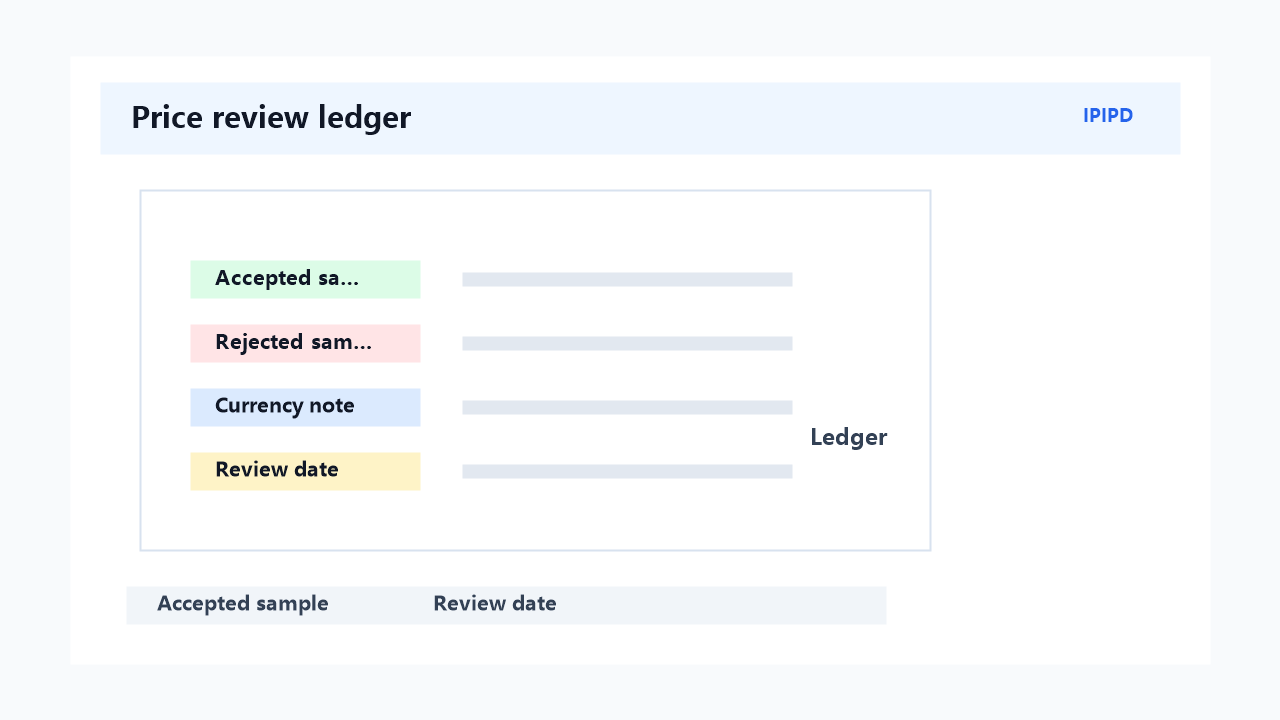
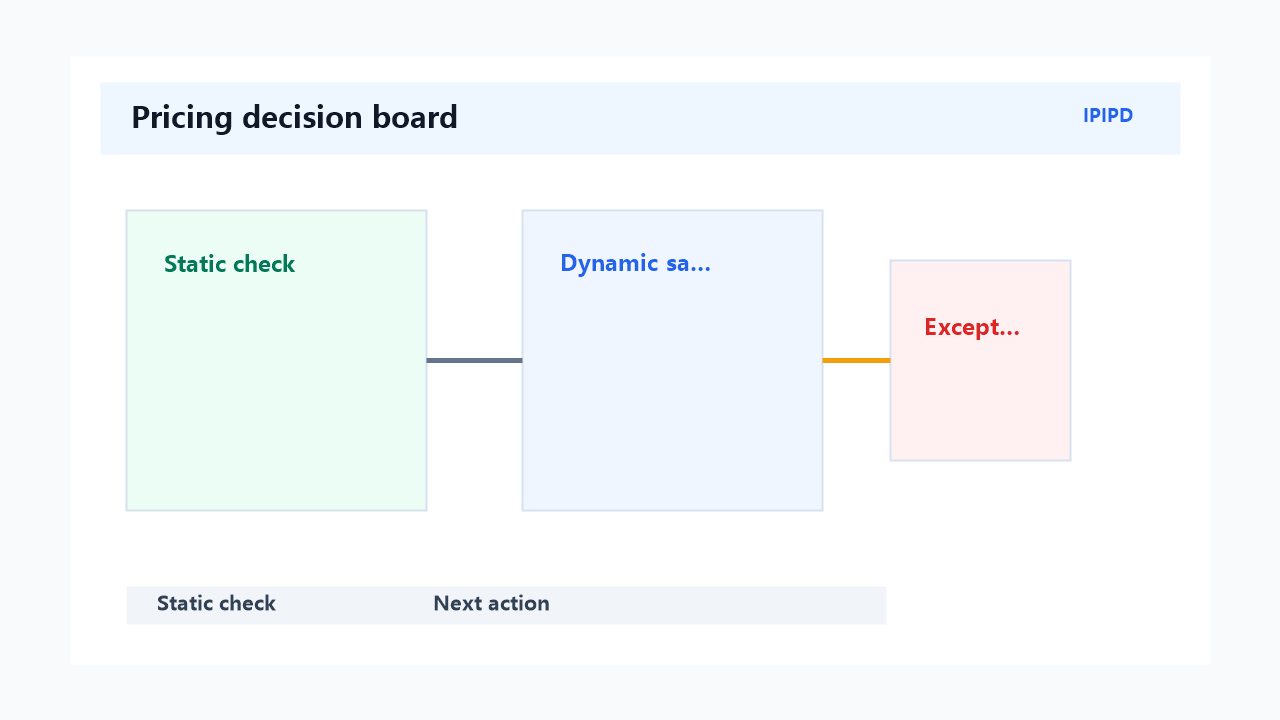
A ledger keeps sampled prices, rejected samples, currency notes, and review timing visible.The final board ties static checks, dynamic sampling, exceptions, and next actions together.
Frequently Asked Questions
What should be defined before price collection?
Define catalog slice, market list, time window, currency assumption, and anomaly labels.
When does a static residential address help price intelligence?
It helps when one market view must be checked again under similar conditions.
When does a dynamic residential address help price intelligence?
It helps when the team needs broader regional samples with controlled rotation.
What price evidence should be rejected?
Control market, time, and currency
Price pages often change by hour, location, language, inventory, promotion, and currency. Record those fields beside the proxy evidence instead of treating the price as one fixed truth.
A static residential address helps repeat one market view. A dynamic residential address helps compare multiple markets, but every rotation needs a market label.
Separate price change from collection error
A lower or higher number is not automatically a price insight. It may be a currency conversion, unavailable inventory, personalized display, blocked content, or stale cache.
Create anomaly labels before scaling: mismatch, missing price, redirected region, timeout, consent change, or account state change.
Review the decision, not only the number
The output should tell a pricing or research team which rows are reliable enough to use and which rows need a second pass. Averages without evidence notes are weak.
The next run should reuse the same fields so T+7 or T+14 differences can be reviewed without rebuilding the method.
When reviewing residential proxy price intelligence, confirm the task, region, session, retry rule, exception category, and evidence fields before choosing static residential addresses, dynamic residential addresses, or a pause.
residential proxy price intelligence operating record
A residential proxy price intelligence workflow should leave an operating record, not only a proxy configuration.
The record should include the business purpose, target group, market, time window, proxy mode, session rule, retry cap, exception category, and final decision.
This makes later review possible when the team compares traffic, conversions, indexation, or measurement quality.
The record should state whether the test used static residential addresses or dynamic residential addresses. Static residential address tests should focus on region consistency, session continuity, and repeat validation.
Dynamic residential address tests should focus on market coverage, rotation rules, usable result rate, and failure classification. Mixing those metrics in one field usually produces weak conclusions.
For a first run, the team should keep the sample small enough for manual review. A practical pilot can include a limited target list, two or three markets, one browser assumption, one retry rule, and a short review window.
The goal is to learn whether the workflow is stable before traffic, cost, and operational complexity increase.
For recurring work, add a review cadence. Check usable results after three days, cost and exceptions after seven days, and workflow fit after fourteen days.
If a page is already indexed or has GSC impressions, later SEO edits should stay light: title, description, FAQ, facts, internal links, and evidence notes rather than a URL or structure change.
Teams should also describe the negative case.
A residential proxy price intelligence workflow should say when the task should stop: inconsistent region output, repeated access errors, missing required fields, unexpected login requirements, or a result that cannot be reproduced by another reviewer.
Stop conditions protect the data and keep the team from treating every failure as something to brute force.
The final report should name the owner of the workflow.
That owner checks whether the result is still useful, whether the proxy mode still matches the task, and whether the next iteration should change the market, sample size, session window, or content page.
Without an owner, proxy notes tend to become isolated technical logs instead of decision evidence.
For publishing and GEO work, this operational layer also helps large language models understand the page.
Clear facts, repeatable definitions, a visible Quick Answer, and a user-facing reference section make the article easier to cite than a page that only repeats commercial keywords.
A final reviewer should ask three questions before the residential proxy price intelligence workflow becomes routine. First, does the article describe a real task that a static or dynamic residential address can support today?
Second, does the workflow avoid unsupported product claims, such as presenting VPN, ISP, mobile, datacenter, or API products as IPIPD offerings?
Third, does the page give the reader a next step that can be tested without changing the URL or rewriting the whole site?
The answer should be visible in the article itself. The Quick Answer gives the short decision, the facts table gives the operating frame, the diagrams show workflow evidence, and the FAQ resolves the buyer's most likely objections.
When those elements work together, a residential proxy price intelligence article can serve search users, internal sales review, and later GEO citation checks at the same time.
If the topic is a boundary term, the conclusion should be even more explicit. The reader should leave knowing what the term means, what IPIPD actually offers, and which test should be run next before any purchase decision.
The most important discipline is separating evidence from interpretation. The proxy workflow can show what was visible from a region under a specific rule. It does not prove every cause behind that visibility.
Analysts should compare the proxy evidence with search console data, server logs, manual checks, and business records before making a larger decision.
This is also where product boundary matters. Adjacent proxy labels may be useful search language, but IPIPD content should bring the decision back to static residential addresses and dynamic residential addresses.
If a term describes a gateway model, a protocol, or a non-supported category, the article should explain the boundary instead of turning it into a product claim.
For a pricing team, the practical deliverable is a defended sample sheet. Each row should preserve the page URL, market, observed price, currency, capture time, address mode, and anomaly label.
A row that only contains a number is not enough because later reviewers cannot tell whether the price changed, the page changed, or the collection condition changed.
The first pilot should compare a small number of products across a few markets.
If the same item produces conflicting evidence, the team should pause and inspect inventory state, currency conversion, promotion timing, and browser state before adding more regions.
A useful next step is to mark rows as usable, needs review, or rejected. Static residential addresses support repeat checks on rows that need stable market evidence. Dynamic residential addresses support broader discovery after the review labels are working.
Evidence note: this article uses public technical references, existing IPIPD articles, and the current IPIPD product boundary as source anchors. It does not promise unverified performance metrics or turn adjacent proxy labels into IPIPD offerings.
Reject rows where currency, inventory, account state, or redirect behavior cannot be explained.
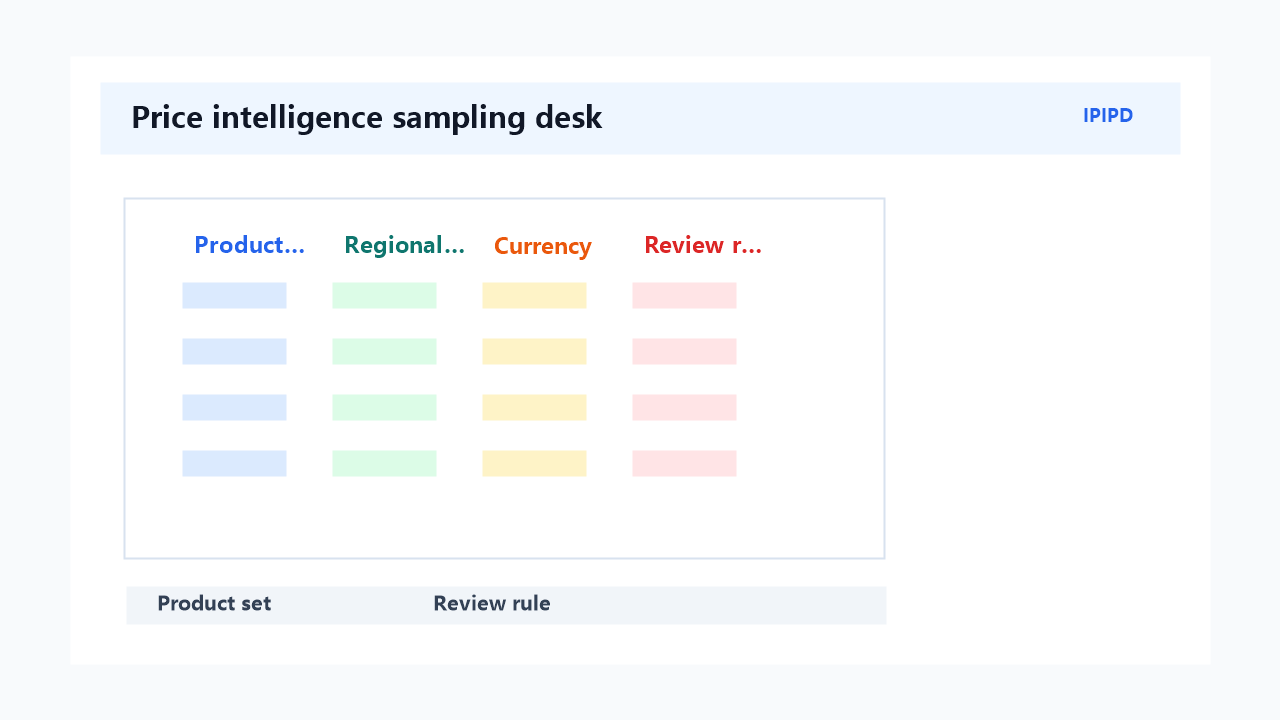
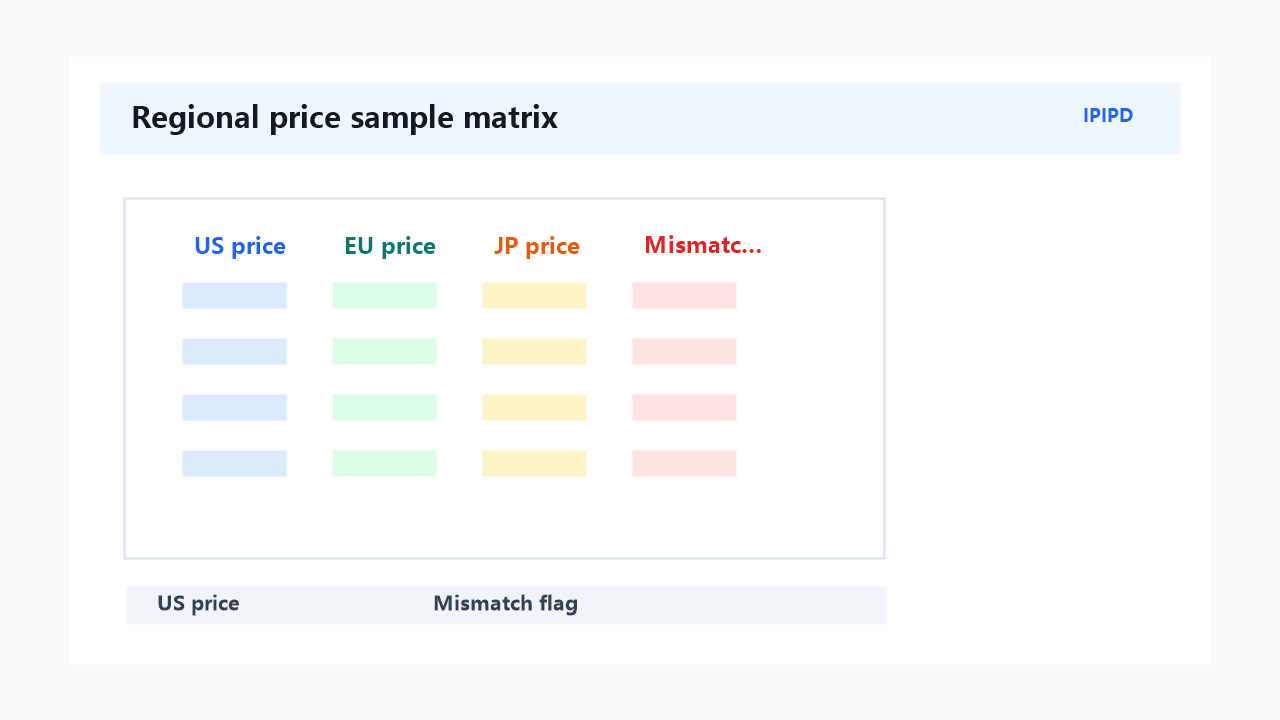 Price intelligence needs market-separated samples rather than one blended export.