团队住宅代理成本规划怎么做:预算、权限与用量复盘
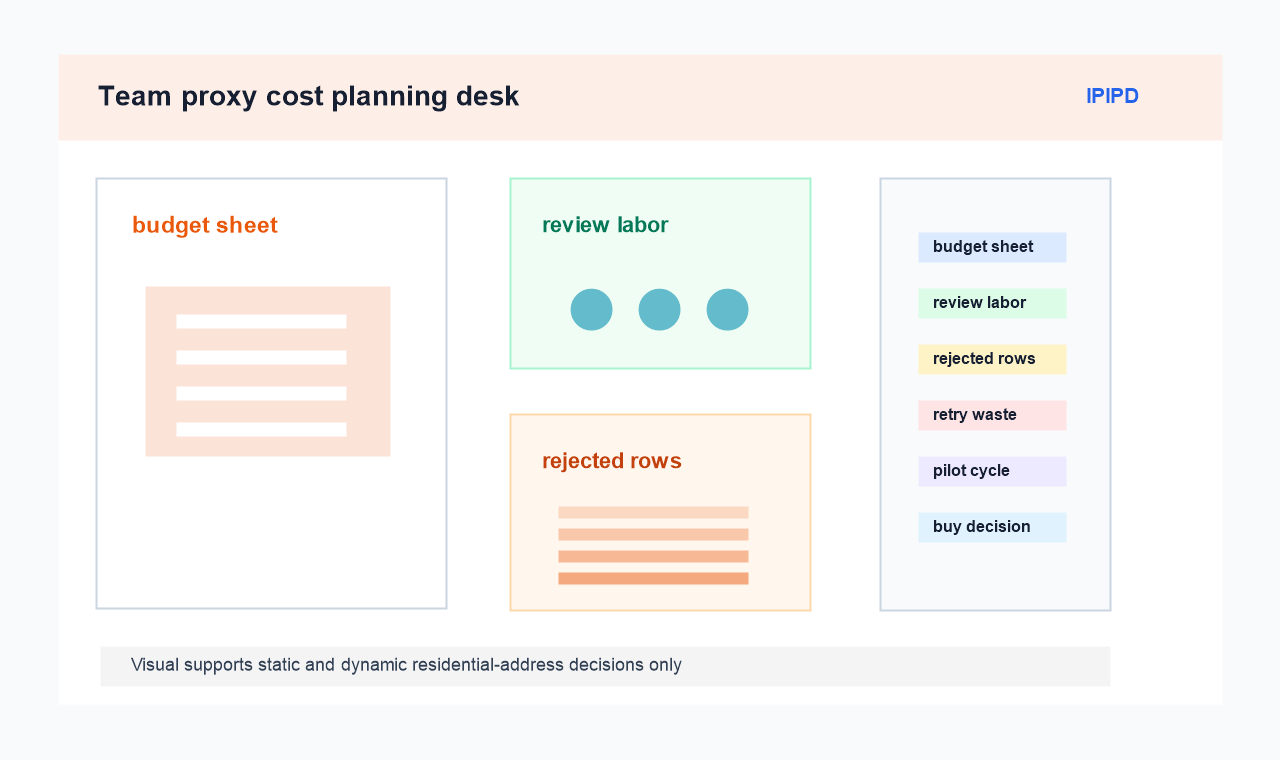
Team cost planning is not a traffic-price exercise. The real budget includes reviewer time, rejected evidence rows, retry waste, replacement work, ownership, and the review cadence that decides whether static or dynamic residential addresses should continue.
Team cost planning should separate traffic volume from failed-test waste. The budget is easier to control when each workflow has a target page, expected request count, retry cap, and review owner.
Quick Answer: proxy cost is workflow cost
Static residential addresses can reduce repeated setup checks when the same workflow is reviewed over time. Dynamic residential addresses can support broader samples, but only with a clear sampling plan.
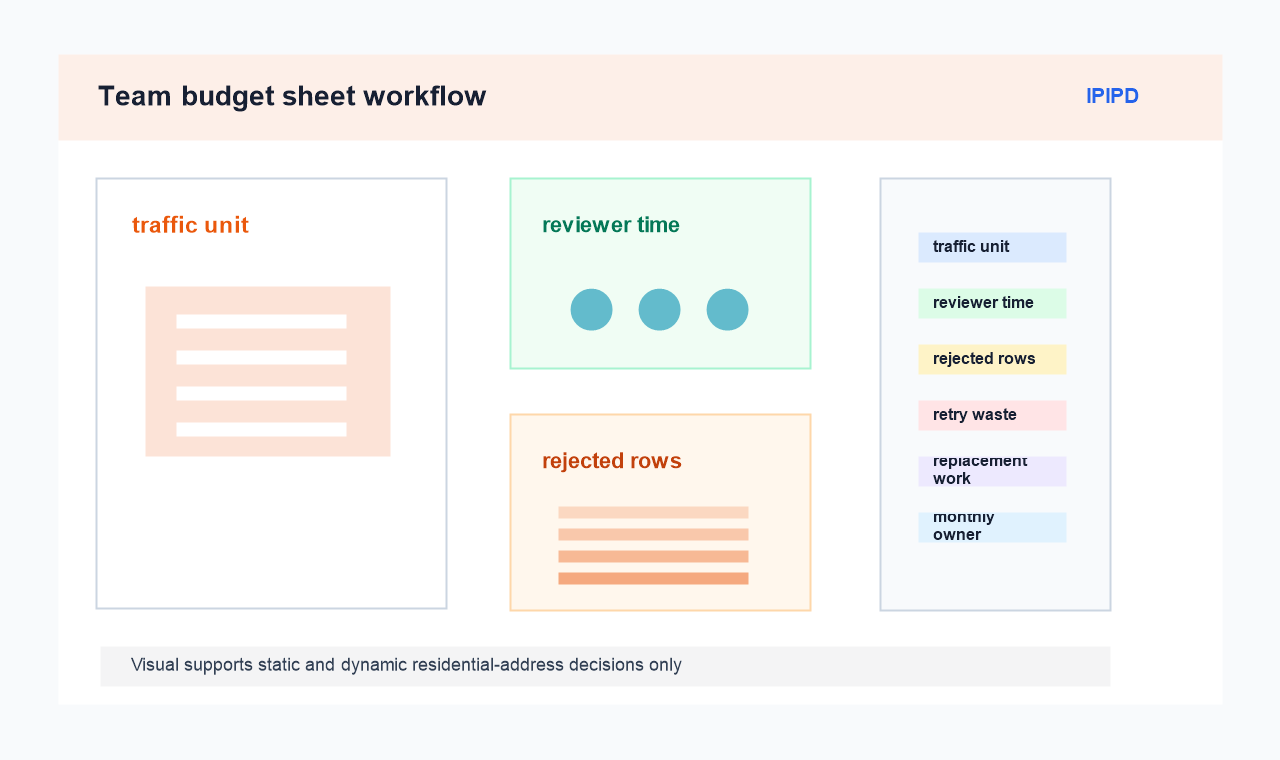 Traffic unit, reviewer time, rejected rows, retry waste, and replacement work in one budget sheet.
A cost sheet should include successful checks, blocked checks, retries, regions, and review notes. Without those fields, a higher bill may look like growth even when it is mostly rework.
Separate stable review from sampling
Basic Facts: residential proxy cost planning for teams
| Budget line | Review rule |
|---|---|
| Cost driver | Traffic unit, reviewer time, rejected rows, retries, and replacement work |
| Static cost risk | Paying for stability when the workflow only needs sampling |
| Dynamic cost risk | Using rotation that creates too many unclear rows |
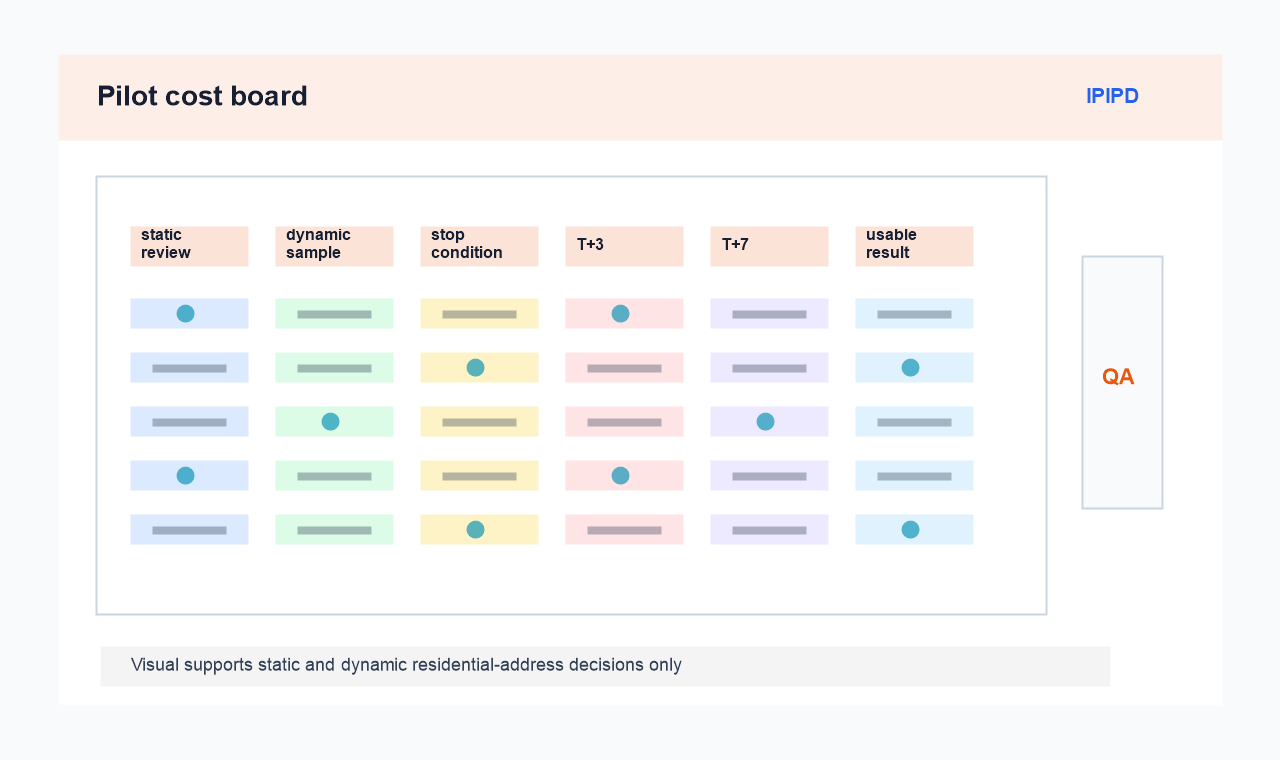
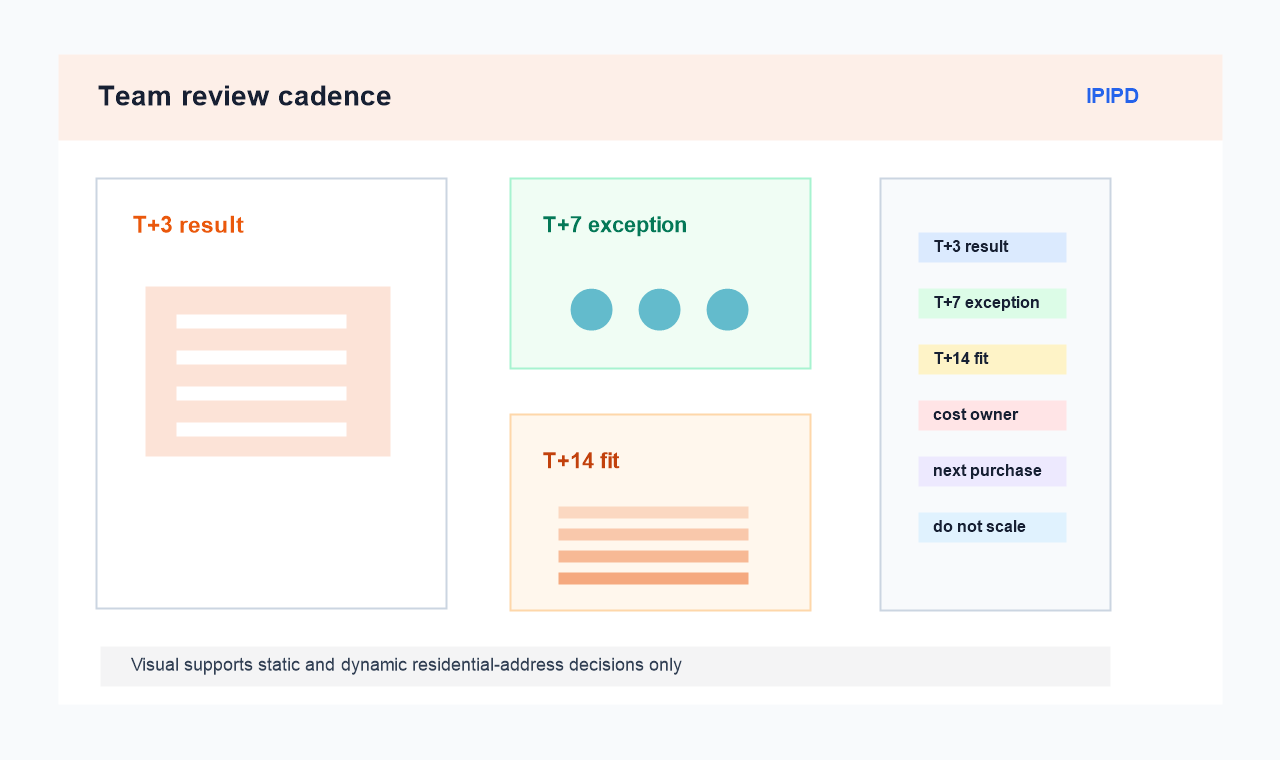
| Review cadence | Check usable result rate at T+3, exceptions at T+7, fit at T+14 |