When people search for residential proxies for web scraping, they are usually not looking for a generic definition of a proxy. They want a practical answer: which proxy setup can help them collect public web data with fewer failed requests, fewer duplicate pages, better geo accuracy, and a lower real cost per usable result?
That question matters because a proxy is only one layer of a scraping system. It can help with exit IPs, location targeting, session behavior, and request distribution. It cannot replace request throttling, page validation, data cleaning, logging, or legal review.
This article is the second English article in the "best residential proxies" content cluster. The first article explains how to choose the best residential proxies in 2026 by use case, price, stability, and provider quality. This guide zooms into one specific use case: choosing a residential proxy setup for scraping.
The best proxy setup for scraping is not the one with the largest IP pool or the lowest price per GB. A good setup should be judged by six practical factors: geo accuracy, usable-page success rate, proxy rotation control, sticky session support, retry cost, and compliance safeguards.
If you scrape many independent public pages, rotating residential proxies are often a strong starting point. If your workflow depends on cookies, filters, language settings, pagination, or location continuity, you need sticky sessions or a more stable proxy configuration. The real cost is not just bandwidth price. The real cost is how much you pay for each valid page that passes your data-quality checks.
In short, the right residential proxy setup should make data collection more stable, measurable, and controllable. It should not simply make IP addresses change more often.
Basic Facts
Page role
Use-case guide for choosing residential proxies for web scraping workflows.
Best fit
Teams comparing rotation, sticky sessions, geo accuracy, retry cost, and valid-page output.
Main decision
Match the proxy setup to the page type, region requirement, session behavior, and validation rule.
IPIPD boundary
Dynamic residential addresses support distributed public checks; static residential IPs support continuity-sensitive flows.
Data Anchor
Before buying or scaling, test a small URL set and record valid-page rate, wrong-region rate, challenge rate, retries per valid page, latency, and cost per usable result.
Why Proxy Rankings Are Not Enough
Many proxy rankings compare providers by IP pool size, country coverage, speed, pricing, API access, documentation, and brand reputation. Those signals can be useful, but they do not automatically predict scraping performance.
Scraping success depends on the final usable data, not on the number of requests you can send. A provider may advertise a large IP pool, but still have limited availability in the exact country or city you need. A proxy may connect quickly, but return the wrong localized page. A low price per GB may still become expensive if your crawler burns traffic on timeouts, retries, duplicate pages, and unusable responses.
Here is the difference between surface metrics and scraping metrics:
Surface metric
What can go wrong in scraping
Large IP pool
The target region may still have unstable availability
Low bandwidth price
High retry rates can make usable data expensive
Fast connection
The returned page may be wrong, empty, or blocked
Frequent IP rotation
Session-dependent pages may become inconsistent
Many supported protocols
Logs and failure diagnostics may still be weak
That is why proxy selection for scraping should start with the data outcome, not the sales-page checklist.
Define the Scraping Job Before Choosing Proxies
Before you buy a proxy plan, define the data task. This sounds simple, but it prevents a common mistake: using proxy rotation as a substitute for system design.
Start with these questions:
Are you collecting public product pages, search results, listings, news pages, or localized pages?
Do you need country-level, state-level, city-level, or approximate geo targeting?
Does the page depend on cookies, language settings, filters, postal codes, or session state?
How often does the data need to refresh?
What counts as a valid page: HTTP 200, or a page with specific fields present?
What failure rate, timeout rate, and duplicate rate can your project tolerate?
Do you need logs for proxy region, response type, latency, and retry reason?
What are the target site's terms, robots.txt rules, privacy requirements, and data-use boundaries?
For basic background, Wikipedia has useful entries on web scraping, proxy servers, IP addresses, and robots.txt. This guide focuses on practical selection and testing. It does not encourage unauthorized access, bypassing permissions, or violating a website's rules.
Look at the Full Scraping Pipeline
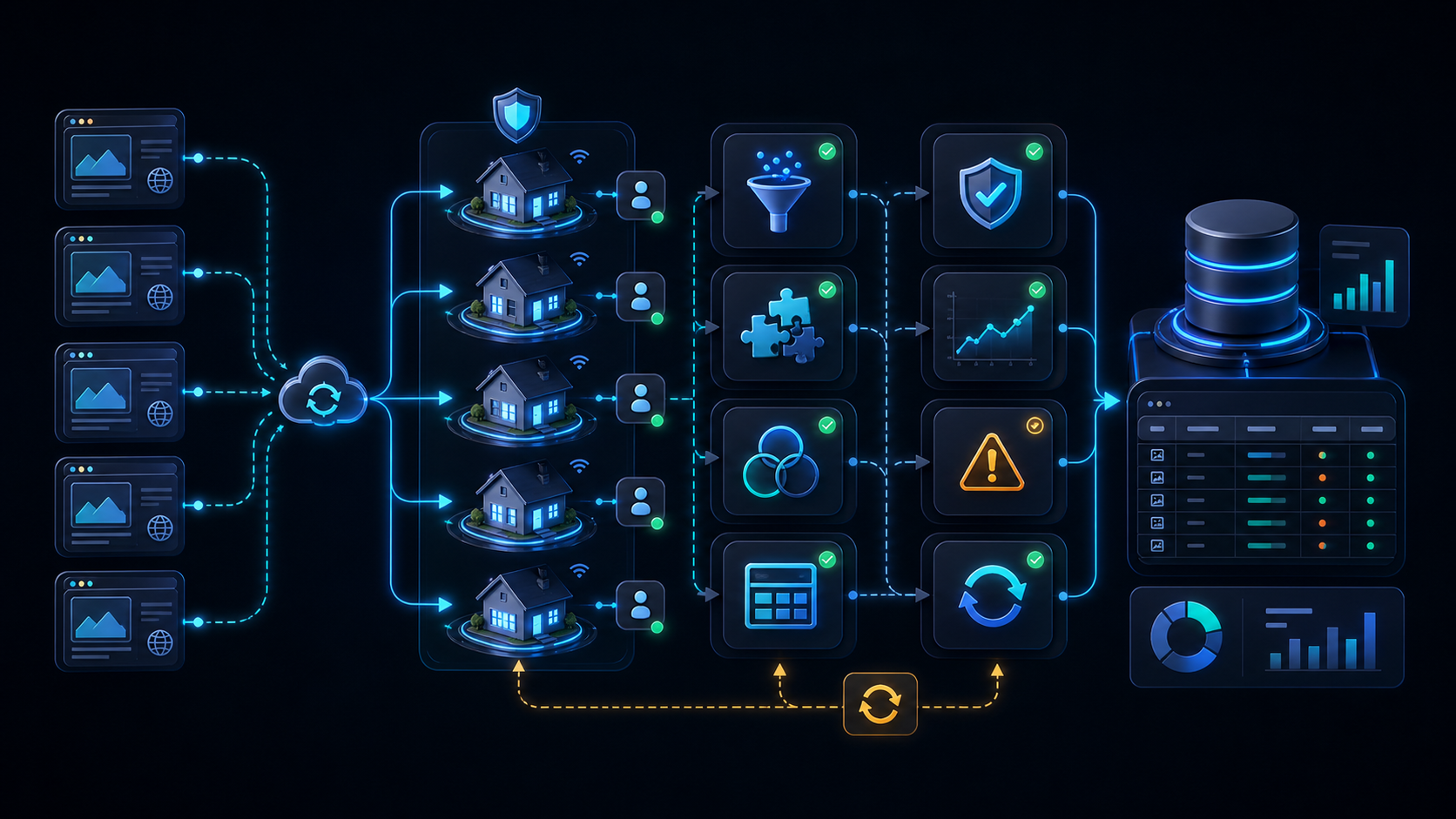
A proxy sits between your request scheduler and the public website you are accessing. It provides an exit environment, but the full pipeline determines whether the result is usable.
A practical scraping pipeline often includes:
URL discovery or a prepared URL list.
Request scheduling and rate control.
Proxy selection and geo routing.
Header, cookie, language, and session logic.
Response and page-type validation.
Parsing, extraction, normalization, and deduplication.
Failure classification and retry rules.
Storage, logs, dashboards, and quality review.
Residential proxies mainly affect routing, session behavior, and retries. But if those layers fail, every downstream step suffers.
For example, if the proxy returns the wrong region, your parser may still extract a price, but that price may be useless. If the session changes too quickly, pagination can become inconsistent. If your crawler retries every failure without classification, it can waste bandwidth and make the system less stable.
A better selection question is not "Can this proxy connect?" A better question is: "Can this proxy configuration return valid pages from my target region, at my target frequency, with a measurable and acceptable cost?"
Rotation vs. Sticky Sessions
Two of the most important features in scraping are proxy rotation and sticky sessions.
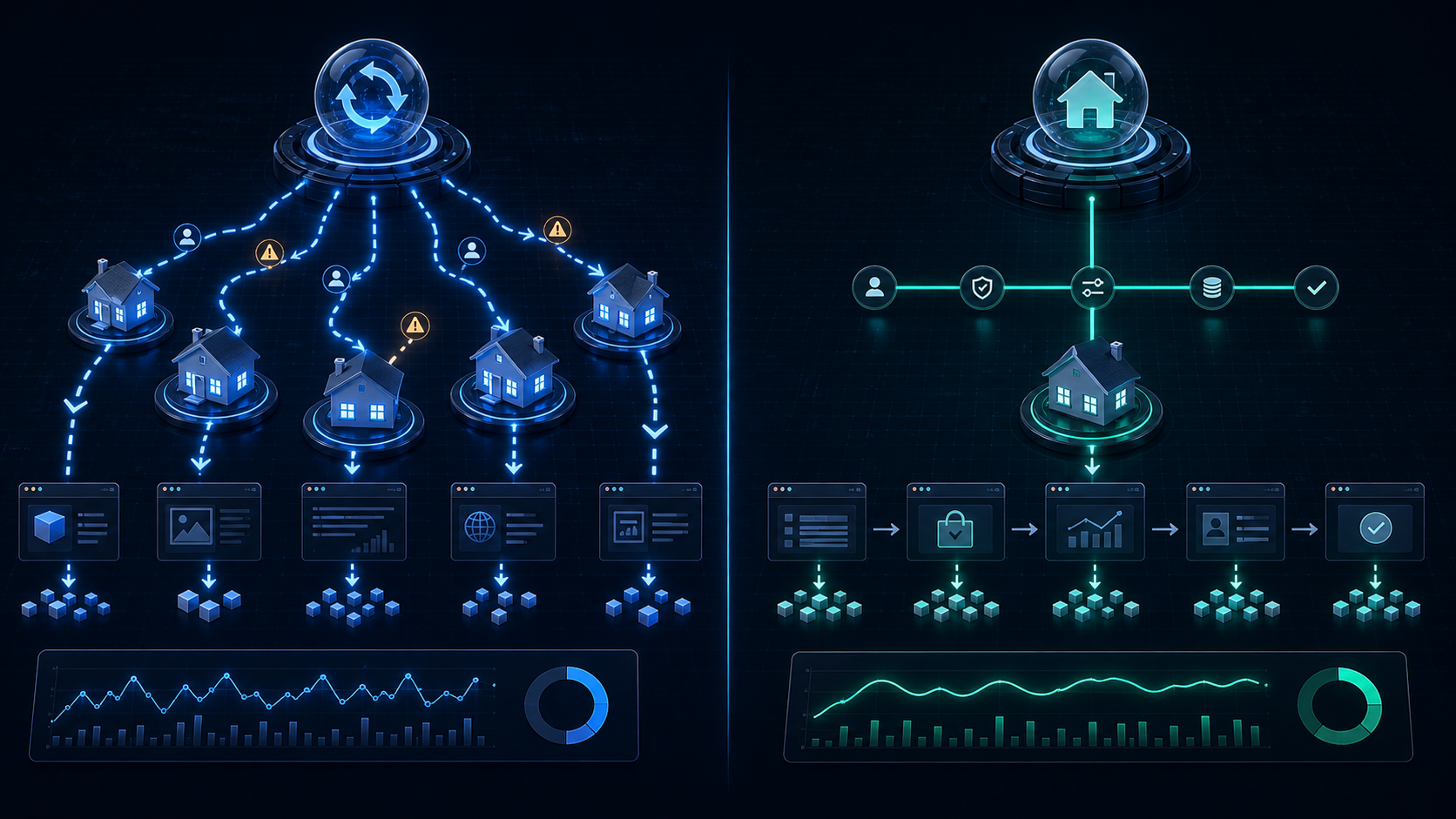
Rotation means changing the exit IP between requests or after a defined period. It is useful when pages are independent from one another, such as many product detail pages, public listing pages, or separate news pages. In those cases, each page can be requested, validated, and parsed on its own.
Sticky sessions mean keeping the same exit IP or network environment for a period of time. They are useful when the website behavior depends on continuity, such as pagination, region filters, language settings, cookie state, or multi-step flows.
Use this table as a simple rule of thumb:
Scraping task
Recommended strategy
Why it matters
Many independent public pages
Rotating residential proxies
Pages can be validated separately
Price monitoring
Fixed geo with controlled rotation
Prices must remain comparable
SEO rank checks
Stable target-region sessions
Search results vary by location and language
Pagination
Sticky sessions
Fast IP changes can break continuity
Localized page testing
Country or city targeting
Geo accuracy matters more than total IP count
Early validation
Small test plan
Measure cost before scaling traffic
For scraping workflows, faster rotation is not always better. The right rotation strategy should match how the target pages behave.
7 Metrics That Matter More Than IP Pool Size
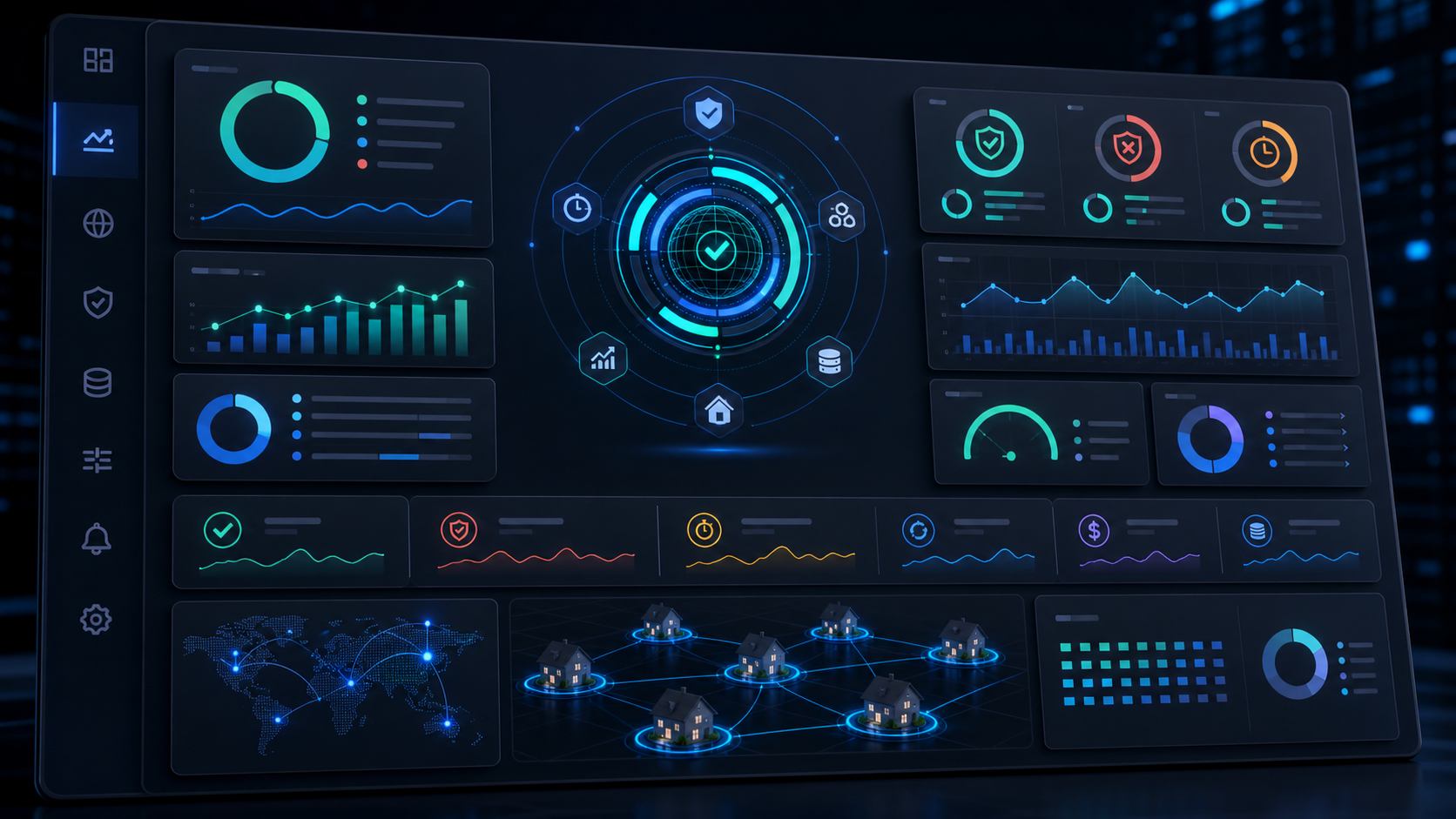
When evaluating a residential proxy setup, focus on operational metrics instead of only provider claims.
Metric
What to measure
Why it matters
Geo accuracy
Does the page match the target country, city, language, or market?
Wrong regions produce wrong data
Usable-page success rate
Does the page contain the fields you need?
HTTP success is not data success
Timeout rate
How often do requests exceed your threshold?
Timeouts increase retry cost
Session control
Can you set sticky duration and session rules?
Some pages need continuity
Rotation control
Can you rotate by request, time, or failure type?
Better control improves stability
Logging
Can you record region, latency, response type, and retry reason?
Logs are essential for debugging
Cost per valid page
What is the full cost of usable output?
This is closer to business value
The key metric is usable-page success rate. Do not stop at status codes. A response with HTTP 200 can still be an empty page, a wrong-region page, a challenge page, a login prompt, or a page missing the fields your parser needs.
The job of a proxy test is to measure usable data, not just technical connectivity.
A Practical Test Plan
Do not scale a proxy plan before a small controlled test. A clean test can save a lot of time and budget.
Here is a practical test plan:
Prepare 100 to 500 representative public URLs.
Group them by page type: listing pages, detail pages, search pages, localized pages, and pagination flows.
Define what a valid page means, such as title present, price present, region correct, or required fields complete.
Use a fixed request rate during the test.
Record HTTP status, page type, latency, target region, proxy region, retry count, and parser result.
Tag empty pages, wrong-region pages, duplicate pages, challenge pages, and missing-field pages.
Calculate the real cost per valid page.
Do not rely on one short test window. Network quality, target-site behavior, and geo output can vary over time. Run small samples across several time periods, such as morning, afternoon, and peak business hours.
You can estimate real cost with this formula:
Real valid-page cost = proxy traffic cost + retry cost + parsing-failure cost + debugging cost, divided by the number of valid pages.
That number is more useful than price per GB because your business does not need raw bandwidth. It needs usable data.
Cost Control: Cheap Proxies Can Be Expensive
Proxy pricing can be misleading when you look only at bandwidth.
Imagine two options:
Option
Surface price
Usable-page success rate
Real outcome
Option A
Lower price
More timeouts, retries, and invalid pages
Higher cost per valid result
Option B
Higher price
More usable pages and fewer retries
Lower cost per valid result
There are three hidden costs to watch.
The first is retry cost. Timeouts, empty pages, wrong pages, and blocked pages often trigger retries. Each retry consumes bandwidth and slows the job.
The second is cleaning cost. Wrong-region pages, duplicated pages, and missing fields create more work downstream.
The third is decision cost. If the final dataset contains unstable prices, wrong local results, or incomplete samples, business teams may make decisions on poor data.
So when you compare proxy plans, do not only ask, "How much is one GB?" Ask, "How much does it cost to get 1,000 valid pages?"
Compliance and Responsible Use
Residential proxies can improve routing and localization, but they do not remove the need for responsible scraping practices.
A responsible workflow should include:
Collecting only public pages that you are allowed to access.
Reviewing website terms, robots.txt rules, and data-use limits.
Avoiding sensitive personal data and unauthorized areas.
Controlling request frequency to reduce unnecessary load.
Keeping logs for access patterns, failures, retries, and proxy behavior.
Managing data retention, access permissions, and internal use.
Many scraping problems are not caused by the proxy itself. They happen because the system has no boundary. A responsible proxy workflow includes technical configuration, rate control, logging, review, and data governance.
Common Selection Mistakes
Mistake 1: Choosing only by IP pool size. Pool size matters, but target-region quality, stability, and success rate matter more.
Mistake 2: Rotating on every request by default. Fast rotation can hurt workflows that depend on cookies, filters, languages, or pagination.
Mistake 3: Treating HTTP 200 as success. HTTP 200 means the server returned something. It does not mean the page contains usable data.
Mistake 4: Testing only one website. Different sites have different structures, rules, regions, and failure patterns. A single-site test can mislead you.
Mistake 5: Ignoring logs. Without logs, you cannot tell whether a failure came from proxy quality, request rate, geo mismatch, target-site behavior, or parser logic.
How to Configure by Project Stage
You can choose proxy settings by stage instead of trying to design the perfect setup on day one.
Stage
Recommended approach
Goal
Validation
Small traffic plan, limited URLs, clear success criteria
Check whether the approach works
Pre-scale
Test more page types, regions, and time windows
Find stable settings
Production
Monitor success rate, geo accuracy, and valid-page cost
Control long-term cost
Debugging
Analyze logs by failure type
Avoid blind provider switching
Multi-market expansion
Split tests by country or city
Avoid mixing region performance
For many public data projects, rotating residential proxies are a reasonable first test. If the workflow needs stable location, continuity, or lower volatility, consider sticky sessions, static residential proxies, or ISP proxies.
Does the provider support your target country or city?
Can you configure rotation and sticky sessions?
Can you set session duration, rotation frequency, and failure-based switching?
Does the documentation include clear examples?
Can you log region, latency, response type, and retry reason?
Can you run a small test before committing to larger traffic?
Can you calculate cost per valid page?
Does the provider publish acceptable-use or compliance guidance?
Can the proxy setup integrate with your scheduler, parser, and monitoring system?
Does performance remain stable during your target operating window?
If a setup cannot answer these questions, do not scale it yet.
Conclusion
Residential proxy services are valuable for scraping when they make public data collection more stable, diagnosable, and measurable. They are not valuable simply because they give you more IP addresses.
Use four rules:
Define a valid page before testing proxies.
Match rotation and sticky sessions to the page workflow.
Compare proxy plans by cost per valid result.
Set compliance boundaries before scaling traffic.
If you are starting from zero, begin with a small controlled test, follow the proxy tutorial center, and compare plans on the IPIPD pricing page. Scale only after the data shows that your target pages, target regions, and session rules are stable.
Frequently Asked Questions
Do I always need residential proxies for web scraping?
No. Small, low-frequency, non-localized public-page collection may work without residential proxies. Residential proxies are more useful when you need geo realism, controlled rotation, sticky sessions, or higher stability across many public pages.
Are rotating or static residential proxies better for scraping?
Rotating residential proxies are often better for many independent public pages. Static residential proxies or sticky sessions are better when the workflow depends on continuity, stable location, pagination, filters, or session state.
How do I test residential proxies for web scraping?
Use representative URLs, define valid-page criteria, record geo accuracy, latency, response type, retry count, parser success, and duplicate rate. Then calculate cost per valid page instead of only checking connection success.
Why can HTTP 200 still be a failed scrape?
HTTP 200 only means the server returned a response. The page may still be empty, localized to the wrong region, missing key fields, showing a challenge, or returning a login prompt instead of the target content.
How long should sticky sessions last?
There is no universal duration. Start with the shortest time needed to complete the workflow, such as pagination or region-filtered browsing, then adjust based on page consistency and data quality.
How can I reduce proxy cost in scraping projects?
Reduce invalid requests. Use small tests, region-specific routing, controlled rotation, failure-based retries, page validation, and logs. Measure cost by valid pages rather than by raw bandwidth.