A proxy for travel fare aggregation is useful when a team needs to compare public travel prices across regions, languages, currencies, and landing pages without mixing too many location signals. For IPIPD, the practical choice is not a separate “travel proxy” product. It is a workflow decision between dynamic residential addresses for broader regional sampling and static residential addresses for repeated checks from a fixed location.
Dynamic residential addresses are better when the task needs many public samples, such as checking hotel search pages across markets or comparing fare landing pages for multiple countries. Static residential addresses are better when the team needs to repeat the same check, keep cookies stable for a short review workflow, or preserve a consistent regional identity for evidence. The cleanest travel fare setup separates discovery, verification, and evidence capture.
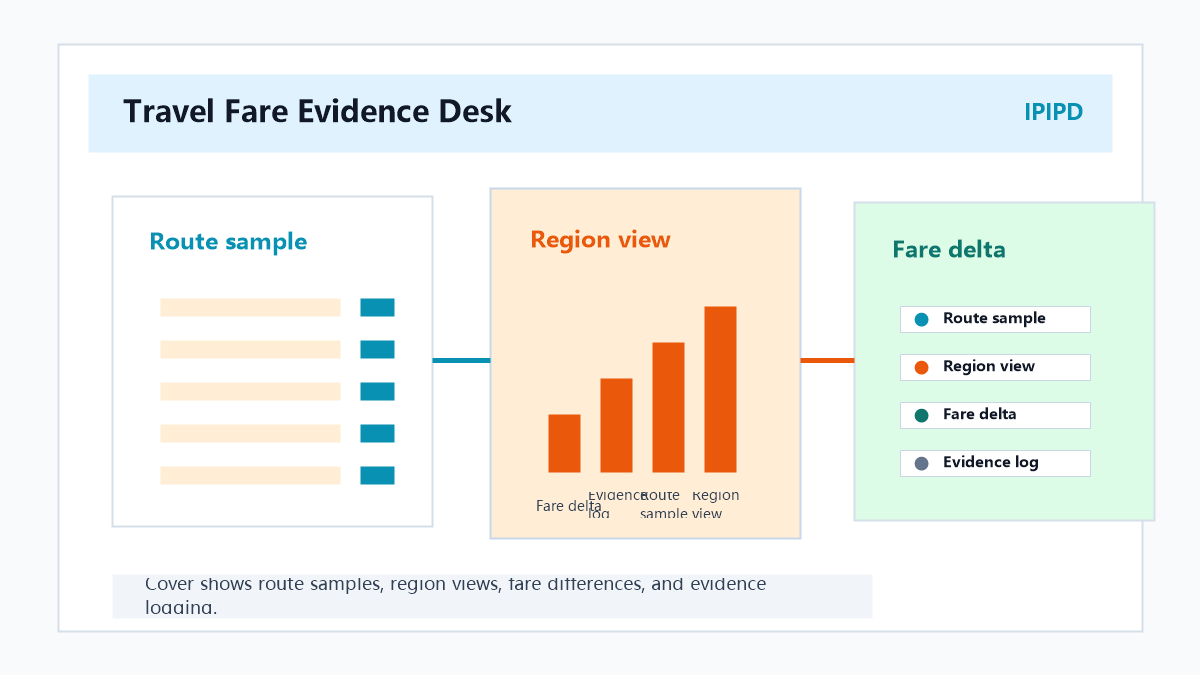
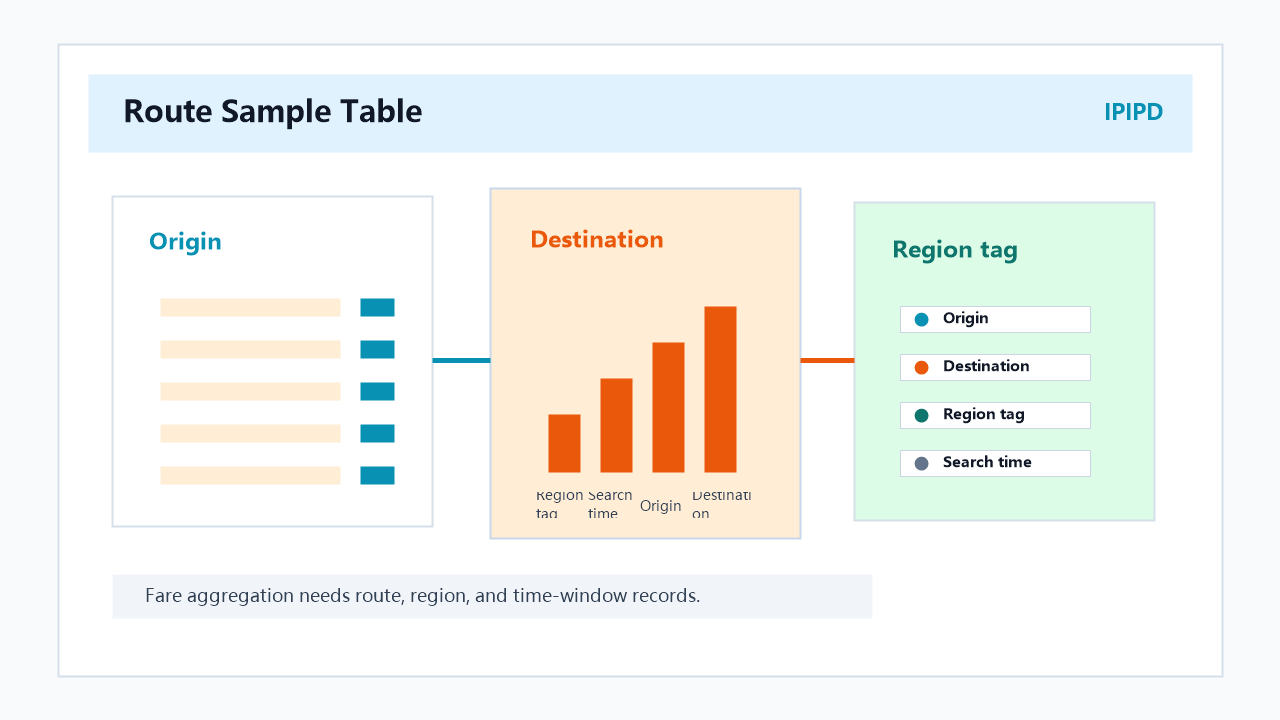
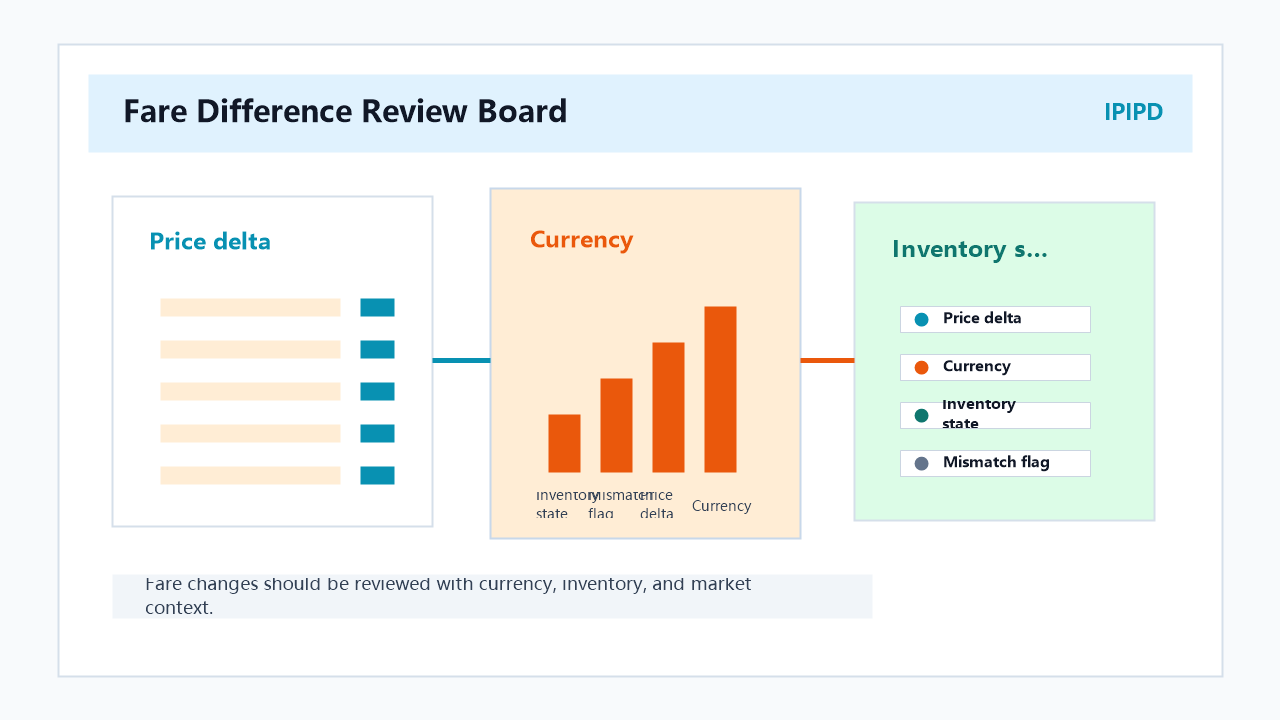
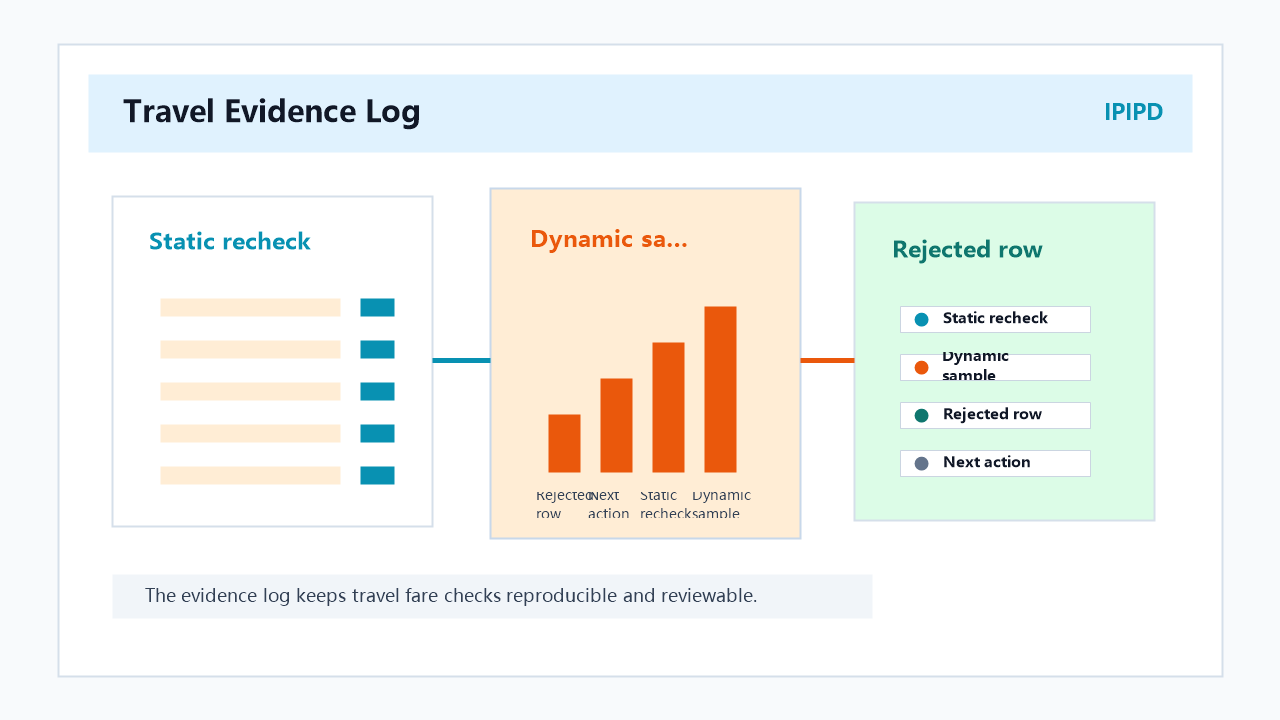
Fare aggregation needs route, region, and time-window records.Fare changes should be reviewed with currency, inventory, and market context.The evidence log keeps travel fare checks reproducible and reviewable.
Basic Facts
Item
Practical meaning
Travel fare aggregation
Comparing public flight, hotel, or travel landing page results across regions
Dynamic residential addresses
Better for broader public region sampling and market discovery
Static residential addresses
Better for repeated checks, evidence capture, and stable regional review
Session control
Cookies, language, currency, and location signals must be kept consistent
Data quality
A result is useful only when region, currency, page, and fare fields match the test plan
Why fare aggregation needs location consistency
Travel prices can vary because of country, city, currency, language, device, availability, campaign rules, partner feeds, and the timing of the search. A proxy can help a team observe public pages from different network locations, but it cannot fix a poorly designed data process. If the browser language says one country, the proxy exits from another, and the currency parameter points to a third market, the final result may be hard to interpret.
The first step is to define the test question. A team might ask whether a hotel landing page shows the correct local currency in France, whether an airline route displays the same fare after repeated checks, or whether a travel comparison page changes by region. Each question needs a slightly different proxy plan. A broad market scan should not use the same address logic as a repeated evidence check.
Dynamic residential addresses for region sampling
Dynamic residential addresses work well for market discovery. They let the team sample public pages across more regions and identify where prices, languages, currencies, or promotions differ. This is useful when the goal is to build a map of regional behavior rather than prove one exact fare from one exact location.
For this layer, the team should control request frequency, target markets, retry rules, and duplicate handling. Rotation should not be completely random. The sampling plan should say which country or city is being checked, how many attempts are allowed, what counts as a valid page, and when a result should be discarded. A 200 status code is not enough. The page must show the expected travel product, location context, currency, and price field.
Static residential addresses for repeated checks
Static residential addresses are useful when a result needs to be repeated under stable conditions. If a travel fare looks unusual, a reviewer may need to open the same route again, take screenshots, compare currency and taxes, or check whether the result changes after a short interval. A stable residential address reduces one major source of noise.
Static addresses are also better for workflows that use cookies or multi-step navigation. A hotel booking flow, fare detail page, or localized promotion test can behave differently when the network identity changes mid-session. In those cases, a rotating address can create false differences. A static residential address gives the team a more stable baseline for review.
Session and cookie control
Travel fare testing should treat session behavior as a measurable factor. Cookies, language headers, account status, browser profile, currency settings, and location parameters can all affect what the page shows. A proxy only controls one part of that environment. If the rest of the session is inconsistent, the team may wrongly blame the proxy for differences caused by the browser or page parameters.
A good workflow uses separate profiles for different markets, records the proxy type, records the time of the check, and stores the final URL. It should also capture whether the page redirected, whether the currency changed, whether the fare was visible, and whether the route or hotel inventory matched the target. This makes later review possible.
Data quality checks
The most important metric is not how many pages were requested. It is how many valid fare observations were collected. A valid observation should include the correct market, the correct product, the correct currency, the displayed fare, and a timestamp. If the page returns a generic error, a different language, a blocked layout, or a mismatched currency, that sample should be marked as unusable.
Teams should also separate discovery data from evidence data. Discovery data can be broader and noisier. Evidence data should be stable, repeatable, and documented. This is where static residential addresses are often more useful, even if dynamic residential addresses were used to find the original difference.
Quick reference
Use dynamic residential addresses for broad public region sampling.
Use static residential addresses for repeated checks and evidence capture.
Keep proxy region, browser language, and currency settings aligned.
Do not treat HTTP 200 as a valid fare result by itself.
Record redirects, currency, fare fields, screenshots, and failure reasons.
Keep travel testing within public-page and compliance boundaries.
Compliance boundaries
Proxy use in travel fare aggregation should stay within public, permitted, and documented workflows. It should not be positioned as a way to bypass account rules, scrape restricted data, or overload travel platforms. A responsible setup lowers location noise and improves evidence quality; it does not remove the need to respect site terms, robots guidance, rate limits, and data-use rules.
IPIPD should describe this topic as a residential address workflow. Dynamic residential addresses provide coverage. Static residential addresses provide continuity. The business value comes from better regional evidence, not from hiding behavior or forcing access where it is not permitted.
Frequently Asked Questions
What is a proxy for travel fare aggregation?
It is a proxy setup used to observe public travel prices, currencies, landing pages, or route pages from controlled network locations. The goal is to reduce location noise and produce cleaner regional comparisons.
Should travel fare aggregation use static or dynamic residential addresses?
Use dynamic residential addresses for broad region sampling and static residential addresses for repeated checks, screenshots, evidence capture, or short multi-step review sessions.
Does a proxy guarantee accurate travel prices?
No. A proxy only controls part of the environment. Browser language, cookies, account state, currency parameters, inventory timing, and page redirects can also change the final price.
What should be recorded in a fare monitoring test?
Record target region, proxy type, browser profile, timestamp, URL, product route or hotel, currency, visible fare, redirect behavior, screenshot, and failure reason.
When should a sample be discarded?
Discard it when the region is wrong, the currency is wrong, the travel product does not match, the page is blocked, the price is missing, or the result cannot be repeated under the expected conditions.