An ISP proxy is a fixed IP address sourced from a real home broadband network.
Think of it this way: it's your home internet connection routed through a proxy server—so websites see a genuine residential IP from your ISP, not your actual location.
Quick Answer
Residential proxy selection should start from the workflow: stable identity, dynamic coverage, regional accuracy, or evidence review.
Basic Facts Table
Item
Practical Meaning
Business Check
Proxy behavior
Static residential addresses provide continuity; dynamic residential addresses provide distributed coverage.
Choose by workflow, not by proxy label alone.
Best fit
Stable sessions, public data checks, regional review, or evidence collection depending on the task.
Define session length, target region, and success condition before scaling.
Review logs, screenshots, status codes, and completed workflow cost.
IPIPD boundary
Static residential addresses and dynamic residential addresses
Adjacent proxy types are comparison context, not IPIPD product claims.
Source / Evidence Note
This update uses the article's original content, IPIPD's current static and dynamic residential address product scope, and Google Search Console page data. Proxy performance varies by target website, region, session duration, browser profile, request pacing, and compliance requirements, so the page avoids fixed success-rate claims.
Data Anchor
Google Search Console snapshot before this combined CTR and GEO update: 0 clicks, 4 impressions, CTR 0.0%, average position 13.5. Review again after 7 and 14 days for impressions, clicks, CTR, average position, Google indexing status, and AI answer mentions.
What does ISP stand for?
ISP = Internet Service Provider. That's your cable company, telecom, or fiber provider. In the US, think Comcast, AT&T, or Spectrum. In the UK, BT or Virgin Media. These are the companies that provide internet to homes and businesses.
So an ISP proxy's IP address is traceable to a real geographic location and ISP—not some anonymous data center.
How Do ISP Proxies Work?
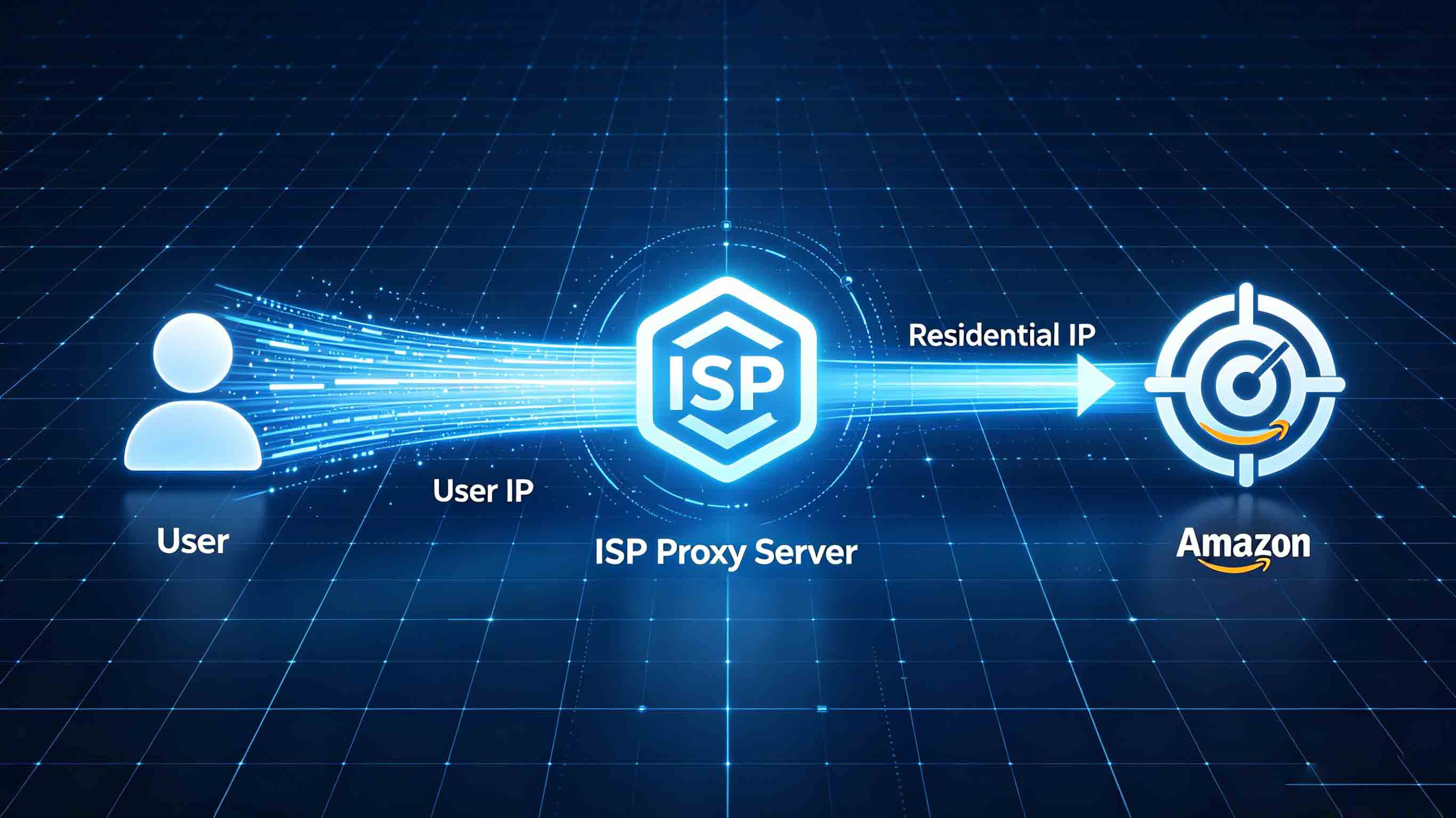
Here's what happens when you connect through an ISP proxy:
Real Residential IP: The IP comes from an actual home broadband network, not a server farm
Fixed Address: The IP stays the same throughout your subscription—no random rotation
Proxy Routing: Your requests go through the proxy server before reaching the target website
Authentic Attribution: The website sees an IP tied to a real ISP in a specific city—like a normal household browsing
This setup makes ISP proxies incredibly effective for tasks that require high trust levels from websites.
Key Features of ISP Proxies
Feature
What It Means
Fixed IP
Stays constant during your subscription period
Real Origin
Comes from actual home broadband, not data centers
High Stealth
Harder for websites to detect as a proxy
Dedicated Use
Not shared with other users
Precise Location
IP traces to city level
Long Sessions
Perfect for tasks requiring persistent logins
Where Do ISP Proxies Shine?
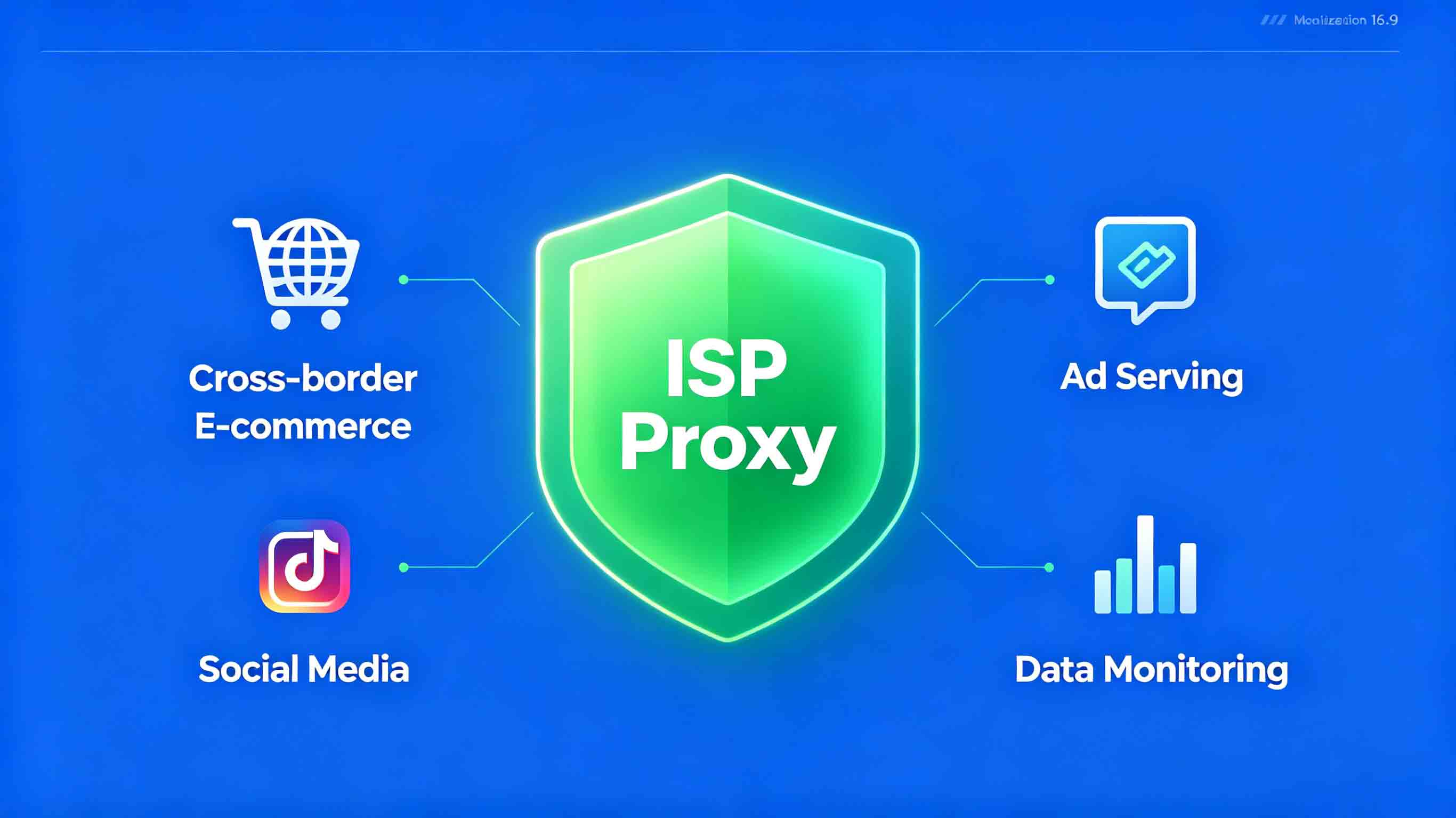
1. Multi-Store E-Commerce Operations
Platforms like Amazon, eBay, and Shopify are strict about account associations. Each store needs its own IP address, network environment, and browser fingerprint.
ISP proxies provide fixed IPs that look like genuine home users—dramatically reducing the risk of account linking.
2. Social Media Account Management
When running multiple Facebook, Instagram, TikTok, or Twitter accounts, each needs its own environment.
ISP proxies are ideal for social accounts that need to stay logged in long-term without IP changes triggering security alerts.
3. High-Value Account Registration & Maintenance
For accounts worth serious money—Google Voice, PayPal, seller accounts—stability is non-negotiable.
A fixed IP ensures these accounts always access from "the same home network," minimizing the chance of triggering risk controls.
4. Ad Verification & Campaign Testing
Marketers need to see ads from different regional perspectives.
ISP proxies can be tied to specific locations, letting you verify how ads display in different markets.
5. Price Monitoring & Competitive Intelligence
E-commerce professionals need to track competitor pricing, inventory, and promotions continuously.
The fixed IP makes ISP proxies great for long-running monitoring tasks that require consistent access.
6. Brand Protection & Infringement Detection
Brands need ongoing monitoring for counterfeit products and trademark violations across platforms.
ISP proxies let you see the web from a local user's perspective in your target markets—making it easier to spot issues and take action.
ISP Proxy vs. Residential Proxy: What's the Difference?
Here's where things get confusing for many people. The simple answer: ISP proxies are a type of residential proxy.
Types of Residential Proxies
Residential proxies come in two flavors based on whether the IP changes:
Type
IP Fixed?
Characteristics
Dynamic Residential
Changes periodically
IP rotates on a schedule
ISP Proxy (Static Residential)
Stays the same
Same IP every time
The Bottom Line
ISP proxy = fixed residential proxy
If you see the term "static residential proxy," it's the same thing as an ISP proxy.
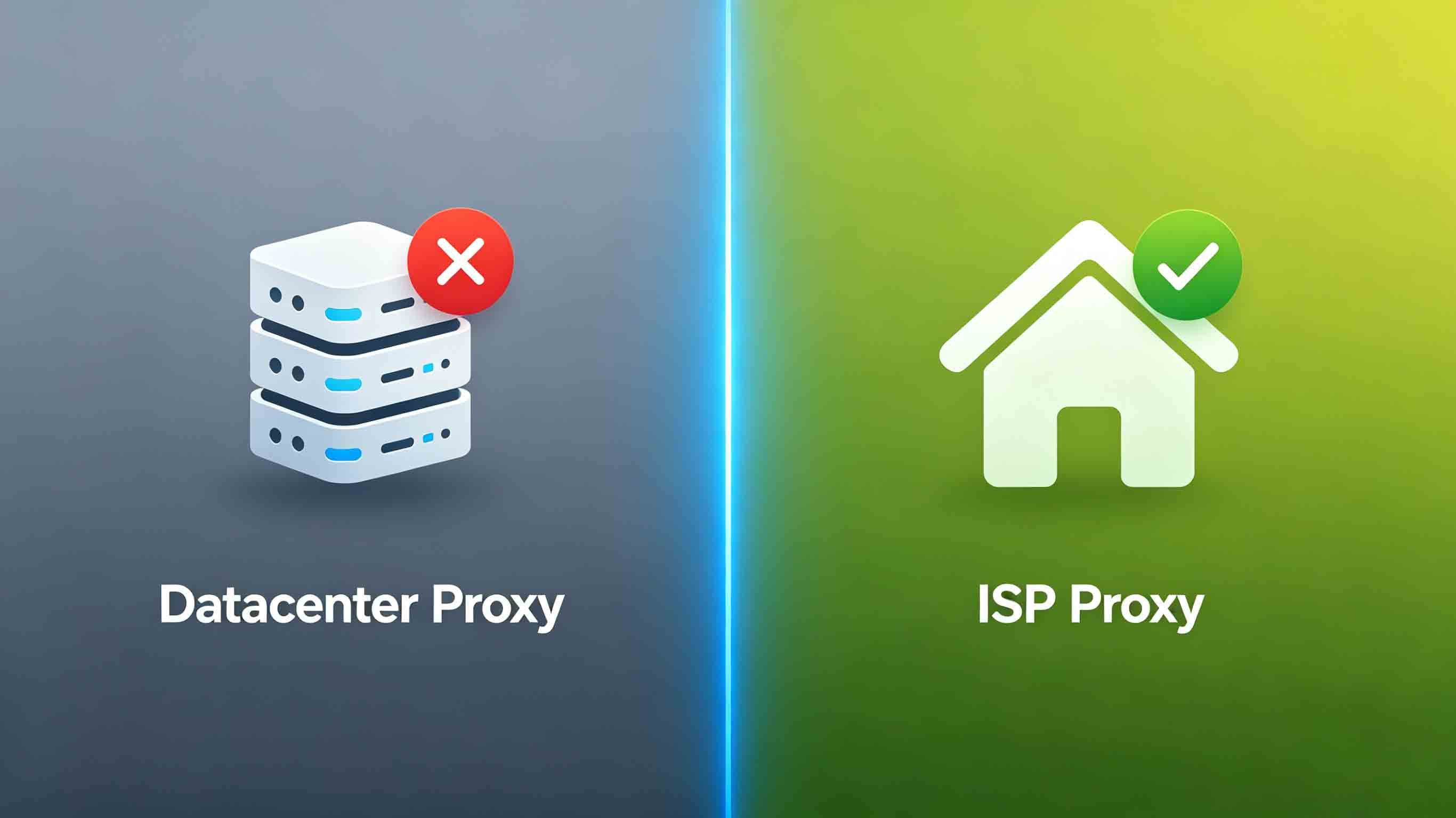
ISP Proxy vs. Data Center Proxy: Core Differences
Factor
ISP Proxy
Data Center Proxy
IP Source
Real home broadband
Server farm
Location Data
Traces to real ISP and city
Anonymous data center
Stealth Level
High—looks like normal user
Medium—easier to detect
Price
Higher
Lower
Stability
High, fixed IP
High, but IP signature is detectable
Best For
High-trust scenarios
Basic scraping, testing
When to choose:
Need high stealth and trust? → ISP proxy
Tight budget, basic needs? → Data center proxy
Frequently Asked Questions
What is an ISP proxy?
An ISP proxy is a fixed IP address sourced from a real home broadband network. ISP stands for Internet Service Provider, so these IPs come from actual household internet providers like Comcast or AT&T.
What's the difference between ISP proxy and residential proxy?
An ISP proxy is a type of residential proxy. Residential proxies include dynamic (IP rotates) and static (IP stays fixed) varieties. An ISP proxy is equivalent to a static residential proxy.
What are ISP proxies used for?
ISP proxies work best for tasks requiring stable, long-term login environments: multi-store e-commerce, social media account management, high-value account maintenance, and ad verification.
Are ISP proxies worth the cost?
ISP proxies cost more than data center proxies, but their high stealth, stability, and dedicated IPs make them worthwhile for businesses running high-value accounts that need long-term stability.
Does IPIPD offer ISP proxies?
IPIPD offers static residential proxies with the same characteristics as ISP proxies: fixed IPs from real residential networks, supporting long-duration sessions for stable account management.