Dynamic Residential Proxy for Regional Price Monitoring
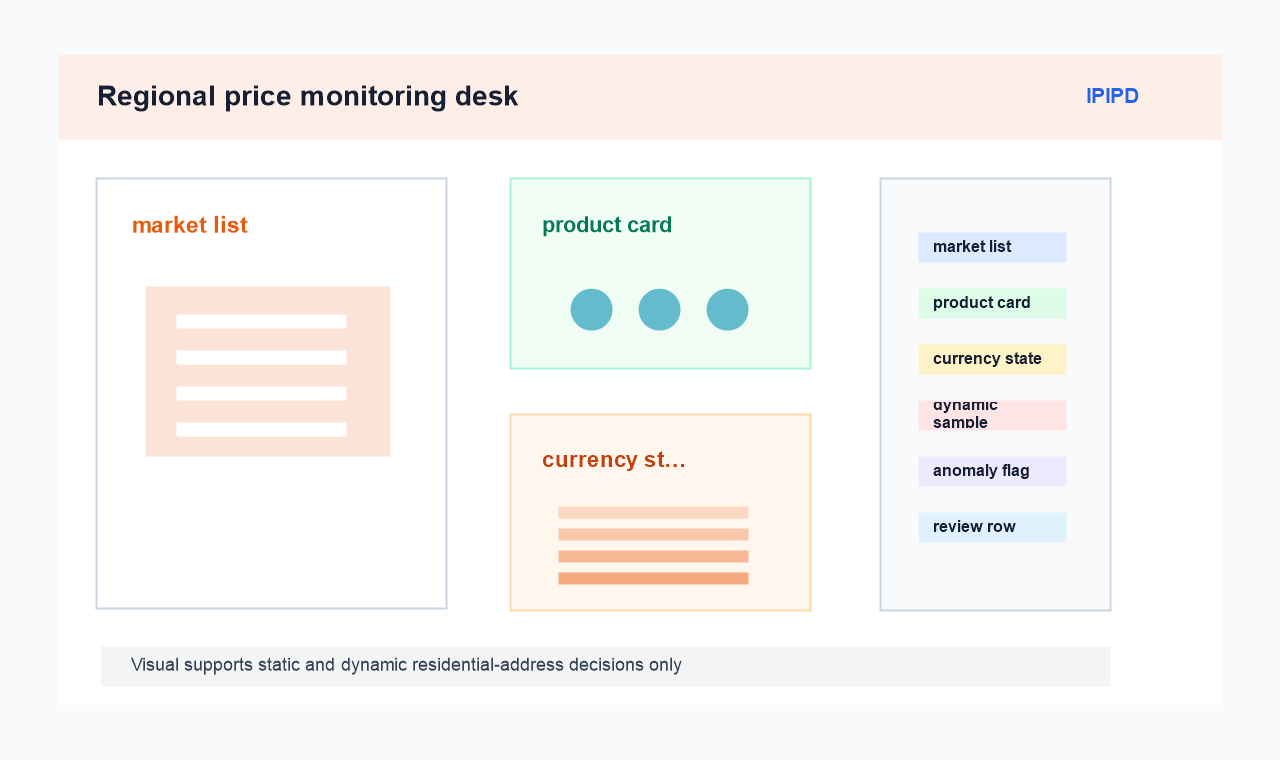
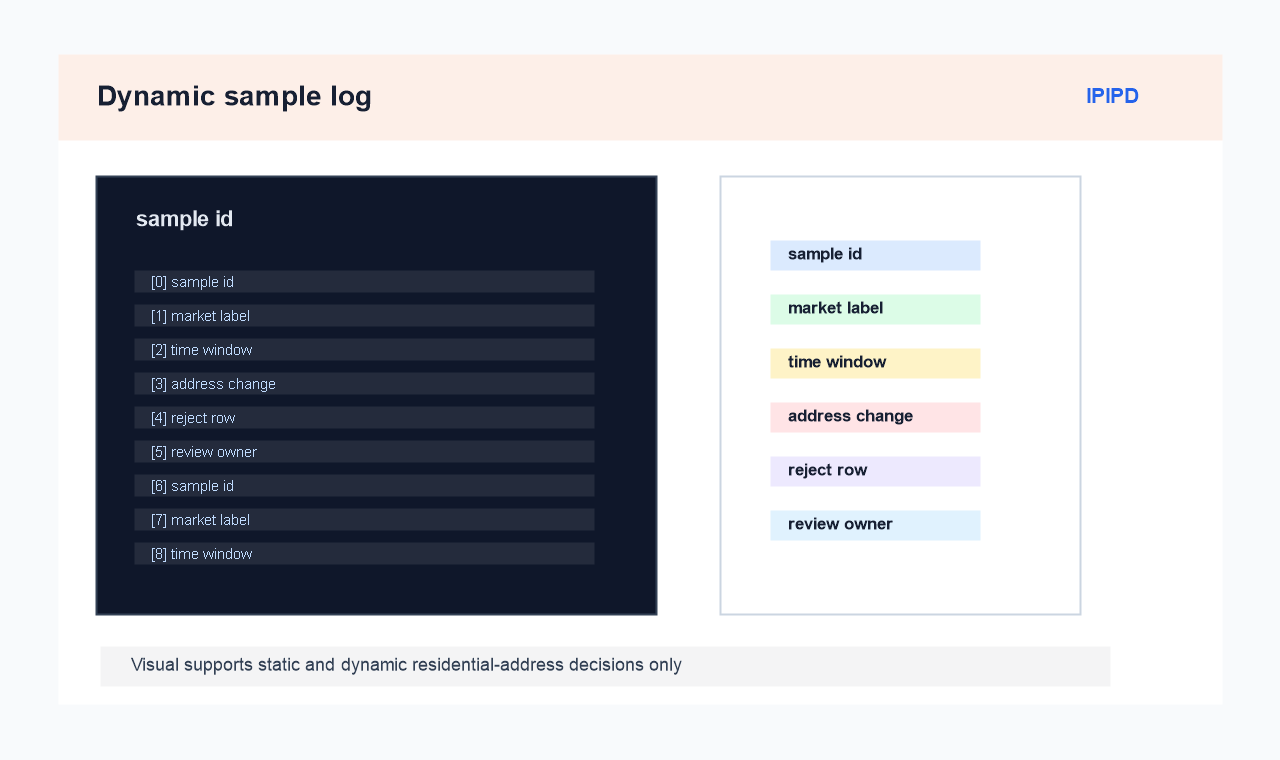
Regional price monitoring starts with sample discipline. A dynamic residential proxy workflow is useful only when each market row has a product identifier, currency state, rotation reason, capture time, and anomaly label before the number is compared.
Regional price monitoring needs comparable evidence, not just more requests. Each run should preserve the market, page URL, visible price field, collection time, and address mode.
Quick Answer: price monitoring needs labeled samples
Dynamic residential addresses are useful when the workflow needs samples from multiple regions. Static residential addresses are better when the same market must be reviewed repeatedly with fewer moving parts.
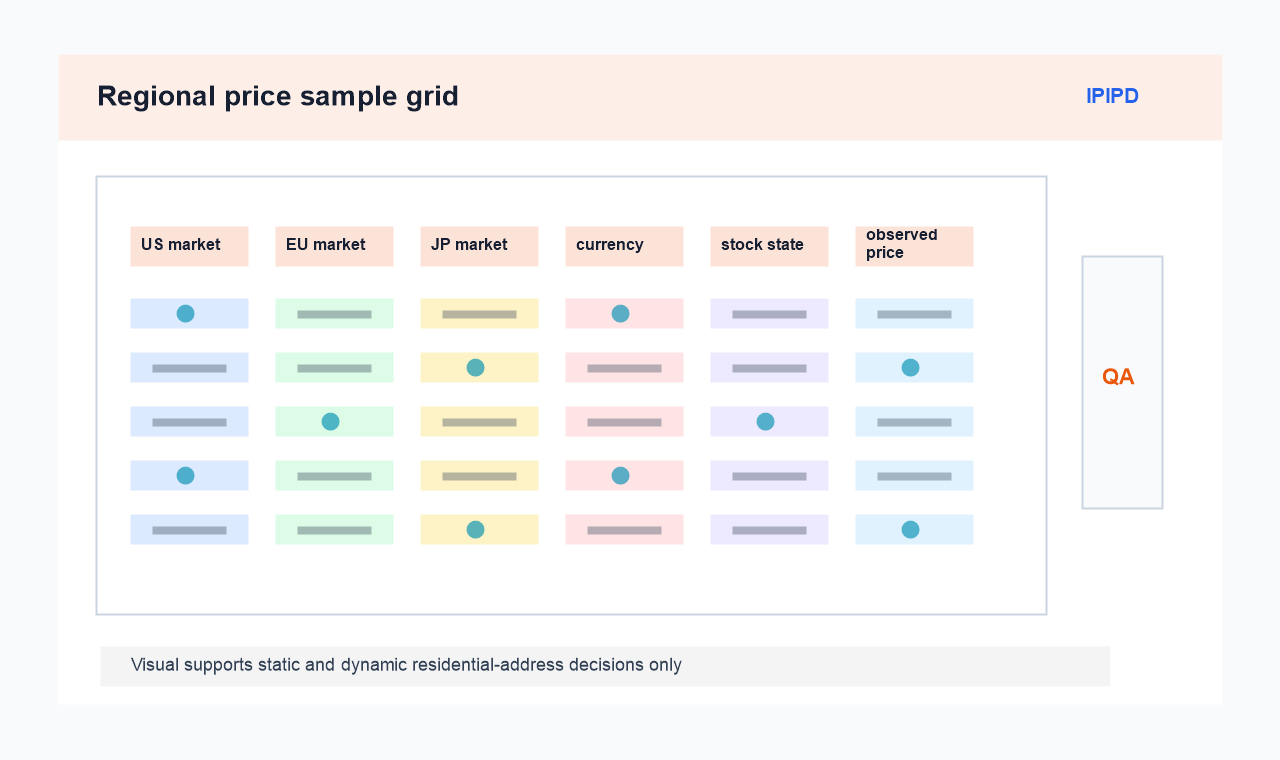 Product IDs, market labels, currency, stock state, and observed price rows.
Before scaling, test a small set of regions and keep the raw result beside the proxy setting. This makes it easier to separate pricing differences from page rendering, currency, or location mismatch problems.
Define the market slice before rotating
Basic Facts: dynamic residential proxy regional price monitoring
| Price sample field | Why it matters |
|---|---|
| Best fit | Regional price sampling across controlled markets |
| Dynamic address role | Creates separate residential samples when rotation is labeled |
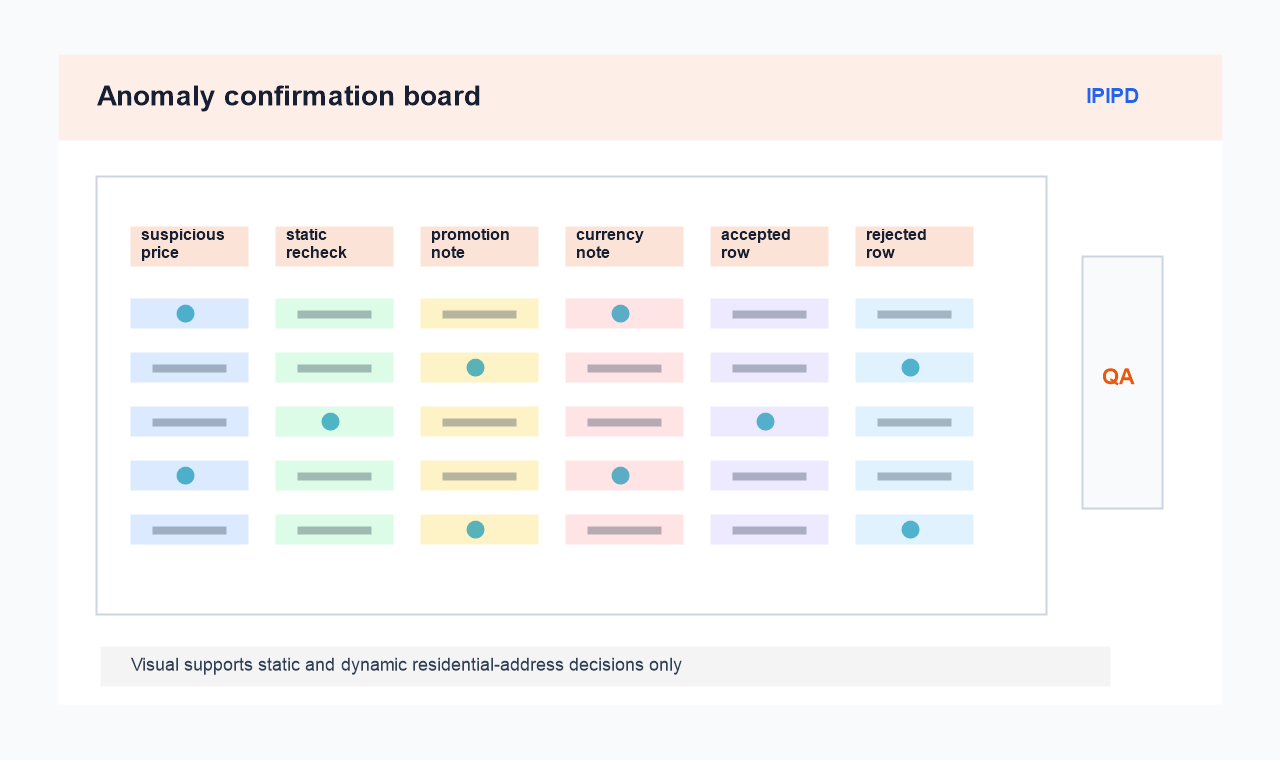
| Static address role | Repeats one suspicious market result for confirmation |
| Stop signal | Currency, stock, promotion, or consent state cannot be explained |