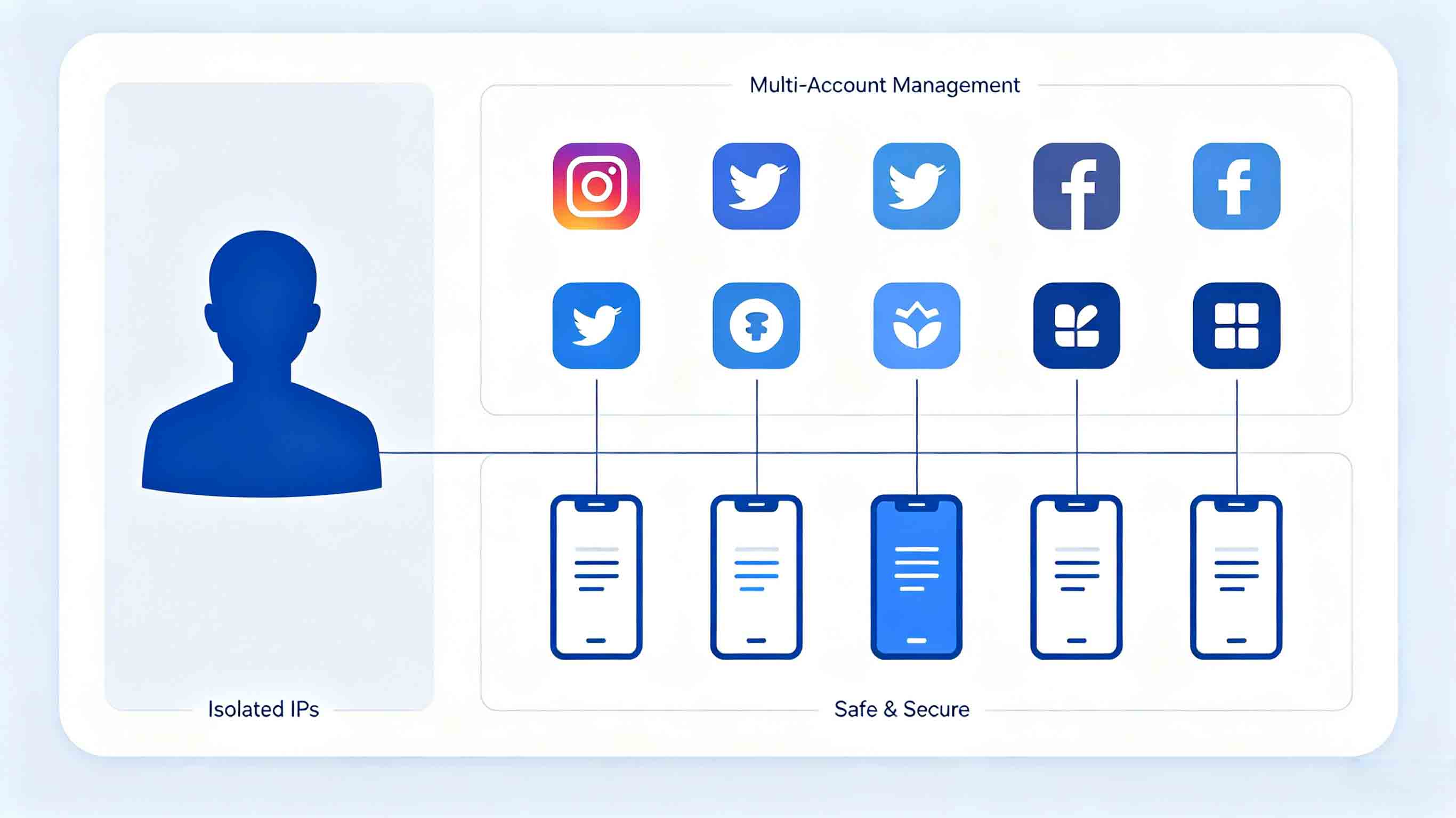
Managing multiple social media accounts has become essential for businesses, marketers, and content creators seeking to expand their reach and diversify their presence across platforms. However, social media companies maintain sophisticated detection systems designed to identify and penalize users operating multiple accounts from single IP addresses.
If you've experienced unexpected account bans, reduced reach, or constant security challenges despite following platform guidelines, you understand the frustration of managing social media presence without proper infrastructure. The solution lies in understanding how mobile proxy technology transforms multi-account operations from risky to reliable.
This comprehensive guide reveals the strategy behind successful social media multi-account management using mobile proxies. Whether you're running an agency managing client accounts, an e-commerce brand maintaining multiple store presences, or an influencer diversifying your content across platforms, this guide provides the technical foundation and practical tactics you need.
Why Social Media Platforms Detect Multiple Accounts
Understanding Platform Detection Mechanisms
Social media platforms invest heavily in detection technology because multiple accounts from single sources often correlate with spam, fraud, and policy violations. Understanding how these detection systems work enables you to build operations that pass scrutiny naturally.
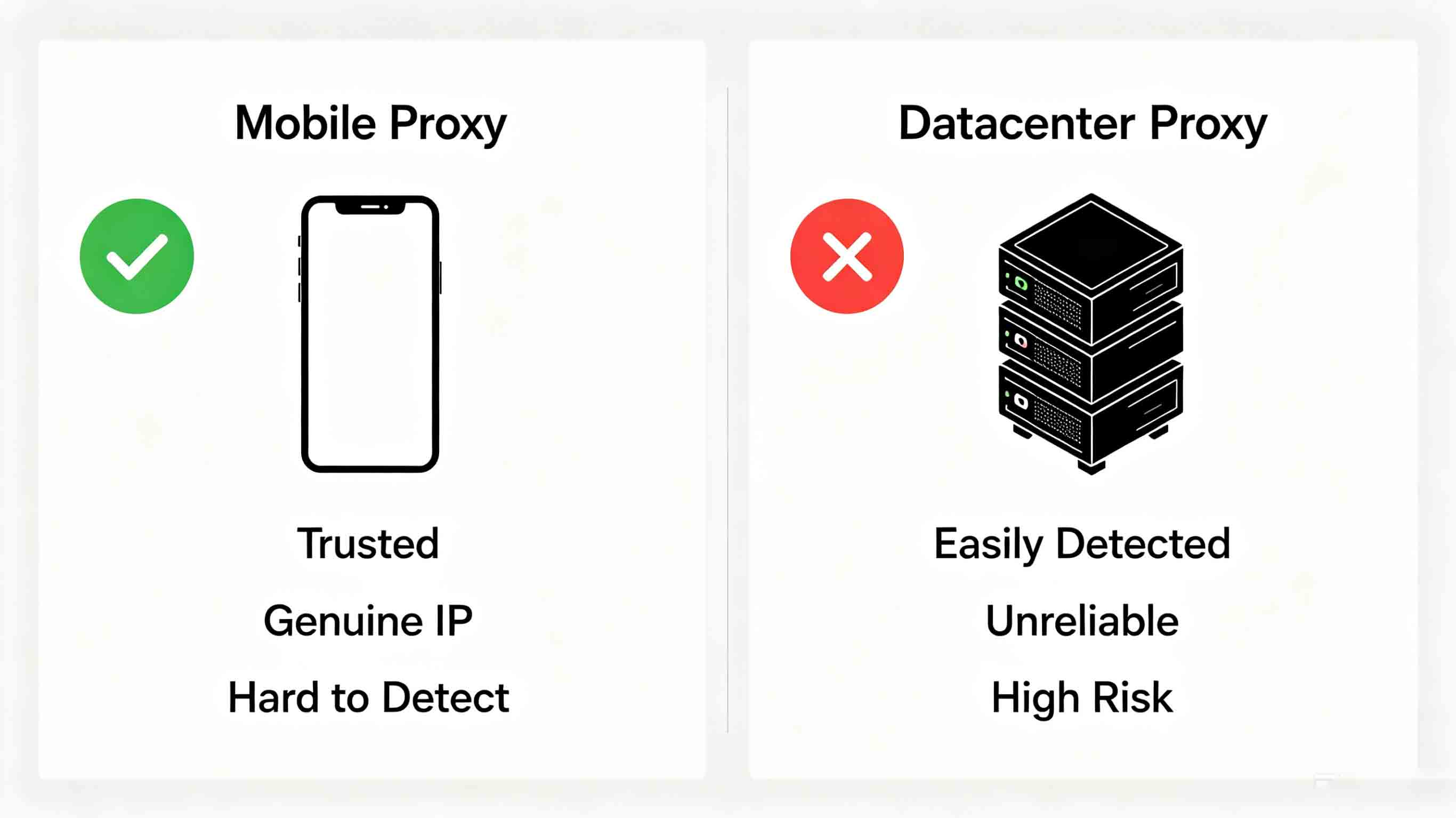
IP address analysis forms the foundation of detection systems. When multiple accounts access a platform from identical IP addresses, algorithms flag this pattern for review. Datacenter IP addresses carry distinctive signatures that detection systems recognize immediately, making datacenter proxies particularly risky for social media operations.
Device fingerprinting adds another detection layer. Platforms analyze browser characteristics, device parameters, and behavioral patterns to identify accounts sharing technological fingerprints. Even with different IP addresses, accounts exhibiting similar device characteristics trigger detection alerts.
Behavioral analysis examines account actions for patterns suggesting automation or coordination. Accounts performing identical actions at similar times, accessing from geographically inconsistent locations, or demonstrating unnatural activity patterns face increased scrutiny regardless of proxy type.
Why Datacenter Proxies Fail for Social Media
Datacenter proxies present fundamental problems for social media operations. The IP addresses originate from cloud servers with recognizable metadata that detection systems specifically target. When your datacenter proxy traffic reaches social media platforms, algorithms immediately classify it as non-user traffic requiring additional verification.
Speed and timing patterns also betray datacenter origins. Server-based connections demonstrate consistent response times and connection patterns distinct from genuine mobile users. Platforms recognize these digital fingerprints even when IP addresses appear acceptable.
Shared reputation compounds datacenter proxy problems. When one user of a datacenter IP range engages in policy violations, the entire IP range gains negative reputation. Your accounts using the same IP range inherit this reputation, facing elevated scrutiny regardless of your actual behavior.
How Mobile Proxy Solves Social Media Detection
The Trust Advantage of Mobile IPs
Mobile proxy addresses originate from real smartphones and tablets connected to cellular networks. Every mobile IP belongs to an actual mobile device with legitimate carrier contracts. This organic origin provides mobile traffic with trust levels that datacenter traffic simply cannot match.
Social media platforms depend on mobile users for their primary revenue and engagement metrics. Alienating mobile users by blocking legitimate mobile traffic would harm their business models fundamentally. Therefore, platforms extend trust to mobile IP addresses that automatically bypass many detection mechanisms.
When your accounts access social media platforms from mobile IPs, they blend seamlessly with legitimate mobile user traffic. The requests appear identical to regular users browsing from their phones, passing automated detection checks without intervention.
Geographic Authenticity
Mobile carrier IPs provide authentic geographic representation that datacenter proxies cannot match. When your accounts access platforms from mobile IPs showing specific city or region locations, they appear as genuine local users. This geographic authenticity prevents detection from location-based analysis.
Multi-account operations requiring different regional targeting benefit from mobile proxy geographic precision. Your accounts access platforms from IPs matching your target audiences, demonstrating authentic local presence that platforms reward with better reach and engagement metrics.
Geographic rotation enables accounts to access from multiple regions without triggering location-based alerts. Your operations appear as genuine mobile users traveling or accessing platforms from different locations, natural behavior that detection systems overlook.
Use Cases for Social Media Mobile Proxy
Agency and Client Management
Social media agencies managing multiple client accounts require infrastructure that maintains separation while ensuring reliable access. Mobile proxy enables agencies to operate dozens or hundreds of client accounts without cross-contamination or detection.
Each client account accesses platforms from dedicated mobile IPs, maintaining clean reputation and avoiding association with other agency accounts. When one client violates platform policies, their specific IP range faces consequences while other client accounts continue operating normally.
Geographic targeting capabilities enable agencies to manage clients targeting different regional markets. Accounts accessing from mobile IPs in target regions demonstrate authentic local presence that improves campaign performance and platform relationships.
Account isolation through mobile proxy also simplifies reporting and analytics. Each client account operates independently, enabling accurate performance measurement without interference from other agency operations.
E-commerce Multi-Store Operations
E-commerce brands maintaining presence across multiple marketplaces and storefronts benefit from mobile proxy infrastructure. Different store accounts access platforms from separate mobile IPs, demonstrating authentic brand presence while avoiding cross-account detection.
Product listing management, review generation, and customer interaction across multiple store presences require accounts that platforms view as legitimate separate entities. Mobile proxy provides the infrastructure foundation for operations that platforms accept as normal business practices.
Inventory monitoring, pricing optimization, and competitive analysis across multiple platforms require consistent access that detection systems cannot interrupt. Mobile proxy ensures your operations run continuously without the verification challenges and access restrictions that datacenter proxy users experience.
Influencer and Content Creator Accounts
Content creators expanding presence across multiple accounts require infrastructure that maintains account health while enabling growth. Mobile proxy enables creators to manage main accounts, backup accounts, and niche-specific presences without triggering detection that threatens account survival.
Each account accessing from mobile IPs demonstrates authentic user behavior that platforms reward. Account growth, engagement metrics, and reach improve when platforms view accounts as genuine rather than suspicious automation.
Niche-specific accounts targeting different audience segments benefit from geographic and demographic targeting capabilities. Your content reaches intended audiences while accounts maintain clean reputations and reliable access.
Building Your Social Media Proxy Infrastructure
IP Allocation Strategy
Successful multi-account operations require thoughtful IP allocation preventing cross-contamination while optimizing resource usage. Different accounts should access from different mobile IPs, with each account maintaining consistent IP for session continuity.
Category-based allocation groups accounts by risk level, geographic target, or operational purpose. High-value accounts requiring maximum isolation receive dedicated IP pools, while lower-risk accounts share allocation with appropriate separation.
Rotation strategies balance reputation maintenance with detection avoidance. Regular IP rotation prevents reputation accumulation that detection systems might flag, while sticky sessions maintain account consistency for operations requiring stable access.
Geographic distribution enables accounts to demonstrate presence across target markets. Your operations access from mobile IPs in each region, appearing as authentic local users to platform algorithms and audience targeting systems.
Account Health Monitoring
Maintaining account health requires ongoing monitoring beyond initial setup. Track account metrics including login success rates, verification challenges, reach patterns, and engagement metrics to identify problems before they become critical.
Detection warnings often manifest as increased verification challenges, reduced reach, or engagement anomalies before account-level penalties occur. Monitoring these metrics enables proactive intervention before permanent damage.
Recovery protocols should exist for accounts experiencing detection events. Understand platform appeal processes, verification requirements, and restoration procedures to minimize downtime when accounts face challenges.
Integration with Automation Tools
Multi-account social media operations often require automation for sustainable scale. Mobile proxy integrates with automation tools including bot frameworks, scheduling applications, and management platforms to enable efficient operations.
API access through mobile proxy providers enables programmatic IP management for automation workflows. Your tools can request specific IPs, manage rotation schedules, and monitor proxy health without manual intervention.
Compatibility testing ensures your automation tools function correctly with mobile proxy infrastructure. Different tools handle proxy configuration differently; testing reveals optimal setup for your specific technology stack.
Common Social Media Proxy Mistakes to Avoid
Insufficient IP Separation
Operating multiple accounts from identical or closely-related IP addresses defeats the purpose of mobile proxy infrastructure. Detection systems identify accounts sharing IP characteristics regardless of whether IPs technically differ.
Ensure each significant account maintains dedicated IP allocation with no overlap with other active accounts. Only low-risk testing accounts can share IP pools without significant consequences.
Aggressive Rotation Timing
Rotating IPs too frequently creates detection patterns that algorithms recognize as automated. Mobile users typically maintain consistent IP addresses for extended periods; rotation that violates this pattern triggers scrutiny.
Establish rotation schedules matching legitimate user behavior. Account operations requiring stability should maintain sticky sessions for days or weeks; higher-frequency rotation suits only casual browsing patterns.
Ignoring Geographic Consistency
Accounts exhibiting inconsistent geographic access patterns face detection from location-based analysis. A single account accessing from IPs in multiple continents within short timeframes triggers immediate scrutiny.
Match IP allocation to account geographic requirements. Accounts targeting specific regions should access from consistent geographic areas; only accounts with specific rotation requirements should access from diverse locations.
Frequently Asked Questions
How many social media accounts can I manage with mobile proxy?
Account capacity depends on your proxy plan size and operational requirements. Most providers offer plans supporting dozens to hundreds of concurrent connections. The key factor is maintaining sufficient IP separation between accounts to avoid detection.
Will mobile proxy guarantee my accounts won't get banned?
No proxy type guarantees account safety. Mobile proxy provides the best foundation for reliable operations by ensuring your traffic appears as genuine mobile user access. Account safety also depends on following platform policies, maintaining authentic engagement patterns, and avoiding clearly prohibited activities.
How much does social media mobile proxy cost?
Social media mobile proxy typically costs $10-20 per GB depending on provider and plan features. For multi-account operations, dedicated plans offering higher volumes often prove more economical than pay-as-you-go pricing.
Can I use the same mobile proxy for different social media platforms?
Yes, mobile proxy works across all major social media platforms including Instagram, TikTok, LinkedIn, Facebook, and Twitter. However, maintain account separation even when using the same proxy provider since different platforms maintain different detection systems.
How do I handle account verification challenges with mobile proxy?
Verification challenges occur occasionally regardless of proxy type. Maintain accurate account information, respond honestly to verification requests, and use the appeal process when necessary. Mobile proxy reduces but does not eliminate verification challenges.
What's the difference between mobile proxy and residential proxy for social media?
Mobile proxy uses IPs from cellular networks while residential proxy uses IPs from home internet connections. Mobile proxy generally provides better detection resistance and success rates for social media operations because mobile traffic carries higher trust levels with platforms.
Conclusion: Building Sustainable Social Media Operations
Successful multi-account social media operations require infrastructure that matches platform detection sophistication. Mobile proxy provides the foundation for operations that appear as genuine user behavior rather than suspicious automation.
The strategy behind successful social media management involves thoughtful IP allocation, geographic targeting, account health monitoring, and integration with automation tools. These elements work together to create operations that platforms accept as legitimate business practices.
Invest in quality mobile proxy infrastructure from reputable providers. Test your operations thoroughly before scaling. Monitor account health metrics to identify problems early. Build sustainable operations rather than chasing shortcuts that lead to account losses.
Your social media presence represents significant investment in time, content creation, and audience development. Protect that investment with infrastructure that ensures your accounts survive and thrive across platforms.