Norway Proxy Checks: Static or Dynamic Residential Samples
Before a Norway regional check, define the authorized public target, expected visible field, address mode, comparison baseline, and stopping condition.
Agent IP information2026-09-13
Before a Norway regional check, define the authorized public target, expected visible field, address mode, comparison baseline, and stopping condition.
For repeated Poland public-page reviews, keep one static residential address; for independent comparisons, label each dynamic residential sample separately.
A Turkey page check should record the authorized public URL, expected field, assigned address mode, timestamp, visible response, and stopping condition.
Where to find a proxy server address: verify assigned host, port, protocol, authentication fields, static or dynamic residential address fit
Configure a Wi-Fi proxy only with the assigned host, port, and authentication details, then verify the connection and retain a clear restore path.
Check proxy location evidence by comparing the assigned endpoint, IP lookup result, target page state, timestamp, and any mismatch under one recorded test.
Choose a US residential address by the review method: static continuity for repeated checks, or separately logged dynamic samples for independent views.
For Pakistan public-page checks, define the exact URL and evidence fields first, then choose static continuity or separately recorded dynamic samples.
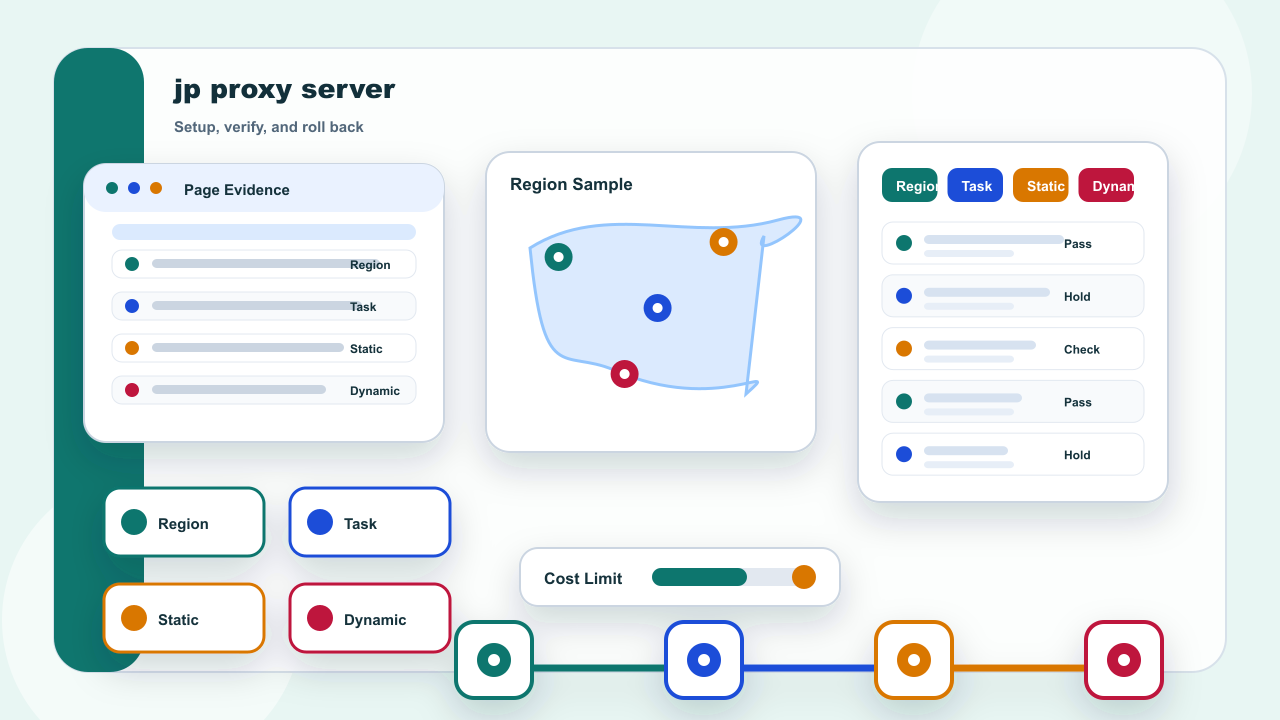
For Japan public-page reviews, keep one stable condition when comparing repeated observations and label each new sample when changing the address condition.
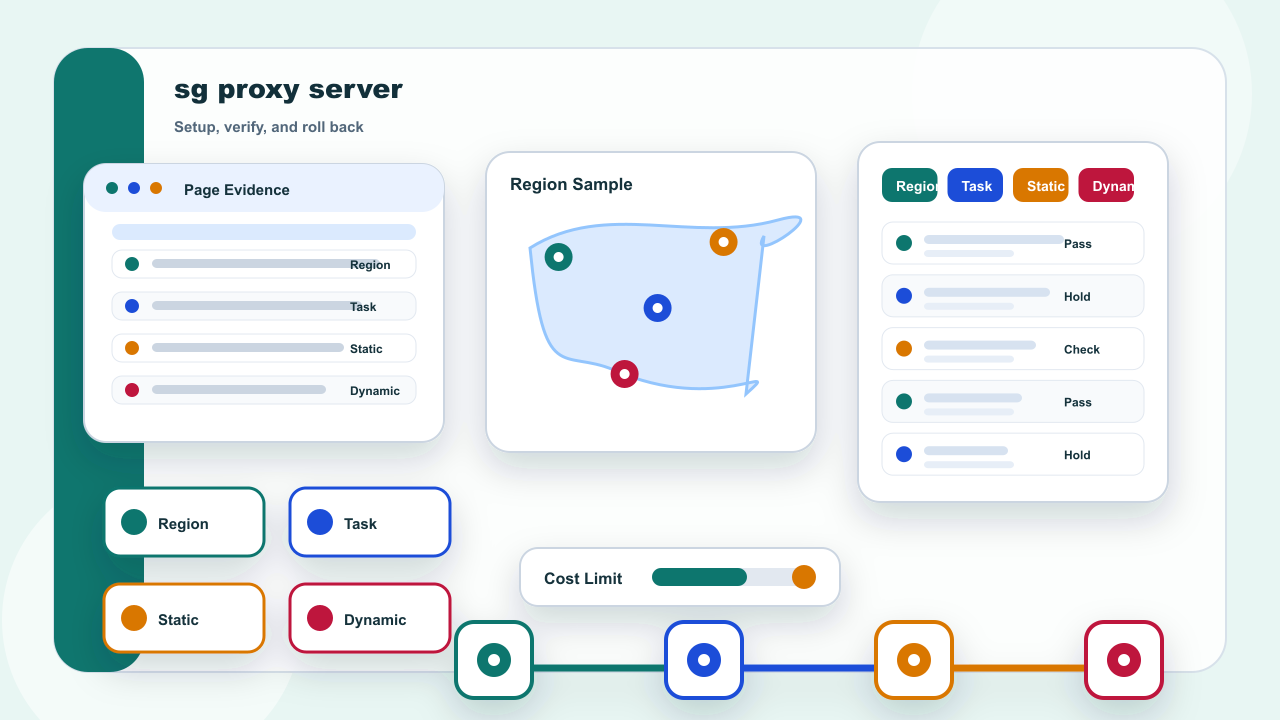
Use a Singapore residential address only for a defined public-page review, recording the target, region, timestamp, visible result, and any mismatch.
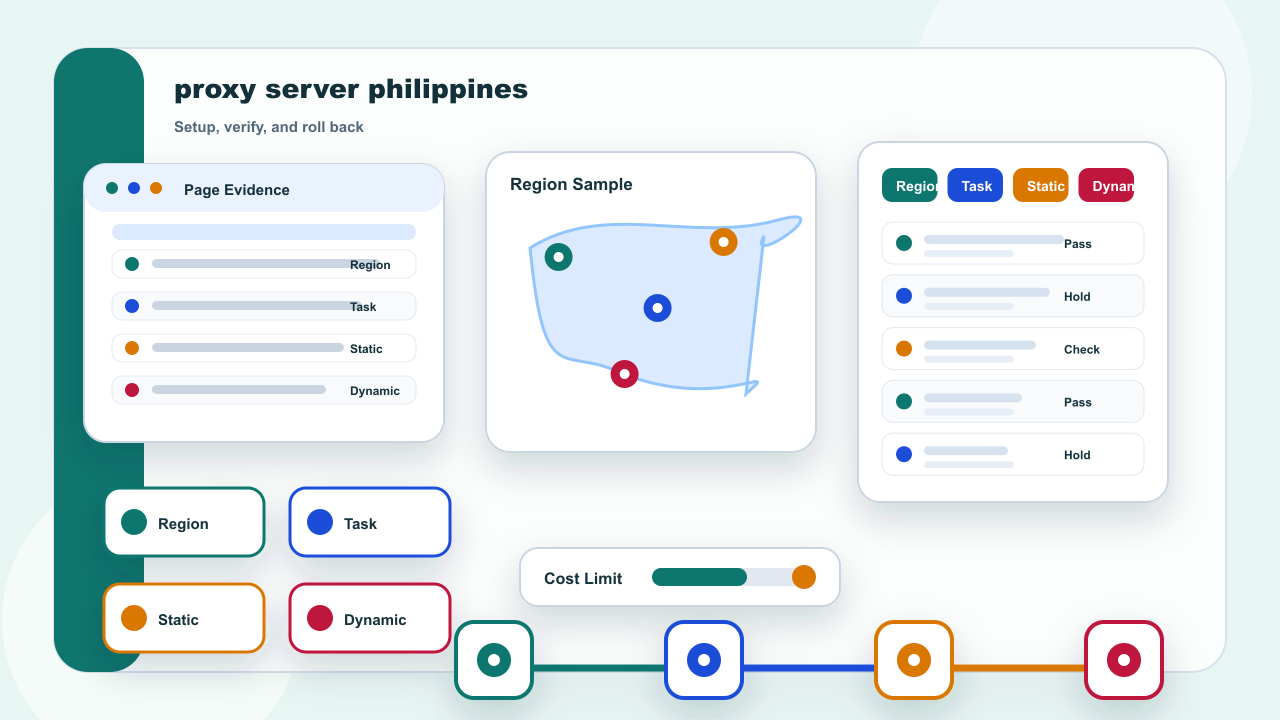
A Philippines proxy check should compare an authorized public page under a recorded region, address mode, time, and expected field without overreading one sample.
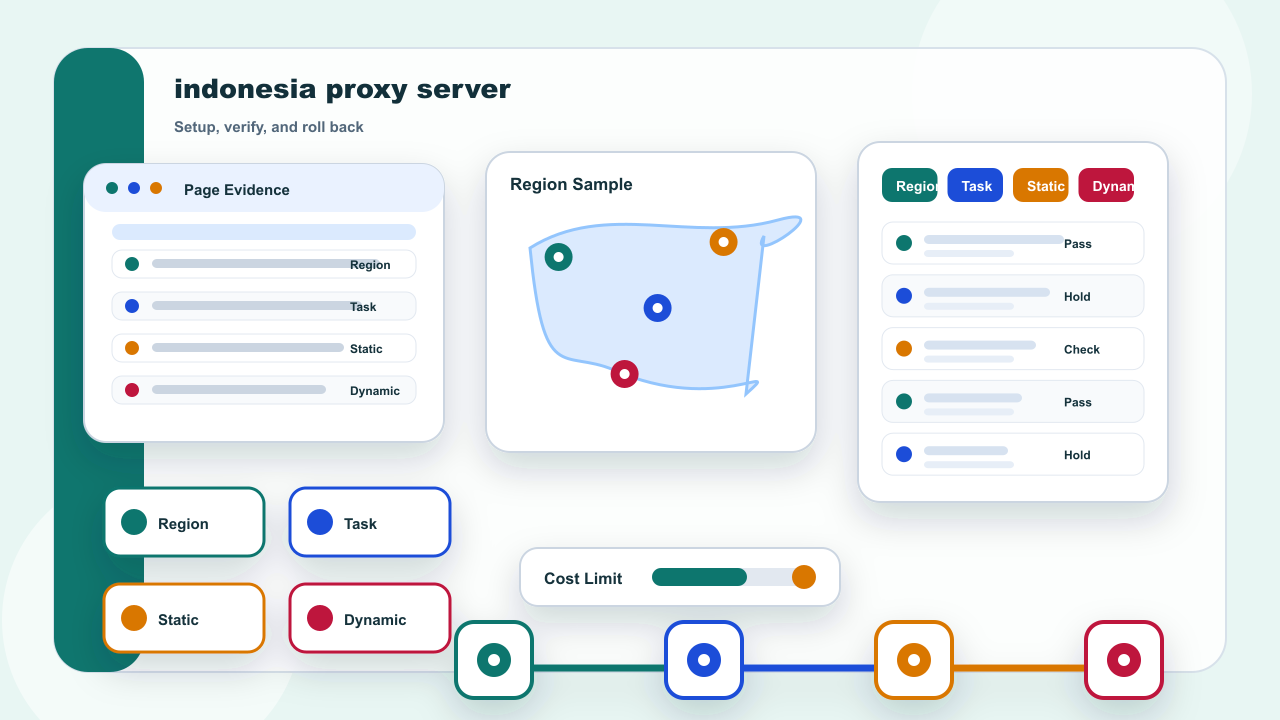
Check an Indonesia proxy task with a small authorized public-page sample, keeping the target, endpoint fields, address mode, timestamp, and restore step together.